





















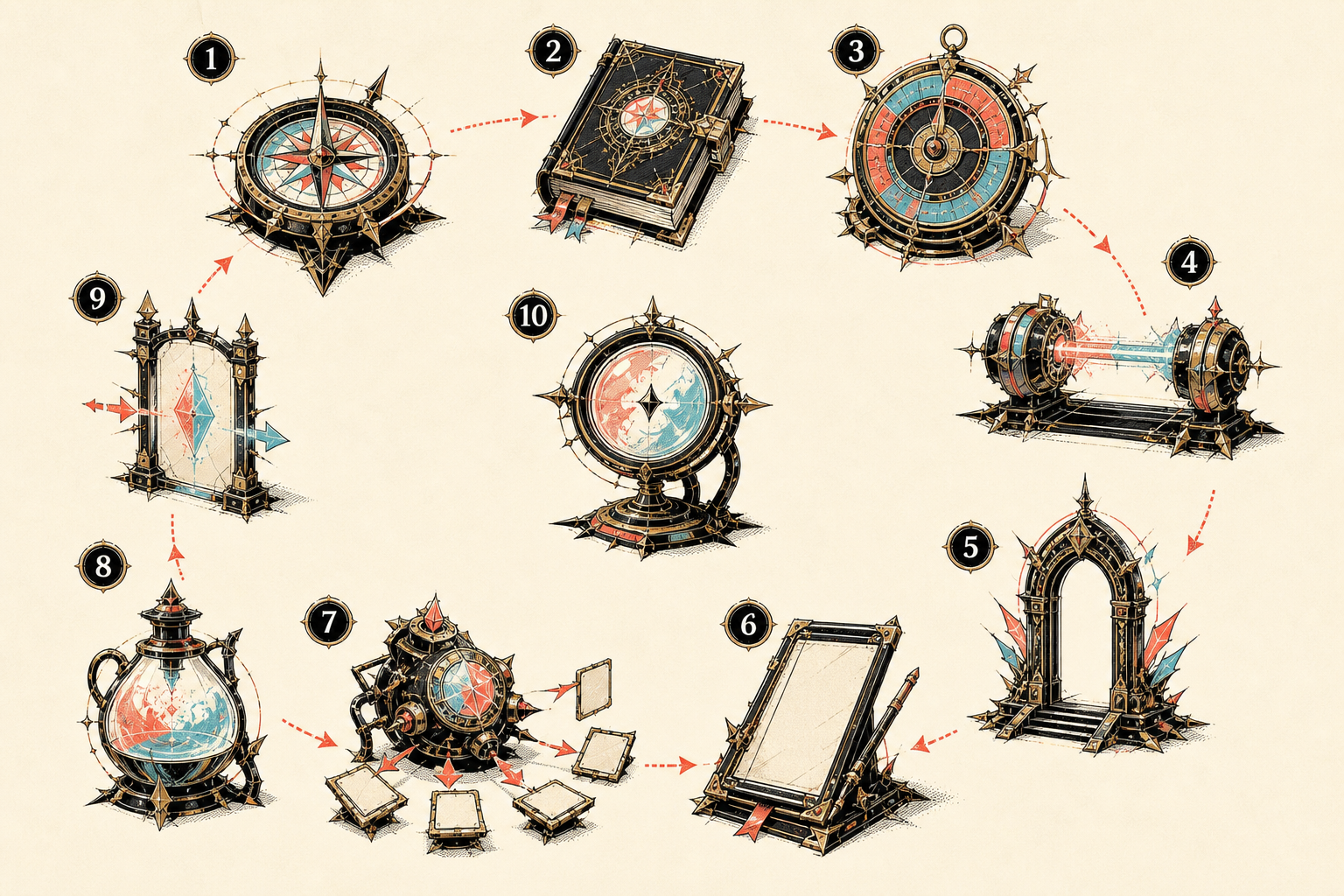
- Set a focused content strategy
- Define clear content guidelines
- Maintain a sustainable content calendar
- Use an efficient production workflow
- Give the work a usable website destination
- Create targeted long-form content
- Plan distribution and repurposing
- Build a nurture sequence
- Define useful conversion points
- Measure what matters and adjust the next cycle
The ten steps, and what each one is for
Think of content marketing as baking your favorite cake! In just 10 steps, you will get successful and creative content marketing as a result. Like every recipe, there are ingredients and tools that consumers can barely notice in the end results that are crucial and make a real difference.
Targets and research in content marketing are similar to baking soda or baking powder in a cake – essential ingredients that go unnoticed when we indulge in a delicious slice. While crucial in the content creation process, these elements and steps often go overlooked when we read a captivating article.
Next, Global Wizards will show you the full recipe to create successful and creative content marketing (Including top-secret ingredients!).
1. A focused content strategy
Your content strategy plays the role of the large mixing bowl where you put together all the ingredients. Without it, there wouldn’t be restrictions and limits and everything would be scattered all over the place.
Using a clear content strategy towards a specific goal and timeline, you will narrow down the ideas and tactics that really matter.
2. Clear content guidelines
Think of content guidelines as measuring cups that help you know how to combine the ingredients you need to use.
Content guidelines are key elements for writers, designers, and other team members to know how to structure and deliver their creations that later on will need to fit into the finished product. A clear example of this is grammar and style guidelines.
3. A sustainable content calendar
You need a content calendar that includes all the elements that are part of the content marketing process for every piece of content. Due dates and publish dates, among others, should be on the calendar.
But remember that no matter how much information is on the calendar, the importance lays in how well you keep up to it. Our piece of advice is to be realistic and set a schedule you can stick to.
4. An efficient content workflow
Content workflow represents the baker’s oven. It’s what turns the ingredients into the final product thanks to the correct timing and environment.
Your content workflow should contemplate the amount of time your team needs to work on the product, leaving time to also solve any potential hiccups.
Up to here, we have talked about the tools you need to produce efficient and creative content marketing. The next 6 items will be the ingredients that customers will taste and interact with.
5. A conversion-optimized website
Your website’s design and structure should be a priority because it should turn visitors into engaged customers. Check if your business’s services or products are clearly offered, or if your visitors can easily find resources to discover more about your brand.
6. Targeted long-form content
Once you have set your content strategy and guidelines, and you made sure your webpage is optimized for a specific marketing strategy, it’s time to start publishing content!
When it comes to building creative content marketing, long-form, onsite content made up with strategic SEO keywords is the sourdough bread of digital marketing. It demands a lot of labor to create, but once you have it you can use it in many other recipes and meals.
7. A distribution and repurposing plan
Content distribution and repurposing processes are like using a basic ingredient for another meal. You pick something that already exists and turn it into something else.
If you want your blog content to be seen and consumed, you need to work for it. Some ideas are repurposing it for social media or turning your content into video scripts.
8. A nurture sequence
Here we refer to any type of campaign, like email marketing campaigns or SMS marketing campaigns, that help visitors become customers.
There are plenty of options to choose from: email sequences, social media posts, ads, and more.
9. Defined conversion points
The conversion point is the end of your customer’s journey. Depending on your sales process, the final destination may be a SaaS signup, a submission form, a cart checkout, or any other endpoint.
10. Measurement tools
The final ingredient of this recipe is a measurement device to know if everything is running properly. It will depend on each sales process, but consider using web analytics services like Google Analytics, Databox, HubSpot, etc.
Define the metrics that are the most important for your business and use measurement tools to track them and adjust accordingly.
What to do with the recipe
Be ready to create top-notch and creative content marketing using the above tools and ingredients. Now, you will be able to design strategies, create and obtain quality results from your content.
As Thomas Keller once said:
“A recipe has no soul. You, as the cook, must bring soul to the recipe.”
Global Wizards is a digital marketing company that will add an extra magic potion to help you obtain even better results.
From the very beginning, we work together with our clients offering the best web development services, online marketing solutions, digital coaching services, multi-channel content marketing and more!
If online marketing was similar to a cooking contest, we would be sure your company would win the main prize.
Our note on content marketing for lawyers shows the same recipe applied to one profession. Contact us if you want help with yours.
Frequently asked questions
What are the ten steps to creative content marketing?
A focused content strategy, clear content guidelines, a sustainable content calendar, an efficient content workflow, a conversion-optimized website, targeted long-form content, a distribution and repurposing plan, a nurture sequence, defined conversion points, and measurement tools. The first four are the equipment; the last six are what a reader actually meets.
Why does a content strategy come first?
Because it is the bowl everything else goes into. Without a clear strategy aimed at a specific goal and timeline there are no limits and the work scatters; with one, you narrow down to the ideas and tactics that matter.
What do content guidelines actually cover?
They tell writers, designers and everyone else how to structure and deliver work that has to fit together at the end. Grammar and style guidelines are the clearest example, and they are what stop a finished piece reading as though four people wrote it.
How do you build a content calendar that survives?
Put every element of the process on it, due dates and publish dates included, and then be realistic about the schedule. What matters is not how much detail the calendar holds but whether you can keep to it.
What is a distribution and repurposing plan?
It is taking something that already exists and turning it into something else, in the way a basic ingredient reappears in another meal. Repurposing blog content for social media, or turning an article into a video script, are the two examples given here, and the point is that content does not get consumed unless you work at that step.
Which tools measure whether content marketing is working?
Web analytics services such as Google Analytics, Databox or HubSpot, chosen according to your sales process. The step that makes them useful is defining which metrics actually matter to your business first, then tracking those and adjusting.