

















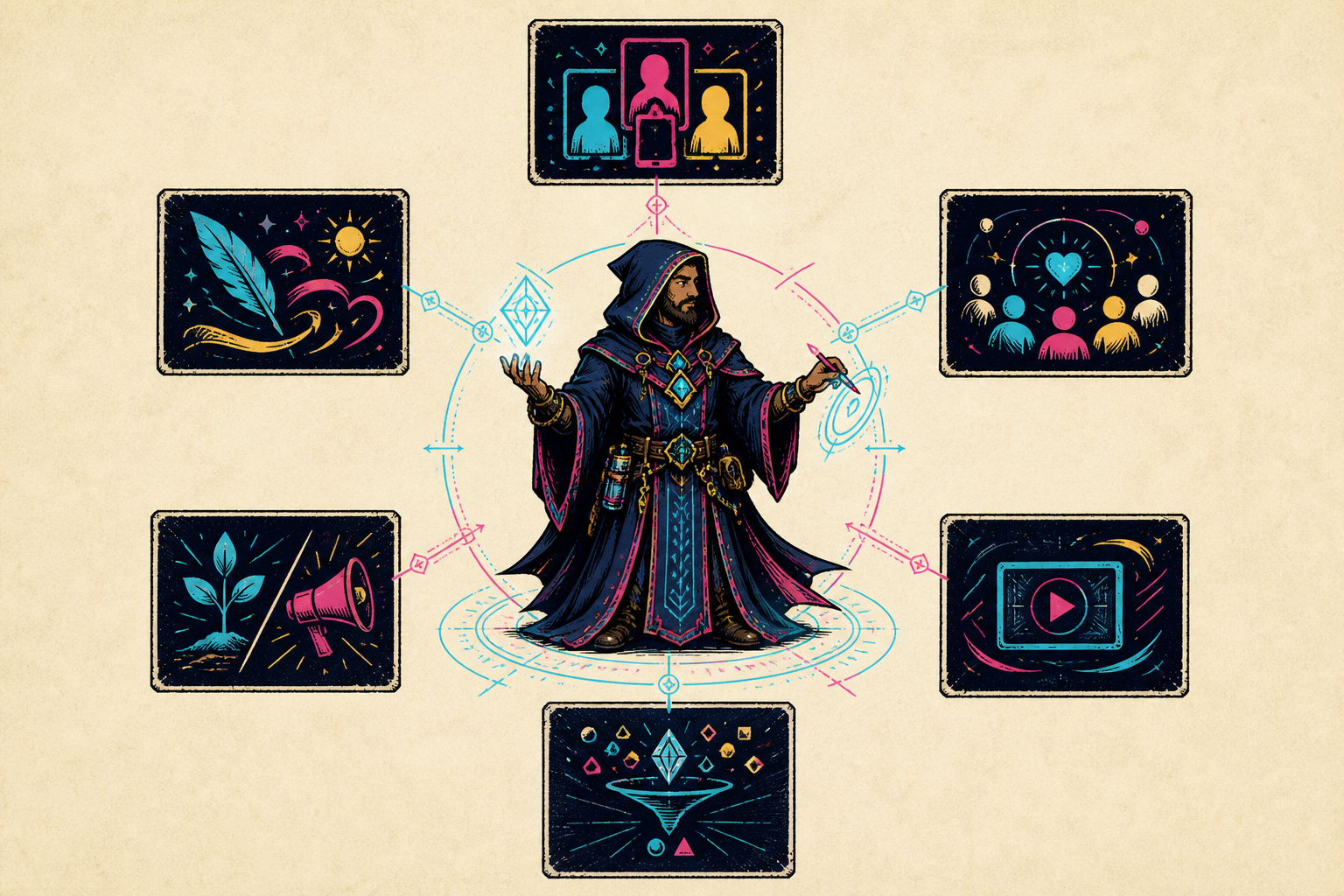

As 2021 ends, here is what we learned about using social media to attract customers — six things worth stopping, and the six things to do instead. Each pair is a habit rather than a tactic, which is why they hold up longer than a platform trend does.

- Adapt one idea to each platform instead of reposting one shape everywhere
- Choose a tone that fits both the audience and the brand
- Build a real community instead of buying follower numbers
- Combine organic and paid distribution rather than relying on one alone
- Prefer concise social video over long-form by default
- Select the moments worth addressing instead of reacting to everything
Content: stop reposting the same thing everywhere
Some time ago it was fine to create one piece of content and repost it across every platform. That has stopped working. Reposting the same thing again only decreases engagement, so make each post specific to the platform it is going on.
The way to recycle a good idea is to change its shape rather than its subject. Each platform has a different audience, so work out which format performs on each and publish accordingly. The more tailored the content, the better the engagement and the follower growth that follows it.
Tone: stop pushing the playful voice too far
Some marketers believe in the power of a playful tone, and it is a slippery slope: there is always a risk of sounding too outspoken, and sometimes arrogant. Some brands do not need that kind of communication, and some cannot afford the risk at all. Before publishing a joke or a punchline, ask whether it fits the company’s values and whether it actually helps the business reach a goal.
Defining a voice is the part that pays. Spend the time to understand who you are targeting, research what they respond to, and tailor the tone to it. Look for a way to be loyal to your brand and to your customers at once, write a guideline so the team can hold the line, and be careful with memes — they are the easiest way to end up somewhere you did not intend.
Followers: stop buying them
Nobody cares about a long follower list if none of those accounts belong to real people who are interested in what you offer. Follower numbers are not a source of credibility on their own, because everybody knows click farms exist.
Build a community instead. Take the time to learn about the followers you already have, ask them questions and answer them properly — that raises engagement, and it also tells you how to adjust the strategy to what the audience actually needs. Do it long enough and you find the brand already has genuine ambassadors promoting the product without being asked.
Traffic: stop treating organic reach as proof
Many marketers rely on organic traffic alone and read it as evidence that the job is being done well. The days when that was enough are long gone; bringing in new customers and keeping them takes a comprehensive strategy.
Rather than waiting for your audience to find the business, use the advertising the platforms have built for businesses. Social media ads have a measurable effect on what people buy, and the best results come from combining organic reach with paid promotion rather than choosing one.
Video: stop investing in the long format
Video has changed how content is consumed on social platforms, and no company can afford to ignore it. But long-form video is losing relevance and appeal in that setting, pushed aside by short snackable clips, so putting resources into the long format is likely to disappoint.
Short-form video is everywhere, and what was once confined to Facebook, Instagram and Snapchat is now standard on TikTok and YouTube too. Choose the platforms and formats that fit your company. And remember it is not necessary to shoot everything: an ambient clip with thematic music or sound effects is still video, and it costs a fraction of a shoot.
Posts: stop commenting on everything
You do not need to react to every single thing that happens in order to attract attention. Doing it produces the opposite result, and it exhausts the team and the community at the same time. Chasing every news report, holiday and meme will not help a business stand out; focusing on particular events and subjects will.
Situational marketing is the disciplined version of the same instinct: create relevant, interesting content around an event, holiday or viral topic while it is still a live issue for the audience, and leave the rest alone.
Rounding off
Brands are investing more in marketing, so keeping a business’ online presence strong is not optional — and the six habits above are the ones that decide whether that investment returns anything. Our piece on why digital presence matters when you open a bank account covers what that presence is worth beyond marketing, and the one on social media management tools covers the software side of keeping it up.
Global Wizards is a digital marketing agency, and social media management is part of the digital marketing services we deliver so you can spend your time on what matters most.
If you want to talk about any of this, drop us a line.
Frequently asked questions
Should you post the same content on every social media platform?
No. Reposting the same thing across platforms now results in a decrease in engagement, because each platform has a different audience and a different format that works on it. Recycle a high-quality idea by all means, but publish it in the shape that particular platform rewards.
How do you choose the right tone for a brand?
Spend time understanding who you are targeting and researching what they respond to, then set a tone that fits both your audience and your company’s values. Write it into a guideline so the team can hold to it, because consistency is what makes a voice recognisable rather than accidental.
Is it worth paying for followers?
No. A long follower list is worth nothing if none of those accounts are real people interested in what you offer, and everybody knows click farms exist, so the numbers are not a source of credibility on their own. Building a brand community and learning about the people already there is the version that pays.
Should a business rely on organic traffic alone?
The days of relying on organic traffic alone are gone, and waiting for a target audience to find you is not a strategy. Social media platforms offer advertising built for businesses, and the best results come from combining organic reach with paid promotion rather than choosing between them.
What kind of video content works best on social media?
Short, snackable clips are what the platforms and the audience now favour, and long-form video has been losing relevance in that setting, so putting a budget into the long format is likely to disappoint. Choose the platforms and formats that fit your company, and remember that not everything has to be shot: an ambient clip with music or sound effects is still video.
What is situational marketing?
Situational marketing means building relevant and interesting content around an event, a holiday or a viral topic while it is still live for the audience. It is the disciplined version of reacting to the news, and the discipline is what keeps it from becoming a team that comments on everything.