



















Passkeys can strengthen casino player-account authentication when the operator treats them as one control inside the player account management system, not as a replacement for KYC, fraud controls or authorization policy. The implementation decision is therefore larger than adding a browser prompt: it covers relying-party domains, server verification, credential lifecycle, recovery, step-up rules, audit evidence and rollback.
For a casino operator or PAM provider, the practical question is whether the current identity stack can bind a WebAuthn credential to the correct player record without creating a weaker recovery route. That decision should be made before selecting a passkey vendor or changing the sign-in screen.

Passkeys strengthen authentication but do not replace KYC
Passkeys prove control of a scoped public-key credential, while KYC establishes facts about the person behind the account. The W3C WebAuthn Level 3 specification defines public-key credentials that are scoped to a relying party and used by web applications to authenticate users. The private key remains under the authenticator’s control, and any fingerprint, face or device PIN used for local user verification is not sent to the relying party.
That boundary is especially important in regulated gambling. The UK Gambling Commission’s customer identity verification condition requires applicable remote licensees to obtain and verify identity information before a customer is permitted to gamble. A successful passkey assertion says that a credential was used correctly; it does not independently verify a name, address, date of birth, age, source of funds or gambling eligibility.
The platform should therefore keep three decisions explicit: who the operator has verified, which authenticator controls the returning account, and what that account is allowed to do now. Signals from the authentication event can feed the same decision layer used for online casino fraud detection, but the passkey itself should not be labelled as KYC evidence or a complete fraud decision.
The RP ID decision comes before the sign-in endpoint
The relying party identifier determines where a WebAuthn credential can be used, so domain architecture is an authentication design decision. W3C states that a public-key credential can authenticate only to the entity identified by the RP ID; by default, that identifier is the caller origin’s effective domain, although a valid registrable-domain suffix can be configured.
This matters for an operator group with several brands, a PAM serving several tenants, or a white-label estate spread across unrelated domains. A credential registered for one RP ID cannot simply be replayed at another. Before implementation, the operator and platform provider need a documented answer for each public origin, the service that owns the RP configuration, and the player identifier to which every credential will be attached.
The safest architecture is the smallest RP boundary that matches the actual account and domain model. Sharing a parent-domain RP ID can support related subdomains where the specification and browser rules permit it, but it also expands the boundary that must be governed. Unrelated white-label domains need their own valid credential scope. WebAuthn Level 3 introduces related-origin mechanisms, but the 26 May 2026 document is still a Candidate Recommendation Snapshot, so an operator should not make an untested cross-origin feature the only production sign-in path.
Server verification belongs beside the PAM session boundary
Server-side passkey verification should complete before the PAM creates or elevates a player session. Google’s server-side passkey authentication guide describes the required sequence: create a cryptographically secure challenge, send request options to the client, receive an assertion, and verify the expected challenge, RP ID, origin, user-presence or user-verification flags, and signature.
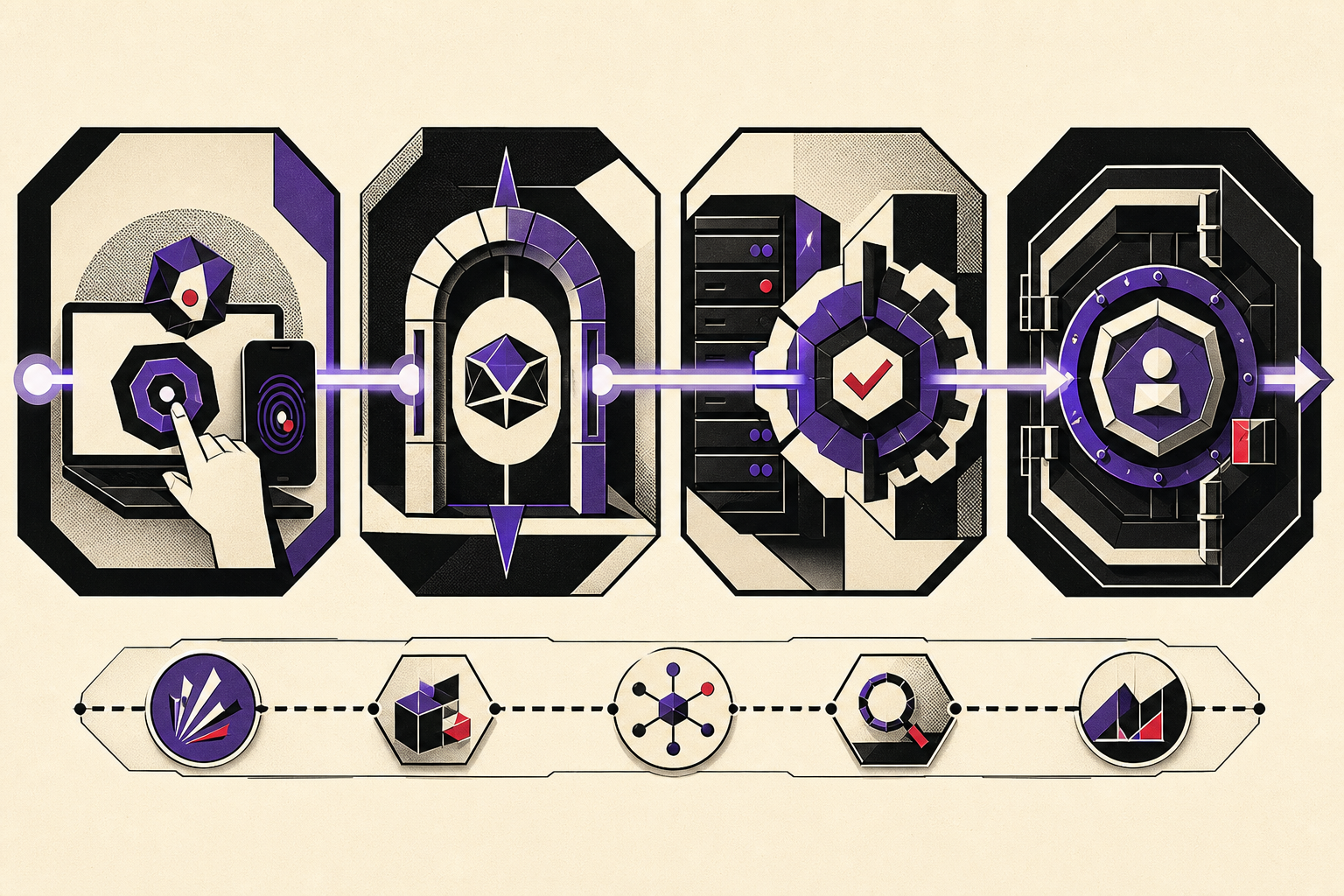
The challenge must be unique to the attempt, expire, and be discarded after success or failure. The verification service must compare the response with server-held expectations rather than trusting values returned by the browser. Only after those checks pass should it resolve the internal credential record to a player account and ask the PAM to issue the session permitted by policy.
This boundary also defines a useful supplier contract. The PAM owns the account, session, status and authorization state; the authentication service owns ceremony options and cryptographic verification; the client mediates the authenticator; and the risk layer can request additional controls or deny the action. Audit records should capture the decision and reason codes needed for investigation without logging private keys, raw biometric data or reusable challenge material.
Recovery must not become the weakest login path
Account recovery needs an equal or stronger threat model than everyday passkey sign-in because an attacker can target the fallback instead of the credential. The FIDO Alliance’s passkey migration guidance warns that recovery mechanisms should not depend on weaker factors than the credential being recovered and recommends a risk-based process for replacing credentials.
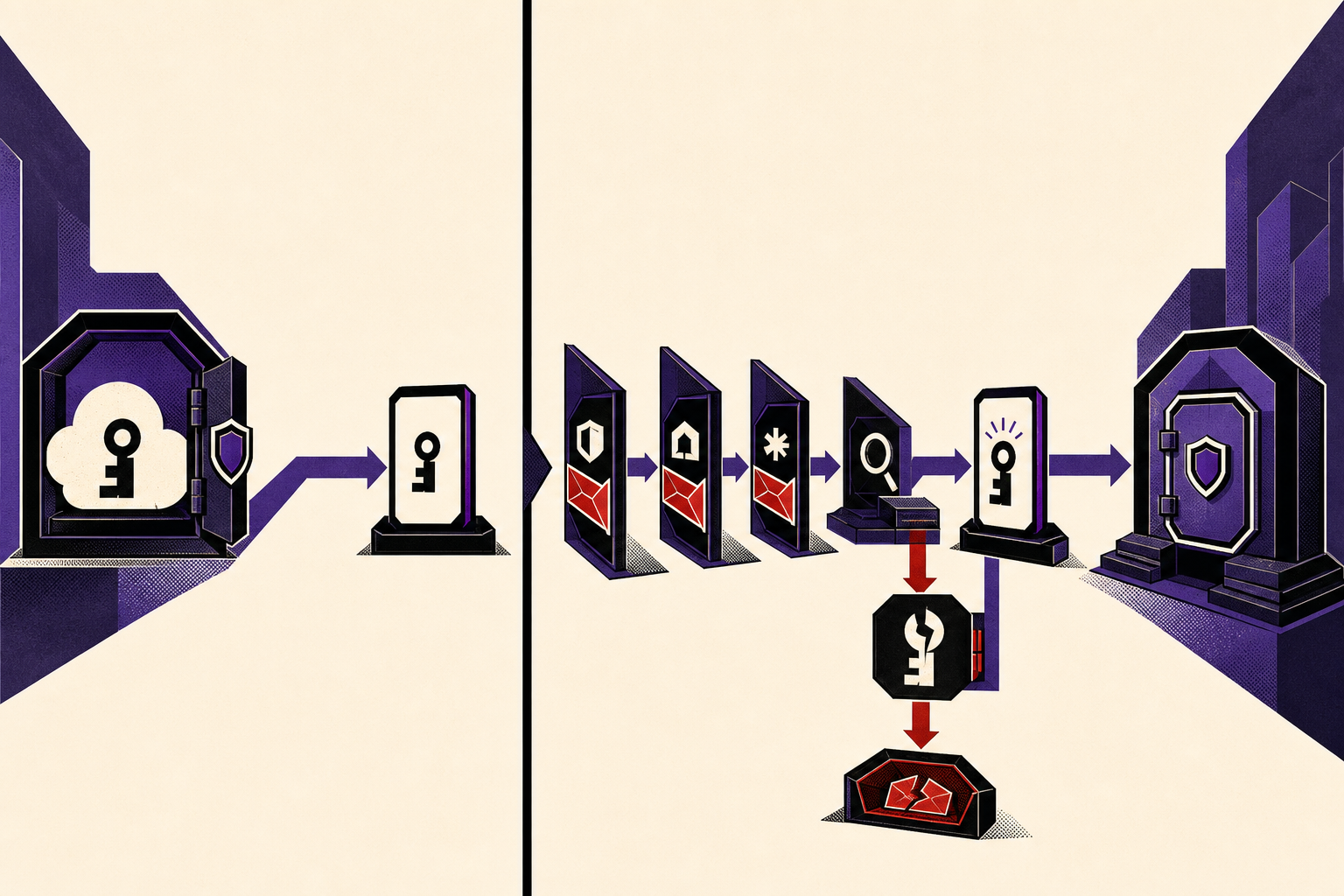
A synced passkey may reappear on a replacement device through the passkey provider’s protected sync process. That can reduce how often the operator must perform full account recovery, but it does not remove the need for one. Players can lose access to every synced device, change ecosystems, use device-bound credentials or face a compromised provider account.
The operator recovery workflow should be designed separately from passkey restoration. It needs evidence appropriate to the account risk, review rules, session handling, notification, and a decision about whether existing credentials are revoked, retained or investigated. A recovered account should not automatically inherit a high-assurance session simply because a new passkey was enrolled inside the recovery flow.
Step-up policy should follow the action risk
Passkeys can serve as primary authentication or step-up authentication, but the PAM must decide which session state each ceremony earns. NIST SP 800-63B-4 describes phishing-resistant cryptographic authentication and explicitly recognizes step-up authentication when a session needs a higher assurance level. NIST is not an iGaming regulation, but its separation of authenticator strength, session assurance and recovery is a useful design model.
An operator can map that model to its own jurisdiction and risk policy. Normal sign-in, credential management, contact-detail changes, payment-method changes, withdrawal requests and access from a newly observed context do not necessarily require the same response. Some actions may need fresh user verification, additional fraud review, KYC evidence or a hold; a passkey assertion should not silently bypass those existing decisions.
The regulatory distinction remains important. The Gambling Commission states that information which could reasonably have been requested earlier must not be introduced only as a condition of withdrawal. Authentication step-up confirms control at a sensitive moment; it is not a reason to defer identity evidence that the operator should already have collected.
A reversible rollout produces evidence before enforcement
A passkey rollout should begin as an observable account upgrade and progress only when the operator can measure enrollment, use, failure and recovery. Start with a cohort that represents the real browser, device, brand and jurisdiction mix, while keeping the current sign-in route available under a controlled fallback policy.
Measure registration offers, starts and completions; successful and failed assertions; failure reasons by client class; the share of accounts with more than one usable credential; recovery starts and outcomes; support contacts; suspicious credential changes; and fallback use. These are operating measures, not promised benefits. They reveal whether the implementation works for the operator’s players and whether the recovery design is carrying hidden risk.
The rollout also needs a server-controlled pause or rollback, credential-management screens, clear player notifications and support procedures. Before a passkey becomes mandatory for any cohort or action, the team should rehearse device loss, provider-account loss, inaccessible authenticators, an unavailable verification service, domain migration, credential revocation and a false-positive risk decision.
The procurement decision is an end-to-end control decision
A passkey supplier should be evaluated against the full account lifecycle, not only a successful demo ceremony. Ask the PAM or identity provider to show how it configures RP IDs and origins, stores multiple credentials per account, verifies every assertion, exposes backup-state signals, revokes credentials, handles domain changes, integrates risk decisions, records audit evidence and supports rollback.
Security ownership must also be explicit. The UK Gambling Commission’s remote technical security requirements include systems that store or process authentication information within the scope of security controls and audit. A managed FIDO service can perform part of the authentication flow, but outsourcing that component does not remove the operator’s responsibility to understand the boundary, evidence and failure modes.
For teams reviewing a player-account authentication change, Wizards can help define the PAM integration boundary, recovery states, risk hand-offs and validation plan within a broader platform development engagement. Talk to Wizards about the account model and jurisdictions the rollout needs to support.
Frequently asked questions
What are passkeys for casino player accounts?
Passkeys are public-key credentials that let a player authenticate with an authenticator on a device or security key. The casino platform stores a public key and verifies a signed challenge; it does not receive the private key or the biometric used locally to unlock the authenticator.
Do passkeys replace KYC?
No. A passkey can provide evidence that the current user controls a credential bound to an account, but it does not establish the legal identity, age or eligibility of that person. KYC, age verification, sanctions screening and account-authentication controls remain separate parts of the operator journey.
Are passkeys phishing resistant?
Properly configured WebAuthn credentials are phishing resistant because a credential is scoped to its relying party and the authentication response is bound to that context. The property depends on correct RP ID, origin, challenge, signature and user-verification checks, and it does not make account recovery automatically phishing resistant.
Where should passkey verification run in a casino platform?
Passkey challenges and assertions should be created and verified in a trusted authentication service or FIDO server integrated with the PAM. That service must verify the expected challenge, RP ID, origin, user-presence and user-verification flags, and signature before the PAM creates or elevates a session.
How should operators recover an account without a passkey?
Operators should treat full account recovery as a separate high-risk workflow with evidence appropriate to the account and action, rather than falling back silently to a weaker factor. The process should revoke or review exposed credentials and sessions before a replacement passkey is enrolled.
Should passkeys be required for every player action?
Not automatically. Operators should map authentication requirements to risk and jurisdiction, then decide whether a passkey is the primary sign-in method, an optional upgrade or a step-up control for selected account actions. The policy must preserve accessibility, recovery and a tested fallback during rollout.