







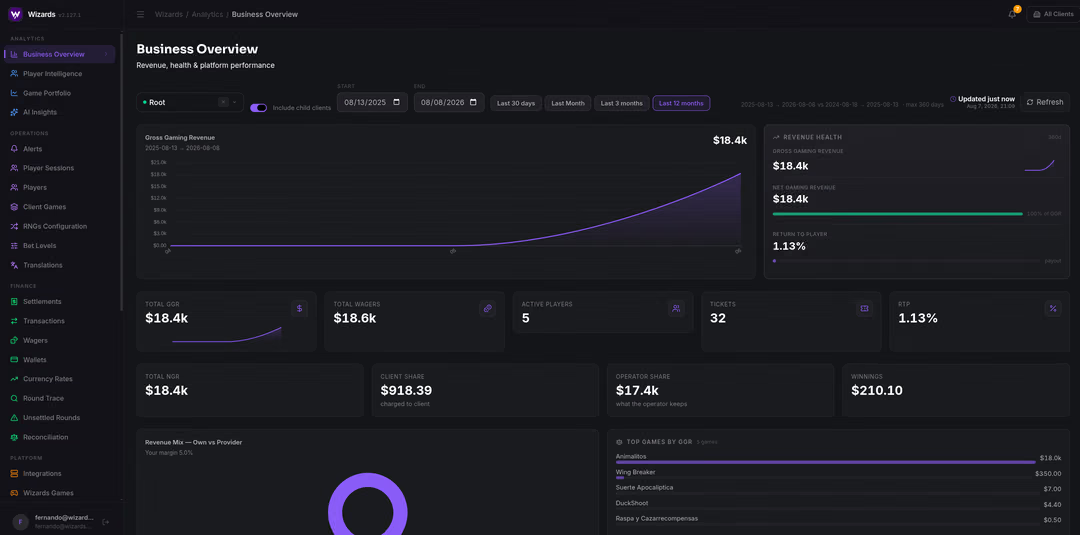
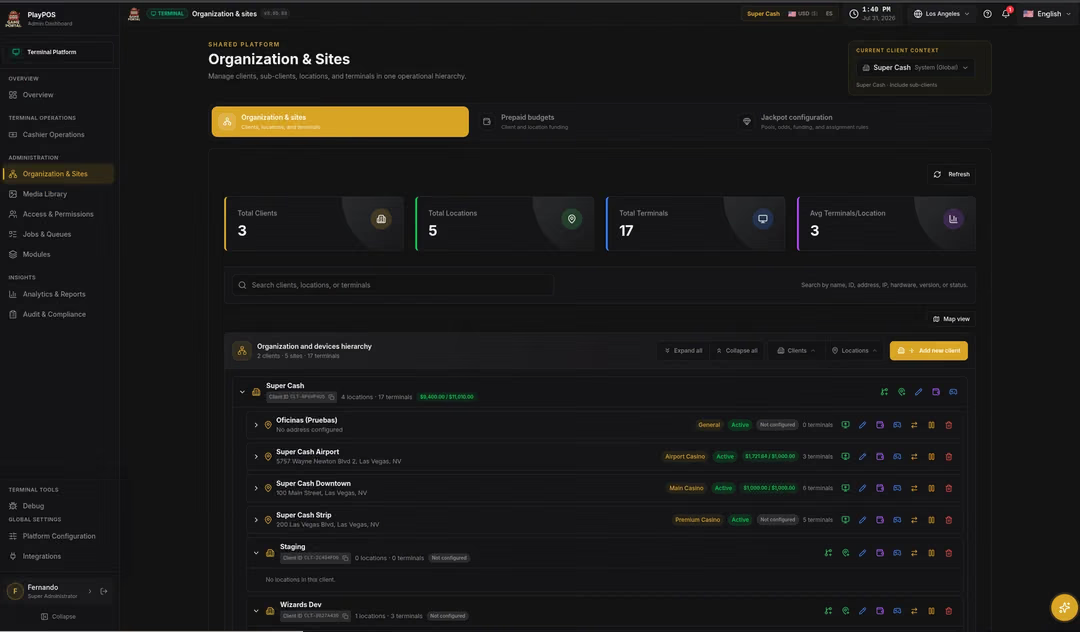













Modern iGaming operations face a dual threat: sophisticated syndicate attacks that drain margins and tightening regulatory scrutiny that puts licenses at risk. Effective online casino fraud detection is no longer a peripheral security layer but a core operational requirement that integrates real-time telemetry with historical player data. Successfully mitigating risk requires a transition from reactive manual reviews to proactive, automated systems that identify anomalies without degrading the overall house edge.
To achieve this level of oversight, operators must evaluate how their current stack communicates with third-party verification tools and payment gateways. Partnering with experienced online gambling software providers ensures that the underlying architecture supports high-velocity data processing and satisfies the rigorous technical standards demanded by tier-one jurisdictions.

How real-time scoring separates legitimate players from fraud signals
The fundamental logic of online casino fraud detection relies on the continuous ingestion of data points across every stage of the player lifecycle. From the initial IP handshake at login to the specific betting patterns during a live dealer session, the system evaluates incoming signals against a baseline of legitimate behavior. This real-time processing allows operators to distinguish between a high-value VIP player and a bot attempting to exploit software vulnerabilities.
Most modern systems utilize a hybrid approach combining static rule engines and predictive machine learning models. While rules handle known threats like restricted jurisdictions or blacklisted emails, AI models detect subtle deviations in velocity and wagering frequency that might indicate a coordinated attack. This multi-layered analysis assigns a risk score to every transaction, enabling automated approvals or triggering manual intervention only when specific thresholds are breached.
Essential system components for a robust risk architecture
Building a resilient security stack requires specific modules that go beyond simple payment verification to cover the entire user journey. Heads of Product must ensure these components work in concert to create a unified profile of the player’s hardware and digital habits.
- Device Fingerprinting: This technology tracks unique hardware signatures and network configurations to identify if a single user is operating multiple accounts.
- Identity Verification: Automated KYC modules validate government-issued documents and perform real-time checks against global sanction lists to ensure compliance.
- Behavioral Biometrics: By analyzing how a user interacts with interfaces, these systems detect bot-like patterns that are difficult for humans to replicate consistently.
These systems must be deeply integrated into the platform’s middleware to prevent latency issues during high-traffic events and seasonal peaks. When a risk architecture is properly implemented, it provides the technical evidence needed to justify account freezes or fund seizures during regulatory audits or disputes.
Combatting bonus abuse and collusive play
Bonus abuse and collusion represent a direct drain on an operator’s marketing budget and long-term profitability by skewing the expected return to player. Fraudsters often use gnoming or chip dumping techniques to systematically harvest incentives, requiring detection systems to analyze relationships between seemingly unconnected accounts. Cross-platform tracking is essential here, as sophisticated syndicates often distribute their activity across several different brands within the same network.
Identifying these patterns requires high-velocity betting analysis that flags arbitrage attempts or low-risk wagering used to clear turnover requirements. By automating the detection of these non-organic play styles, operators can protect their margins and ensure that promotional budgets are reserved for genuine players. This level of technical oversight is critical for maintaining a healthy lifetime value across the entire player database.

The balance between security friction and player retention
For Product Managers, the primary challenge is implementing robust security without causing legitimate players to abandon the platform due to excessive friction. High-friction environments often lead to lower conversion rates during the onboarding phase, which can be just as damaging to the bottom line as fraud itself. Balancing security and user experience is a delicate operational task that requires sophisticated logic to avoid false positives.
The solution lies in progressive profiling and risk-based authentication, where harder security checks are only triggered by specific high-risk flags. For example, a player making a small deposit from a verified device might experience a seamless journey, while a large withdrawal from a new IP would trigger multi-factor authentication. This approach maintains a high level of security while preserving a smooth experience for the majority of the player base.

Compliance and data integrity in regulated markets
In regulated markets, fraud detection is a mandatory component of maintaining a license to operate, not just a financial safeguard. Regulators require automated Anti-Money Laundering capabilities, including the ability to generate and file Suspicious Activity Reports without manual delays. Working with a partner that provides iGaming certification and compliance support helps operators structure their fraud architecture in a way that satisfies both technical auditors and licensing bodies from day one.
Operators must also balance these security needs with data privacy regulations such as GDPR or CCPA when storing sensitive fraud-related information. Storing player data requires encrypted environments and strict access controls to ensure that information is protected while remaining accessible for third-party lab certifications. A robust system provides the necessary reporting tools to prove to regulators that the operator is actively mitigating financial crime risks.
Selecting a future-proof fraud prevention strategy
Choosing a fraud prevention strategy requires evaluating whether a system can scale alongside business growth, particularly during peak traffic events like major sporting tournaments. An adaptive system that moves away from static rules toward real-time machine learning offers strong long-term resilience against evolving threats. Integration flexibility is also paramount, as the platform must connect seamlessly with existing infrastructure to ensure data consistency across all channels.
The shift toward automated, data-driven security allows operators to focus on player acquisition while the underlying tech stack handles the heavy lifting of risk management. This approach ensures that the casino remains competitive, compliant, and profitable in an increasingly complex global market.
If you are evaluating or upgrading your fraud prevention architecture and want a team that understands both the technical and regulatory requirements, our iGaming platform team can help you build a stack that is secure, scalable and ready for tier-one markets.
FAQs about casino fraud prevention systems
What are the most common integration challenges when deploying a new fraud stack within an existing platform?
Most operators face significant hurdles when mapping legacy data structures to modern real-time gaming security architecture. The primary challenge involves ensuring low-latency data transmission between the gaming core and the risk engine to prevent gameplay interruptions. Mismatched data formats often lead to blind spots where player signals are lost during the ingestion phase. To mitigate these risks, technical teams should prioritize solutions that offer robust API documentation and flexible middleware. Successful implementation typically requires a phased rollout, allowing for the calibration of scoring models against historical data before automating high-stakes account actions.
How can operators minimize the impact of false positives on legitimate player lifetime value?
False positives are a primary driver of churn, particularly among high-value players who trigger automated flags due to unusual wagering volume. To minimize this impact, operators should implement tiered workflows where low-confidence flags trigger subtle soft checks, such as two-factor authentication, rather than immediate account suspension. Leveraging advanced fraud detection solutions that offer granular scoring helps refine these thresholds. By adjusting sensitivity based on the player’s historical trust score and geographic risk profile, teams can preserve the user experience while maintaining a robust security posture against actual threats.
What is the most effective way to handle high volumes of chargebacks in regulated iGaming markets?
Managing chargebacks effectively requires a proactive link between payment gateways and your online casino fraud detection layer. Instead of simply reacting to disputes, operators should use transactional velocity monitoring to flag patterns associated with friendly fraud before funds are processed. Consolidating player behavior data with payment metadata allows teams to provide comprehensive evidence during the representation process. Furthermore, implementing strong customer authentication (SCA) protocols significantly reduces the liability shift for the operator, though it must be balanced against onboarding friction to ensure conversion rates remain stable across different regions.
What technical evidence is typically required during a regulatory audit of a fraud prevention system?
During a regulatory audit, compliance officers must demonstrate that their security architecture is both proactive and auditable. Regulators typically look for detailed logs showing how specific alerts led to SAR (Suspicious Activity Report) filings or account closures. This includes proof of identity verification (KYC) accuracy and the logic behind the automated rule engines used for AML monitoring. Operators should ensure their systems maintain immutable audit trails for at least five years, or as dictated by local laws. Having a modular system that generates automated compliance reports can drastically reduce the administrative burden during license renewals.
When does it make sense for an operator to invest in a third-party risk management solution instead of an in-house build?
Third-party iGaming risk management systems are typically preferred when speed-to-market and access to global threat intelligence are the primary drivers. While building an in-house engine offers maximum control, the operational cost of maintaining a dedicated data science team to update rules against evolving threats is often prohibitive for mid-scale operators. External providers offer a network effect, where fraud patterns detected at one casino are immediately used to protect all clients on the platform. This collective intelligence provides a level of security that is difficult to replicate within a closed, single-brand environment.
How do data privacy regulations like GDPR affect the storage of fraud-related player telemetry?
Maintaining a balance between effective online casino fraud detection and strict data privacy compliance is a complex operational task. Operators must ensure that any PII (Personally Identifiable Information) used for risk scoring is encrypted and accessed only on a need-to-know basis. While anti-money laundering laws often mandate long-term data retention, privacy regulations require that this data is not repurposed for marketing or unauthorized profiling. Utilizing a risk architecture that separates sensitive identity data from behavioral metadata allows operators to fulfill security requirements while minimizing the legal exposure associated with large-scale data breaches.