





















Player deposits set in motion mandatory anti-money laundering (AML) and know-your-customer (KYC) checks. Effective casino KYC is not just simple identity confirmation; it is a layered process. Mismanaging these initial verifications can lead to substantial regulatory penalties, fraud losses, and operational disruption for iGaming operators.
Many new operators focus only on regulatory checkboxes and underestimate how hard it is to weave robust KYC into the player journey. Getting it right demands a precise strategy and often dedicated gambling certification services to build a compliant, efficient system.

Why is verifying player identity before deposits essential?
Letting players deposit without adequate identity verification introduces serious risks: money laundering, fraud, and underage gambling. Regulators such as the Malta Gaming Authority (MGA) and the UK Gambling Commission (UKGC) mandate strict Customer Due Diligence (CDD). Failing it can mean hefty fines and license revocation.
The core purpose is to protect the integrity of both the financial system and the gambling industry. Without robust verification, operators could inadvertently facilitate illicit activity, eroding trust and inviting scrutiny from financial intelligence units.
What actual checks happen when a player first deposits?
The first deposit triggers a series of verifications to meet regulatory obligations and mitigate risk. The process usually starts with basic identity data and moves through several layers:
- Initial Identity Data Collection — full name, date of birth, residential address, and sometimes nationality. This is the baseline for every later check.
- Real-time Database Checks — data is cross-referenced against third-party databases such as electoral rolls, credit bureaus, and identity services to confirm details and assess risk.
- Age Verification — confirms the player meets the legal gambling age, often concurrently with the database checks.
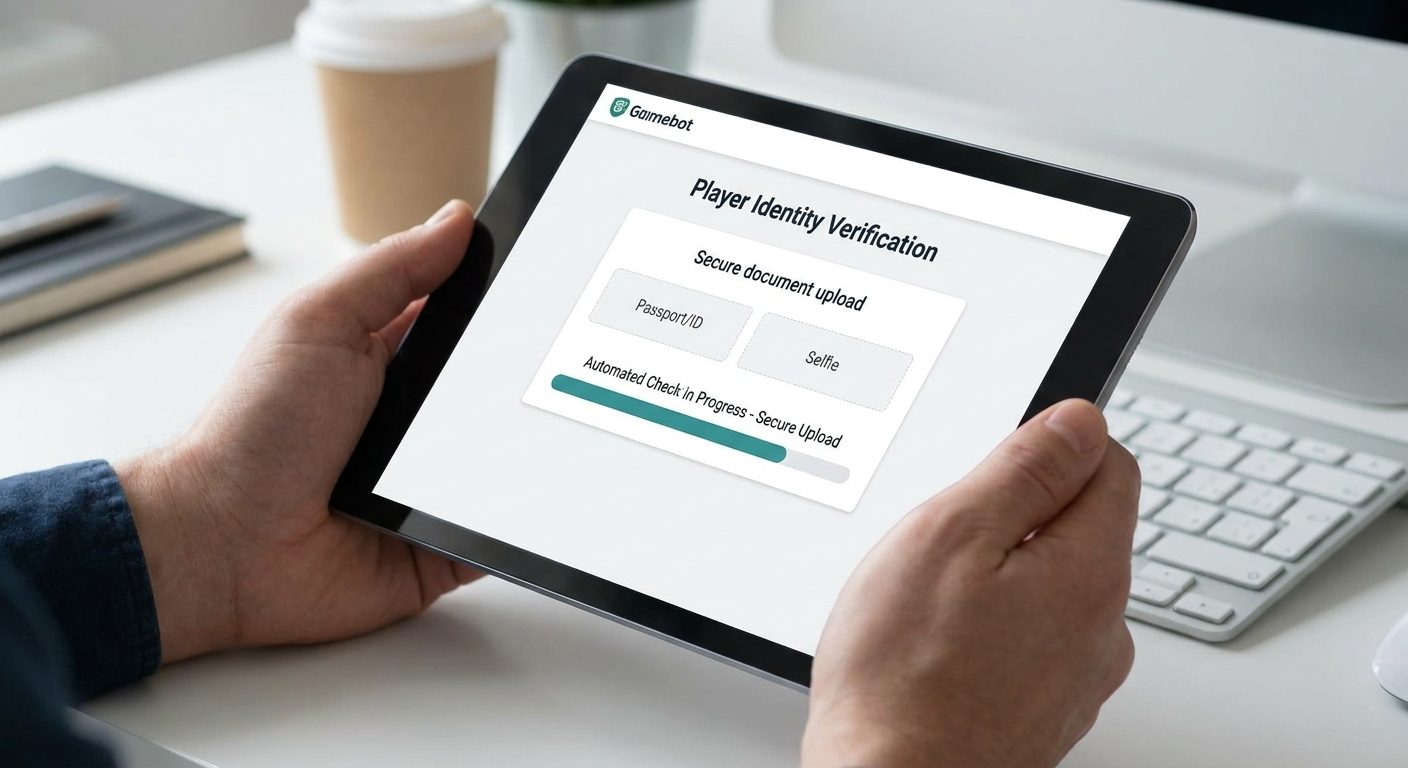
- Document Upload Requests — if automated checks are inconclusive or a deposit threshold is met, you request a government-issued ID and proof of address.
- Payment Method Verification — confirms the payment method belongs to the registered player (name on card, account ownership for transfers).
- Sanctions and PEP Screening — screens against politically exposed persons and sanctions lists to flag high-risk individuals and meet anti-terrorism financing rules.
This phase establishes a verified identity and an initial risk score, laying the groundwork for ongoing monitoring and enhanced due diligence.
How do different deposit methods change KYC requirements?
The deposit method shapes how deep verification has to go. Operators adjust their due diligence based on the risk and verifiability of each payment rail:
| Deposit method | Typical KYC impact | Fraud prevention considerations |
|---|---|---|
| Credit/Debit Cards | Standard identity, age, and address verification. CVV checks and 3D Secure are common. | Chargebacks, card theft, unauthorized use. Enhanced checks for large deposits or multiple cards. |
| Bank Transfers | Often lower risk due to bank-level verification. Identity and address must match the account holder. | Account takeovers, illicit-source funds. Source-of-funds checks for significant amounts. |
| E-Wallets (PayPal, Skrill, Neteller) | Identity checks depend on the e-wallet provider’s own KYC. Operators may add verification if thresholds are met. | Account linking and multiple wallets used to obscure origin. Monitor for rapid transfers. |
| Cryptocurrencies | Higher inherent anonymity, so more robust operator-level KYC. Source of funds and wallet ownership become critical. | Money laundering, unregulated transfers, tumbler use. Needs specialized blockchain analytics. |
| Prepaid Cards/Vouchers | High risk due to anonymity. Many regulated jurisdictions restrict these without full identity verification. | High fraud potential for small, frequent illicit deposits. Strict limits or prohibition. |
The rule of thumb: apply more stringent checks where the transaction’s risk or anonymity is higher. This layered approach keeps regulators satisfied and financial crime out.

When should operators use automated or manual casino KYC?
An effective casino KYC strategy usually blends both: the speed of automated checks with the precision of manual review. The right mix depends on risk profiles, regulatory requirements, and efficiency goals.
Automated KYC uses technology for rapid verification, offering speed, scale, and cost-efficiency. It integrates with third-party data providers for real-time database checks, facial recognition, and document authentication. Operators rely on it for onboarding, low-risk customers, and basic verification, keeping the journey smooth for most players.
Manual KYC involves human review of documents, data, and behavior. It becomes necessary for complex cases, higher-risk profiles, or when automated systems flag discrepancies or cannot verify an identity conclusively.
Manual review allows nuanced judgment and investigation of suspicious patterns. Escalation typically occurs for large deposits, unusual transaction patterns, or specific risk indicators. A good system clears most cases automatically while a dedicated team handles exceptions, with support from iGaming compliance experts.
How to simplify casino KYC for players without compromising compliance?
Balancing strict compliance with a smooth experience is a constant challenge. Simplifying verification does not mean bypassing rules; it means cutting friction and abandonment. Useful tactics:
- Progressive Profiling — collect minimal data at registration and request more only as players hit deposit or withdrawal thresholds.
- Clear Communication — tell players upfront which documents they will need, with examples to avoid repeated submissions.
- Intuitive Upload Interfaces — support multiple file types and give real-time feedback on document quality.
- Automated Pre-checks — run initial checks in the background and, on failure, tell the player exactly what to do next instead of waiting for manual review.
- Dedicated Support — offer accessible, knowledgeable help to reduce frustration during verification.
- Pre-emptive Verification — some iGaming platform providers let players complete KYC before their first deposit or withdrawal, reducing delays later.
A well-designed verification flow lowers abandonment and improves retention while keeping your compliance framework intact.
Refining your casino KYC or rolling out new verification technology is where precision pays off. Our team at Wizards helps operators worldwide structure compliant, low-friction player verification, balancing regulatory rigor with a smooth deposit experience so good players get through fast and bad actors do not.
Frequently asked questions about casino KYC for operators
How long does initial casino KYC verification typically take for a player?
For many players, initial casino KYC is near-instantaneous, completed through automated real-time database checks within seconds. If manual document review is triggered due to inconclusive automated checks or risk profiles, the process can extend to a few hours or, in complex cases, up to 24-48 hours. This variability depends on document clarity and operator staffing.
What happens if a player fails or refuses to complete casino KYC?
If a player fails or refuses initial casino KYC, the operator typically restricts deposits and gaming activity. For instance, in MGA jurisdictions, funds often remain frozen until verification. This protects the operator from compliance breaches and fraud. Persistent failure usually leads to account suspension or closure, preventing any future transactions.
Are different levels of casino KYC required based on deposit thresholds?
Yes, casino KYC commonly employs progressive profiling, meaning enhanced verification often triggers at specific deposit or withdrawal thresholds. For instance, cumulative deposits exceeding €2,000 under EU AML directives generally mandate further ID and source of funds checks. These thresholds vary by jurisdiction and the operator’s internal risk assessment.
What is the difference between KYC and AML checks for iGaming operators?
KYC (Know Your Customer) specifically identifies and verifies a player’s identity at onboarding. AML (Anti-Money Laundering) is a broader framework that includes KYC, but also encompasses ongoing transaction monitoring, suspicious activity reporting, and internal controls to prevent illegal financial activities. KYC is foundational; AML is the complete program.
How frequently should iGaming operators re-verify player identities after initial casino KYC?
Operators typically re-verify identities when significant changes occur in a player’s profile or behavior, or when specific regulatory mandates (for example, in the UKGC) require periodic reviews. This could include large deposits, changes in payment methods, or suspicious activity. It is often event-driven rather than a fixed calendar schedule.
Can a player initiate deposits with a payment method not registered under their name?
Generally, no. Robust casino KYC requires payment methods to be registered in the player’s verified name. This rule, common in jurisdictions like Malta and the UK, prevents fraud, money laundering, and underage gambling. Operators typically block such deposits and ask the player to use a matching payment method or complete further verification.