



















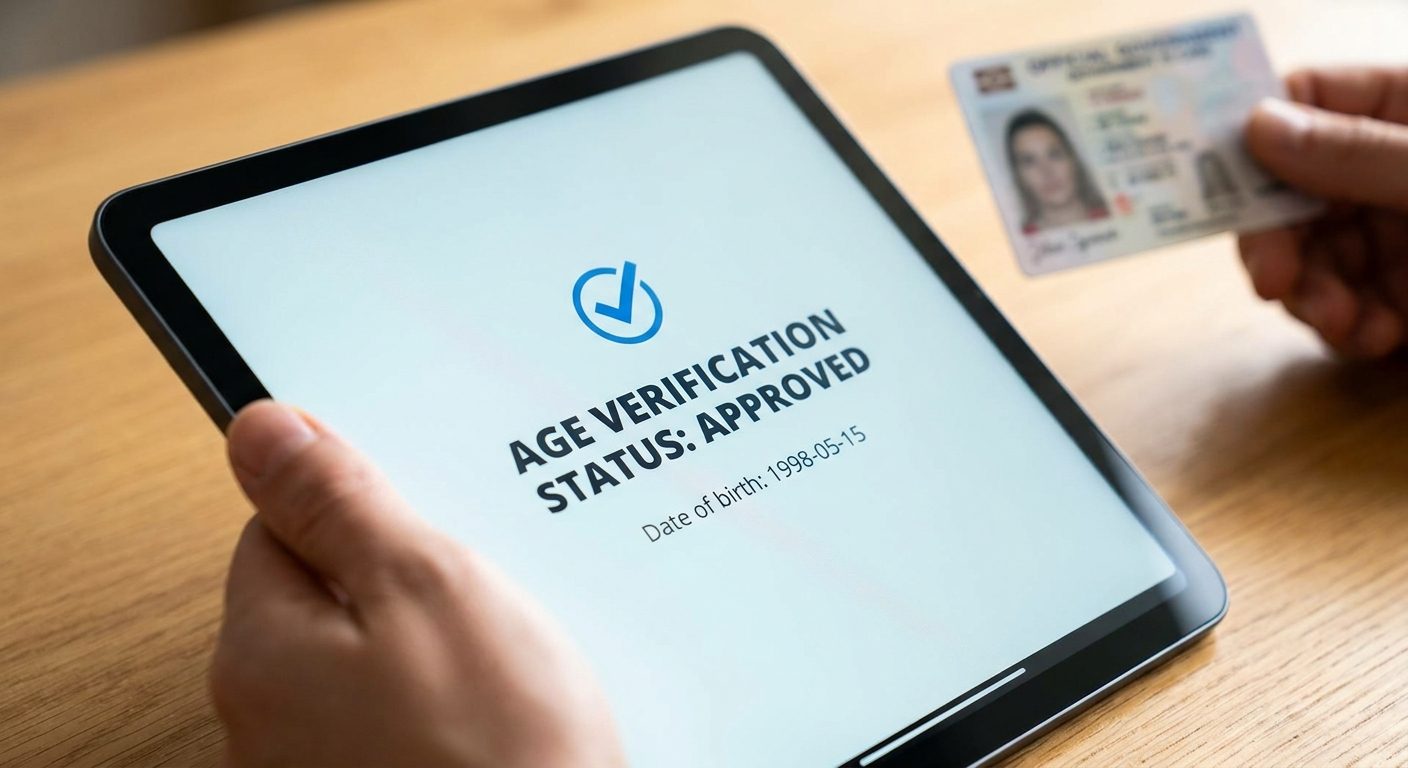

Many iGaming operators underestimate the dynamic nature of age verification regulations, which are often updated in response to technological advancements and evolving social expectations. Effective age verification online gambling requires a robust framework that evolves with these changes, protecting both players and your operation.
We frequently see operators struggle to fold age verification into onboarding without adding friction for legitimate adult players. Robust Gambling certification services address this exact overlap, pairing verification with the wider compliance standards regulators expect.

Why age verification in online gambling is non-negotiable?
Operators must implement rigorous age verification protocols not merely as a best practice, but as a legal and ethical mandate. The UK Gambling Commission (UKGC), for instance, requires age and identity verification before a player can deposit or participate in any online gambling activity, including free-to-play versions. Self-declaration of age is not sufficient for full compliance.
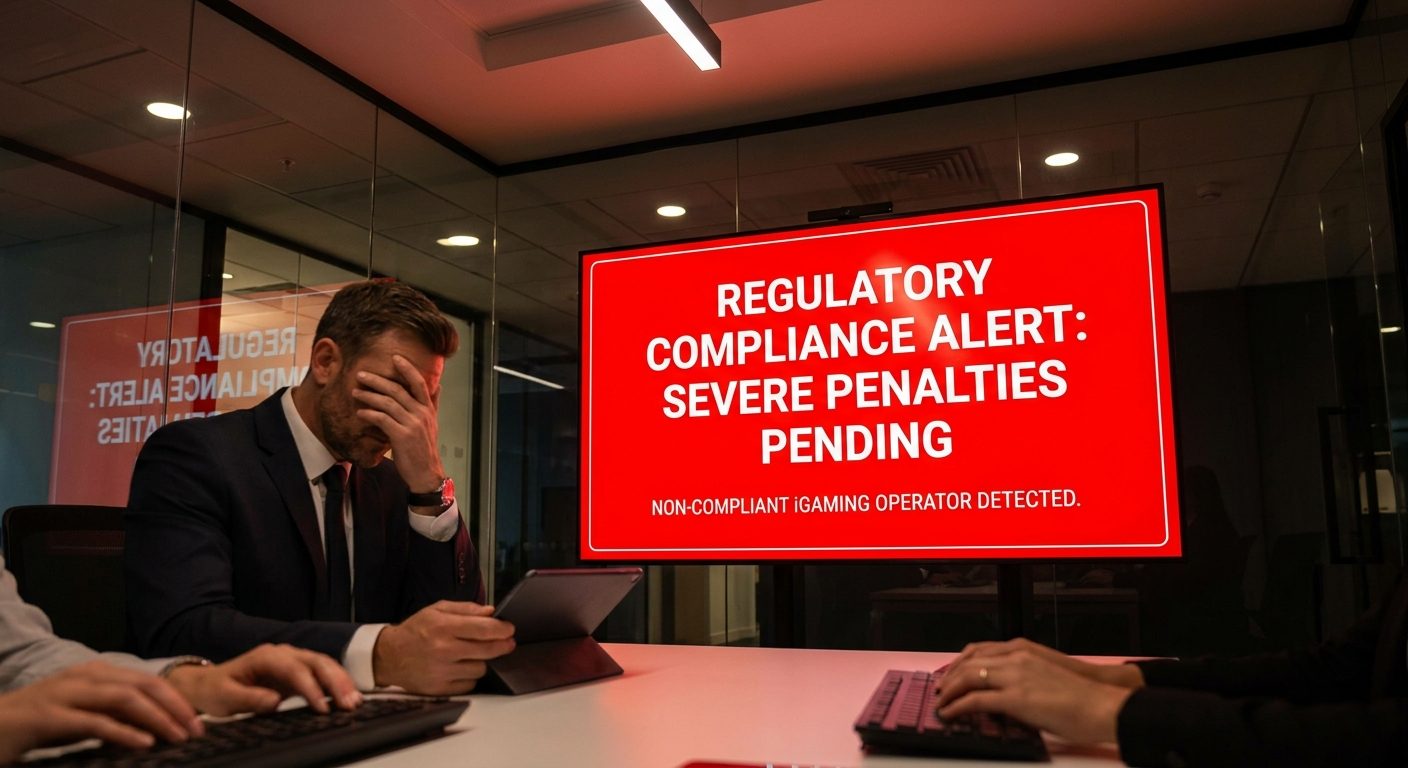
Failure to meet these strict requirements exposes your operation to significant liabilities. Regulatory bodies worldwide impose substantial penalties for non-compliance, including:
- Hefty fines that can reach millions of euros or dollars, severely impacting your financial stability.
- License suspension or outright revocation, immediately halting your operations and eliminating your market access.
- Severe reputational damage, eroding player trust and making it challenging to acquire new users or partners.
- Increased scrutiny from regulators, potentially leading to more frequent audits and compliance checks.
Beyond legal mandates, there is a clear ethical responsibility to protect vulnerable individuals. Allowing underage access harms individuals and undermines the integrity of the entire iGaming sector. Robust age verification online gambling systems are therefore a foundational element of responsible gaming, alongside broader responsible gambling tools that protect players throughout their journey.
How different methods verify age for iGaming operators
Implementing effective age verification typically involves a multi-layered approach, combining various technologies and data sources to confirm a player’s eligibility. Each method offers distinct advantages and limitations in terms of speed, accuracy, and user friction. Below, you will find a comparison of common age verification methods.
| Method | Description | Strengths | Weaknesses |
|---|---|---|---|
| Self-declaration | Player states their age or birth date upon registration. | Low friction, fast initial step. | Easily circumvented, always requires further verification. |
| Document Verification | Player uploads government-issued ID (passport, driver’s license). Automated systems extract and verify data. | High accuracy, legally robust in most jurisdictions. | Can introduce friction, requires clear images, potential for document fraud. |
| Biometric Matching & Liveness Detection | Player takes a selfie, which is compared to their ID photo (biometric match) and verified for real-time presence (liveness). | Prevents identity theft and spoofing, high fraud protection. | Requires specific device capabilities, can be a point of friction if not optimized. |
| Database Checks | Cross-referencing player data (name, address, DOB) against public or commercial databases. | Fast, low friction for many users, can be primary for low-risk scenarios. | Limited coverage in some regions, false negatives for thin files, potential privacy concerns. |
| Age Estimation (AI-based) | Utilizes AI to estimate age from facial features or voice, often as a preliminary screening tool. | Non-intrusive, can deter casual underage attempts. | Lower accuracy for definitive verification, not accepted as primary proof. |
A multi-layered strategy, often beginning with fast database checks, including cross-referencing against self-exclusion registers, and escalating to document and biometric verification for unresolved cases, is generally recommended. This approach maximizes coverage and compliance for robust age verification online gambling.

What jurisdictional differences affect age verification rules?
The global nature of iGaming means that age verification rules are far from uniform; they vary significantly by jurisdiction, reflecting local cultural, legal, and social priorities. You must tailor your processes to each specific market you operate within.
- United Kingdom: The UKGC mandates that age and identity verification must be completed before any gambling activity, including free-to-play demos, and certainly before deposits. This is one of the strictest regimes globally, requiring robust document and database checks.
- United States: Requirements are state-specific. Most states permitting online casino gambling and sports betting set the minimum age at 21. However, some states might allow 18-year-olds for lottery products or fantasy sports. Operators must navigate a patchwork of regulations.
- European Union: While there isn’t a single EU-wide gambling license, the bloc’s anti-money laundering framework requires KYC (Know Your Customer) checks across the gambling sector, which overlap with age verification obligations. Member states like Malta, Sweden, and Germany each set their own minimum age (usually 18, with some products or markets setting it higher) and verification protocols, often requiring identity checks before account activation or first deposit.
- Curacao and Other Offshore Jurisdictions: These licenses typically require operators to enforce local minimum gambling ages of the player’s country of residence, or a universal minimum (e.g., 18 or 21) if no local law is specified. The enforcement and required methods can be less prescriptive but still demand diligence.
Understanding these nuances is important for any operator. A solution compliant in Malta might not satisfy UKGC or New Jersey Division of Gaming Enforcement (NJDGE) standards, and the specific checks required often trace back to how you approached getting a gambling license in that market.
Integrating age verification online gambling for a seamless player journey
Integrating age verification effectively requires balancing stringent compliance with a smooth user experience. The goal is to make the process as invisible as possible for legitimate players while creating a strong barrier for underage individuals.
Start by identifying the optimal points in your player journey for verification. Initial checks can run during registration through database queries, aligned with the broader casino KYC checks operators already perform, then escalate to document and biometric verification before a player’s first deposit.
Third-party age verification providers that specialize in iGaming can process documents, run biometric matching, and complete liveness detection within seconds, depending on data quality. This reduces manual review queues and player abandonment.
Design your interface mobile-first, with intuitive document uploads and selfie capture, and route unresolved cases to trained compliance staff for manual review. Our gambling platforms and software build these fallback flows in from the start, keeping conversion high while maintaining compliance for age verification online gambling.
What happens when age verification systems fail or are circumvented?
Even with robust systems in place, determined individuals can circumvent age verification using falsified documents that bypass automated checks. If a player who registered this way is later identified as underage after making deposits and wagers, your company faces immediate regulatory action, often including investigations and fines tied to the number of affected accounts.
The financial impact extends beyond fines: operators can be required to forfeit profits from underage accounts and refund deposits even if already wagered. Regulators may also review your operating license, and repeated or serious failures can lead to suspension or revocation.
Beyond regulatory penalties, a breach damages trust among players, partners, and investors, making it harder to attract new customers or licenses. Maintaining iGaming certification and running continuous audits with detailed verification trails helps operators catch vulnerabilities before they escalate, reinforcing why age verification online gambling deserves ongoing attention.
Effectively managing age verification in online gambling demands a proactive, adaptable approach that blends advanced technologies with a clear read on regulatory change. Staying current protects your operation from penalties and preserves brand integrity. Our Wizards team builds age verification solutions and helps align compliance measures across the jurisdictions where you run games, from onboarding checks through ongoing monitoring.
Frequently asked questions about age verification in online gambling
What is the typical timeframe for a full age verification process?
Automated checks are rapid, often completing within seconds. However, cases requiring manual review or additional documentation can extend to 24-72 hours, especially during peak times or for less common document types. Efficient fallback processes minimize player abandonment and strengthen compliance.
How do age verification requirements change if I offer free-to-play games?
In the UK, age and identity verification is mandatory even for free-to-play games before any participation. Other jurisdictions, like some US states, typically focus on real-money gambling. For free-to-play, operators often use less intrusive initial checks, escalating if a player transitions to real money.
Can players use virtual private networks (VPNs) to bypass age verification or geo-restrictions?
Players can attempt to use VPNs to mask their location or identity. Robust age verification systems utilize IP analysis, geolocation tools, and database checks to detect and flag VPN usage. This helps prevent access from restricted regions, especially where the minimum gambling age varies.
When should an iGaming operator consider using multiple age verification providers?
Using multiple age verification providers offers redundancy and can enhance coverage, especially across diverse international markets where one provider might have limited data. This strategy can optimize cost-effectiveness and reduce dependency on a single vendor, improving overall resilience against verification failures.
Are there different age verification standards for esports betting versus traditional casino games?
Generally, age verification standards for esports betting align with those for traditional casino games or sports betting within a given jurisdiction, often 18 or 21. Regulatory bodies like the Malta Gaming Authority (MGA) do not typically differentiate the minimum age based on the specific game type.
What steps should operators take if an underage player successfully registers and deposits funds?
An operator must immediately suspend the account, cease all activity, and promptly notify the relevant regulatory authority. They must then initiate a full investigation, forfeit any profits, and refund all deposits made by the underage player, even if the funds have been gambled away.