
















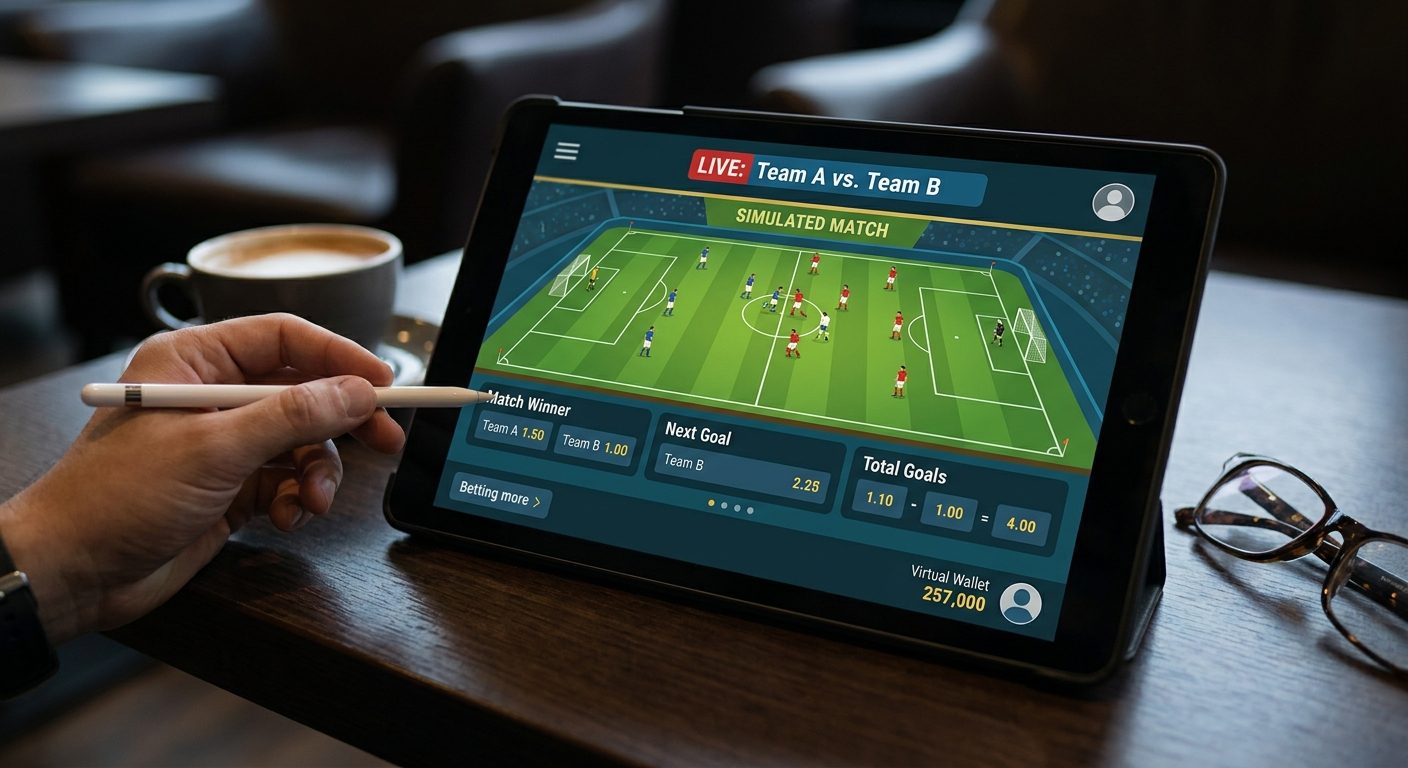

Virtual sports betting offers a unique blend of immediate gratification and continuous betting opportunities, addressing a different player segment than traditional sportsbooks. This category provides uninterrupted engagement, potentially boosting revenue during off-peak seasons or between live events through a constant stream of simulated sports action.
Many operators underestimate the distinct technical and regulatory requirements of virtual sports, treating it as a simple extension of real sports betting. Adding this vertical well requires a specialized approach to Gambling Platforms & Software and a clear grasp of its operational framework.

What makes virtual sports betting a distinct product for your sportsbook?
Unlike traditional sports, simulated sports wagering involves bets on computer-simulated events whose outcomes are determined by algorithms and Random Number Generators (RNGs). These events run 24/7, independent of real-world schedules, player injuries, or weather, offering a fundamentally different betting experience.
That autonomy means that while virtual sports mimic football, horse racing, or basketball, their core mechanics align more closely with online casino games. The “casino engine in sportsbook clothing” analogy captures it: fairness and outcome randomness are governed by certified RNGs, a mathematical process rather than a physical one.
The constant availability and rapid conclusion of events suit bettors who want immediate results and continuous action, a segment underserved by sportsbooks tied to live event calendars. This positioning lets operators diversify and capture new player preferences.
How do operators integrate virtual sports betting into an existing platform?
Operators have three main pathways to add this vertical. Each balances control, speed to market, and cost differently. (Teams launching a book from scratch should first review how to start a sportsbook.)
| Integration method | Control and customization | Speed to market | Best suited for |
|---|---|---|---|
| API integration | Highest, you own the front-end and user experience | Slowest (often 3-6 months or more) | Operators with in-house dev wanting deep control |
| White-label | Medium, branded ready-made product | Fast (often 4-8 weeks) | Operators wanting a quick launch with less development |
| Turnkey platform | Lowest, bundled content and operations | Fastest | New entrants or a separate virtual vertical with minimal overhead |
API integration synchronizes virtual sports odds, markets, and results in real time, but needs a robust sports betting development team. White-label and turnkey shift that technical burden to the provider in exchange for less control over individual components.

What specific regulations apply to virtual sports betting products?
A critical part of offering virtual sports is its regulatory landscape. Operators often assume virtual sports fall under the same umbrella as traditional sports betting regulation, a misconception that can lead to serious compliance issues.
Because outcomes are RNG-generated, virtual sports are typically regulated more like online casino games than conventional sports betting. They are subject to stringent technical standards for fairness, randomness, and security, rather than oversight of betting markets on real-world events.
Standards such as GLI-19 for Interactive Gaming Systems and GLI-33 for Event Wagering Systems often apply. Regulators in many jurisdictions demand independent lab certification for the RNGs and the game logic behind each virtual sport, confirming outcomes are genuinely random and the game operates as advertised.
Operators must pursue jurisdiction-specific licensing and technical audits. What a traditional sports betting license permits may not cover the casino-like elements of virtual sports, so additional iGaming certification services are often needed to operate legally in each market.

How can virtual sports boost your sportsbook’s revenue and engagement?
Virtual sports offer commercial advantages that move beyond the limits of live sports schedules:
- 24/7 Availability — they fill the gaps when live sports are off-season or between major events, keeping your sportsbook active and capturing spend that might go elsewhere.
- Predictable Fixed Margins — unlike live betting margins shaped by sharp bettors, virtual sports often carry more predictable, fixed margins, supporting clearer forecasting and risk management.
- Enhanced Player Retention — instant gratification and quick resolution appeal to modern bettors, fostering a rapid gameplay loop and repeat visits.
- Cross-Sell Opportunities — virtual sports bridge traditional bettors into a casino-like experience, creating organic paths to slots or table games and lifting lifetime value.
By serving players who want instant, engaging content, virtual sports become a tool for continuous activity and new revenue streams across your ecosystem.
What operational challenges should you prepare for with virtual sports offerings?
The benefits come with operational demands that extend beyond initial setup.
First is continuous lab certification, particularly for RNGs and game logic, in every jurisdiction where you operate. Standards like GLI-33 are not a one-time approval; regulators often require re-audits when significant software updates or new titles ship. Neglecting this can lead to revoked licenses or fines.
The high-frequency nature of virtual sports also demands robust responsible gaming tools. Rapid play and constant availability can exacerbate problematic behavior, so deposit limits, session timers, and self-exclusion, plus clear display of outcomes and balances, are essential.
Ongoing content management and fraud prevention matter too. Fresh titles, updated graphics, and engaging commentary support retention, while vigilance against fraudulent betting patterns, even in simulated environments, remains a constant task for any iGaming consulting team.
If you are weighing an expansion into virtual sports, it pays to map the integration path and compliance roadmap with specialists who have done it before. Our team at Wizards can help you navigate the technical standards and jurisdictional requirements so your virtual sports launch is robust, compliant, and genuinely engaging for players.
Frequently asked questions about virtual sports betting for operators
How does the RNG in virtual sports guarantee fair outcomes?
The integrity of outcomes in virtual sports relies on Random Number Generators (RNGs) that produce unpredictable results. These RNGs are typically audited and certified by independent testing labs, such as eCOGRA or iTech Labs, ensuring the game logic and mathematical probabilities operate as designed without bias or manipulation.
What is a typical timeframe for integrating virtual sports into an existing platform?
Integration time varies significantly by method. White-label solutions can offer rapid deployment, often taking 4-8 weeks to launch. Deep API integration, which allows extensive customization, usually requires 3-6 months or more, depending on your existing infrastructure and in-house development capacity.
Are virtual sports betting licenses distinct from traditional sportsbook licenses?
Often, yes. Since virtual sports outcomes are RNG-driven, they are usually regulated more like casino games. Jurisdictions such as Malta (MGA) or the UK (UKGC) frequently require specific amendments or separate approvals for RNG-based content, even if you hold a general sports betting license for real-world events.
How frequently do virtual sports events usually occur on a platform?
Virtual sports events are designed for continuous engagement, running far more frequently than live sports. Platforms commonly feature events starting every 2-5 minutes across various simulated sports, ensuring constant betting opportunities and immediate results for players around the clock.
What are common challenges in maintaining virtual sports content quality over time?
Maintaining engagement requires continuous effort. Operators must plan for regular content updates, including new virtual teams, updated graphics, and refreshed commentary. Keeping offerings fresh might mean updating game assets every 6-12 months to retain player interest and ensure a modern user experience.
What responsible gaming features are particularly important for virtual sports?
Given the rapid pace of virtual sports, robust responsible gaming tools are critical. Features like loss limits and cool-off periods, in addition to standard deposit limits and session timers, are especially important. These empower players to manage their engagement effectively and mitigate potential problematic behaviors.