




















Search visibility is won on the first page or not at all — research cited in this article says Google users do not think about scrolling past it, though no study is named. So the practical question for most businesses is what to do when a site does not rank for the products it sells. One answer is a set of WordPress plugins that make SEO routine; the other is an online visibility management platform, and this article is about the one we use, SEMrush.
What SEMrush is
SEMrush is an online visibility management platform: a suite of tools for managing a company’s internet presence. It covers keyword research, competitor analysis and campaign optimisation among other tasks, and it is arguably the most relevant SEO tool in a field that changes constantly, because it adds features to keep up with where search is going rather than only reporting where it has been.
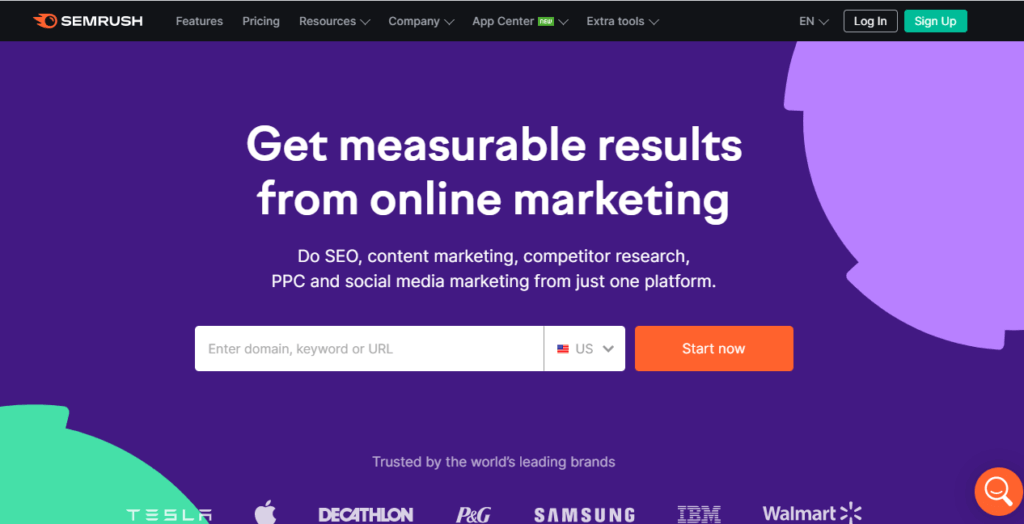
SEMrush covers every part of online presence management, and that breadth is the point. SEO, PPC, social media marketing and branding are all parts of a working digital strategy, and keeping track of them separately is where most strategies come apart — which is also why your digital presence and your Google Business listing belong in the same conversation as your rankings.
Tracking organic rankings and finding your real competitors
The first job is knowing where you stand, which means monitoring your site’s visibility and your top keywords against the competition. If you do not know who your competitors are, SEMrush identifies companies that appear to be in the same race — which is often a different list from the one a business would write down. Keyword performance can then be tracked over a period so you can see whether it improved or fell rather than guessing.
Building PPC campaigns from competitor data
Paid search gives you a headline and a description to persuade with, so the fastest route to a good ad is reading the ads that already work. SEMrush lets you go through a competitor’s ads for that purpose, and it does the keyword research alongside — search volumes, trends, and the comparisons between them — in a few steps.
Content marketing: which keywords work, and which need a push
SEMrush shows you which keywords are already bringing traffic and which are underperforming, which is the difference between writing more and writing the right thing. When there is no obvious next piece, it gives feedback on how to improve existing pages and on what sits behind them — strategy, backlinks, and where your brand is being mentioned. You can also see which sites link back to yours.
Reporting without the spreadsheet
Exported reports are the reason a tool like this survives contact with a team. Rather than copying figures out of Google Analytics into a spreadsheet by hand, SEMrush exports collected results to PDF or Excel, and a report can be emailed or shared as a link so everyone is looking at the same thing.
Measuring social media effectiveness
Social media is part of online presence, so it belongs in the same measurement. SEMrush detects where your brand is being mentioned and surfaces influencer marketing opportunities, and it schedules posts across platforms, which means what customers see and what they say about it are reported in one place rather than two.

- SEO covers keyword research, rank tracking and local search work
- Content covers planning, creation, distribution, optimisation and analysis
- Market Research studies the market, competitors and their promotion
- Advertising covers paid-search research and website monetisation
- SMM and SERM connect social publishing, advertising and reputation management
The five areas SEMrush is divided into
SEMrush is customisable rather than fixed: you save a website as a project and choose which tools apply to it. Those tools sit in five areas — SEO, Content, Market Research, Advertising, and SMM and SERM — and the breadth of them is why it is treated as the default online visibility platform.
SEO
The SEO area holds six features, each made of several tools. Keyword Research is the first step, because the right keywords differ from site to site and only research tells you which are yours. Rank Tracking then monitors those keywords daily for changes in search volume and optimisation opportunities, and the Local SEO tools cover the nearby-customer case: daily performance for the business listing, social relations and search rankings.
Content
The Content area covers content marketing, creation and distribution, optimisation, and content marketing analytics. It finds the popular topics, headlines and questions people are asking online, which is what an editorial plan should be built from. The Marketing Calendar is where the plan lives and where a team collaborates on it, and the SEO Writing Assistant gives actionable suggestions on quality and search performance while a draft is being written.
Market Research
Market Research holds market and competitor analysis tools, paid advertising tools and competitor PR monitoring. The market analysis tools tell you where you stand; the competitor analysis tools are there to be learned from rather than only measured against. The Keyword Magic Tool sits here too, and it is where the related terms, phrases and question keywords for a PPC campaign come from.
Advertising
The Advertising area gives you PPC keyword research and website monetisation tools, which makes it the part aimed at bloggers, affiliate marketers and AdSense publishers as much as at advertisers. The Display Advertising report analyses successful competitors from several angles at once — their audience’s top interests, the devices they arrive on, and more.
SMM and SERM
Social media management is where a small team loses most of its time, so SEMrush ships a suite for it: Social Media Poster and Social Media Ads among them. Publishing, monitoring and advertising are automated far enough that sharing to several channels — Facebook or Twitter among them — is one click, and real-time keyword tracking is what tells you which content belongs on which platform.
What it costs, and what the free plan gives you
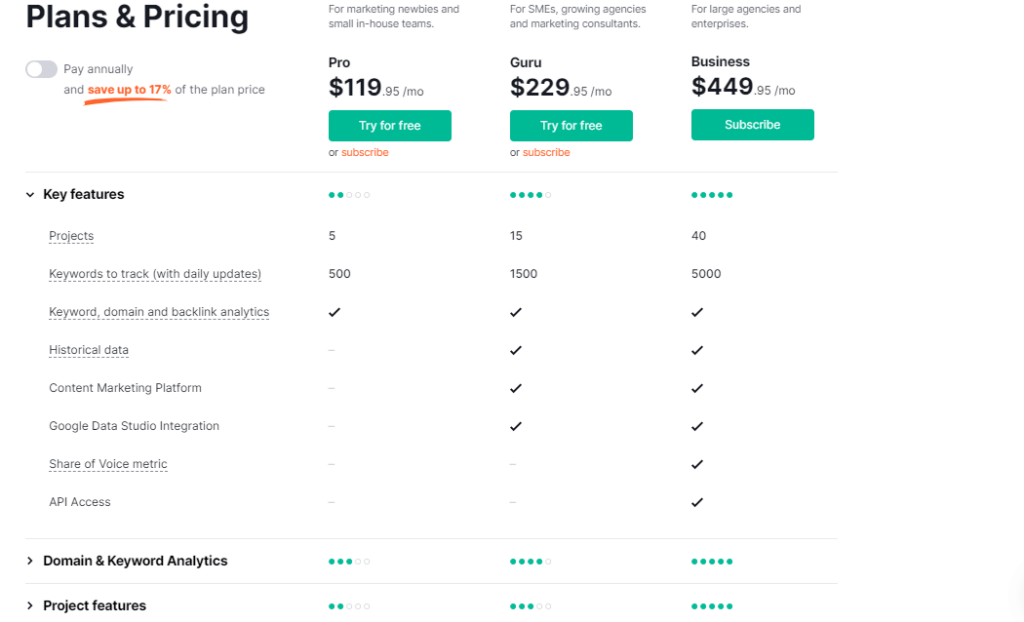
There are three paid plans — Pro, Guru and Business — aimed respectively at marketing newcomers and small teams, at SMEs, growing agencies and consultants, and at large agencies and enterprises. You can cancel, downgrade or upgrade at any time, and cancelling or downgrading within the first 7 days brings a full refund. There is also a free plan, which opens a lot of the tools but limits you to one project and 10 tracked keywords.
Our verdict
We have not found an online management platform as complete as this one, and the interface is the reason a beginner can use it — which matters more than feature count when someone is starting out in SEO. Whether you begin on the free plan or a paid one, it is worth the trial. If you would rather have the work done than the tool, talk to us and we will tell you what your site needs first.
Frequently asked questions
What is SEMrush?
SEMrush is an online visibility management platform: a suite of tools for managing a company’s internet presence, covering keyword research, competitor analysis and campaign optimisation among other tasks. Its purpose is to improve organic search results and rankings, and it adds features regularly to keep pace with how search itself changes.
What are the five feature areas in SEMrush?
SEMrush groups its tools into five areas: SEO, Content, Market Research, Advertising, and SMM and SERM. Each area holds several tools, and any website you work on can be saved as a project so that the tools you selected for it are there next time.
What can you do with the SEMrush free plan?
The free plan gives access to a large number of tools, but limits you to one project and up to 10 tracked keywords. It is enough to see how the platform works on a single site, and not enough to run several clients or a full keyword set.
Which SEMrush plans are available and who is each one for?
There are three paid plans. Pro is aimed at marketing newcomers and small in-house teams, Guru at SMEs, growing agencies and marketing consultants, and Business at large agencies and enterprises. Prices change, so check the SEMrush pricing page rather than any figure quoted in an article from 2021.
Can you cancel or change a SEMrush plan?
You can cancel a subscription, or downgrade or upgrade a plan, at any time. Cancelling or downgrading within the first 7 days brings a full refund, which is what makes trying a higher tier on a real project low-risk.
How does SEMrush help with PPC campaigns?
A paid ad has to persuade inside a headline and a description, so SEMrush lets you read your competitors’ ads before writing your own. Alongside that it does keyword research and compares search volumes and trends, and its Keyword Magic Tool is where the related terms, phrases and question keywords for a campaign come from.