




















Tier-1 crypto casinos are moving the casino itself onto the blockchain, not just the payments. The transition is from off-chain black box operations to Layer 3 application-specific gaming chains, and the standard it formalises is Provably Fair 2.0: every micro-bet, every Random Number Generator seed and every payout settlement executed through zero-knowledge rollups. What makes it possible now rather than three years ago is that these chains avoid the gas costs and latency that made on-chain gaming unusable, so the experience matches a centralised platform while the security stays decentralised.
Why Provably Fair 1.0 was not enough
The mathematics was there between 2023 and 2025 and almost nobody used it. Provably Fair verification required the player to check the result manually, which was too cumbersome for an ordinary gambler, so the sector kept its reputation for black-box algorithms and slow withdrawals despite having a technical answer. The change is that verification is now automatic, and that came from Ethereum Layer 2 maturing and dedicated Layer 3 chains launching on top of it — environments such as those built on Arbitrum Orbit or zkSync Hyperchains, engineered for the throughput real-time betting needs.
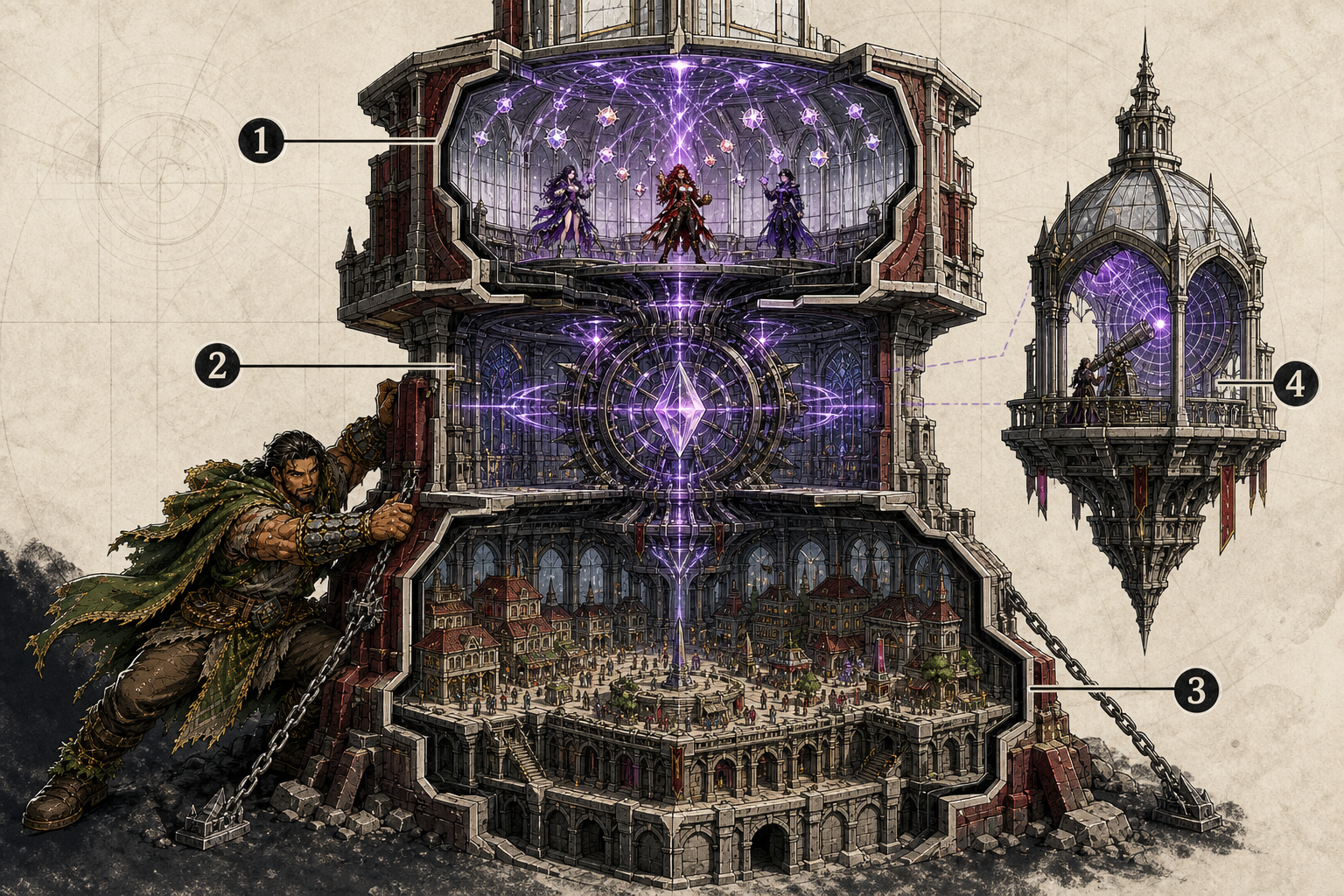
- Game-execution chamber
- Proof-compressor core
- Public settlement foundation
- Read-only observatory
What on-chaining the casino core actually means
Operators are no longer using cryptocurrency only as a rail for deposits and withdrawals; they are using the blockchain as the execution engine underneath the game. That is what makes automated tax reporting and real-time regulatory auditing possible, and it is the direct consequence of MiCA being fully implemented and the Curacao Gaming Control Board revamping its standards. Self-custodial betting follows from the same architecture: the operator never holds player funds in a centralised hot wallet, so insolvency and mismanagement stop being risks a player has to accept.
Nexus-Chain, and the infrastructure the B2B sector is building
A consortium of five major crypto-gaming providers led by SoftSwiss and Moonpay has launched Nexus-Chain, a dedicated Layer 3 rollup. Its technical brief claims up to 50,000 bets per second with sub-millisecond finality — a vendor’s specification, not an independent measurement, and the figure to hold at that strength. What is unambiguous is the shift it represents: software providers are moving from database management to blockchain node management, and selling the infrastructure for trustless casinos where the player does not have to rely on the operator’s integrity.
Smart contract live dealer, and the end of the cashier
Evolution Gaming has announced the first Smart Contract Live Dealer suite, in which a winning payout is triggered automatically by the outcome recorded on the blockchain. That bypasses the cashier approval step entirely, so settlement is instant, and recording live game data to a distributed ledger leaves an immutable record of every hand and every spin. The administrative saving is the operator’s; the reason high-value players care is access to winnings without a queue.
Solana, Firedancer and the micro-wager crash boom
Outside the Ethereum ecosystem, a wave of Telegram 2.0 casinos built on Solana with the Firedancer validator client has reached a reported record of $2.4 billion in monthly wagering volume — a figure this report gives without naming who measured it. What the number is offered to explain is the popularity of micro-wager crash games, which only work at very low latency, and Firedancer is credited with absorbing traffic surges that used to take decentralised applications down. Instant self-custody has become a baseline expectation among top crypto casinos as a result.
Certification moves from static audit to live monitoring
BMM Testlabs and Gaming Laboratories International have issued the first On-Chain Integrity Certifications, for a series of decentralised slot machines. The method is the change: instead of a one-time check of the software, auditors run active nodes that verify randomness and payout ratios as games are played. That means integrity is assured across a title’s whole lifecycle rather than at the moment it was submitted, which is a materially stronger claim for both players and regulators.
Regulators take read-only node access
Regulators are moving from periodic audits to read-only node access, so operator liabilities and player protection metrics can be watched in real time. The Curacao GCB reported that as of mid-March, 75% of new licence applicants under the LOK are using on-chain auditing tools, and its spokesperson describes the approach as being able to see the solvency of an operator in a heartbeat. That was not possible under quarterly reporting and manual document submission, which is the honest comparison to make.
What MiCA and the UK are each doing about it
Under MiCA, any crypto-asset service provider facilitating gambling must meet strict stablecoin reserve requirements, which forces USDT-casinos operating in Europe to publish transparent proof of reserves. The UK Gambling Commission has separately opened a Crypto-Asset Inquiry into white-listed self-custodial wallets: provided they meet strict KYC and AML Travel Rule standards, they may soon be permitted in the UK market. That is an inquiry with a possible outcome, not a rule — and it is worth reading exactly that way.
The games Layer 3 made possible
Three formats in this report exist only because the settlement layer changed. Quantum Crash, from Spribe and NexGen, uses a verifiable delay function for its multiplier so that 10,000 players can bet on the same blockchain tick without the outcome being compromised. On-Chain MegaWays, from BTG and CryptoArcade, records every reel modification as a state change on an L3 chain, which makes its 117,649 ways to win mathematically checkable in real time. And Live Zero-Knowledge Poker uses ZK-proofs to prove the deck is not stacked without revealing cards to the server, which addresses the superuser concern that has followed online poker for years.
Consolidation, and what the CTOs are actually optimising
Smaller offshore casinos that cannot fund Layer 3 integration are being acquired or closing, and investors are moving capital toward infrastructure providers rather than casino brands on the theory that the bridge between Web2 experience and Web3 security is where the value sits. Flutter and Entain face shareholder pressure to announce comparable transparency initiatives. The CTO at SoftSwiss frames the move as operational efficiency rather than crypto enthusiasm: the company reportedly cut transaction reconciliation costs by 92% by moving its ledger to a dedicated gaming rollup — reported, and by the company itself. On the player side, high rollers are moving from VIP programmes to DeFi-VIP models where rebates arrive instantly by smart contract instead of as a weekly manual credit.
What this changes permanently
Moving from centralised black-box databases to on-chain execution is an architectural change rather than a market cycle, and it is being made for regulatory compliance and cost as much as for principle. As MiCA and the Curacao LOK develop, the distinction between a crypto casino and a regulated iGaming operator will keep narrowing until technical integrity is the only competitive advantage left. Our report on sovereign Layer-3 appchains follows the same infrastructure question further.
If you are choosing a settlement architecture for a gaming platform, talk to us — that decision is harder to reverse than any other one on the list.
Frequently asked questions
What is Provably Fair 2.0?
Provably Fair 2.0 is the standard in which every micro-bet, every Random Number Generator seed and every payout settlement is executed through zero-knowledge rollups rather than on a private server. The difference from the earlier Provably Fair mathematics is that the verification no longer requires the player to run it by hand, which is why the older version was available for years and used by almost nobody.
What is a Layer 3 application-specific gaming chain?
A Layer 3 application-specific gaming chain is a blockchain built for the throughput a casino needs, running on top of a Layer 2 network — those built on Arbitrum Orbit or zkSync Hyperchains are the examples named here. Because the chain exists only for gaming, it avoids the gas costs and latency that made on-chain betting impractical on general-purpose blockchains.
What is Nexus-Chain?
Nexus-Chain is a dedicated Layer 3 rollup launched by a consortium of five major crypto-gaming providers led by SoftSwiss and Moonpay. Its technical brief claims up to 50,000 bets per second with sub-millisecond finality, which would match centralised server performance, and it marks software providers moving from database management into blockchain node management.
What is an On-Chain Integrity Certification?
BMM Testlabs and Gaming Laboratories International have issued the first On-Chain Integrity Certifications, for a series of decentralised slot machines. They replace a one-time static code audit with continuous monitoring: the auditor runs active nodes that verify randomness and payout ratios as games are played, so integrity is checked across a game’s whole lifecycle.
What is self-custodial betting?
Self-custodial betting means the operator never holds player funds in a centralised hot wallet — the money stays with the player until a bet settles on-chain. It removes the exposure a player has to platform insolvency or internal mismanagement, which is the risk that centralised crypto casinos carried and could not evidence away.
What is Live Zero-Knowledge Poker?
Live Zero-Knowledge Poker is a Texas Hold’em format that uses zero-knowledge proofs to demonstrate the virtual deck is not stacked without revealing any cards to the server. Because the server never knows a hand until it is shown, it addresses the superuser concern that has followed online poker for years, and it is drawing professional players who weigh integrity above bonuses.