







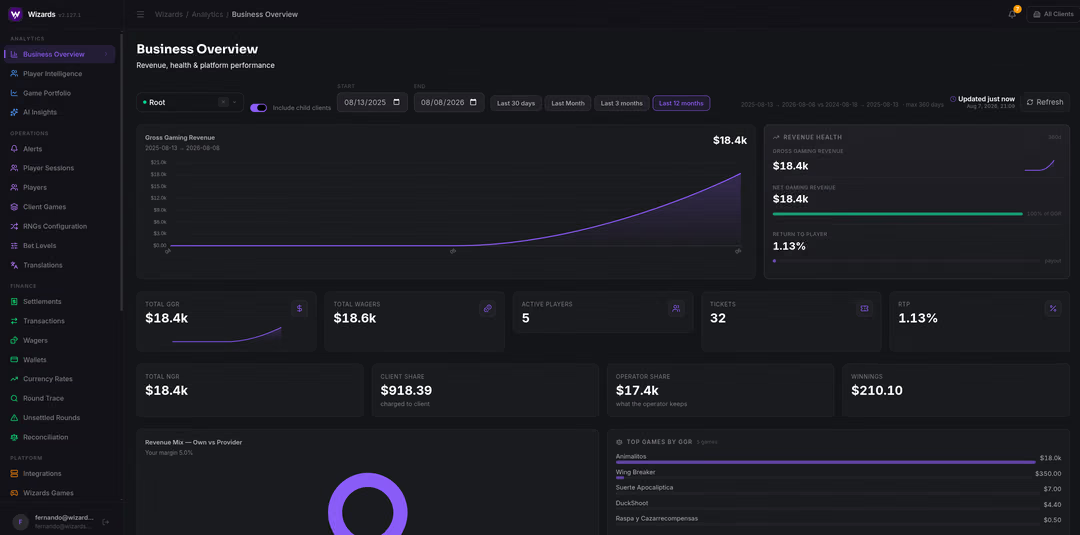











An iGaming multi-tenant platform should be commissioned around an explicit tenant isolation contract, not around a diagram that merely shows several operators on shared infrastructure. The useful delivery artifact defines tenant identity, resource boundaries, administrative authority, failure containment and the negative evidence required before any tenant goes live.
For an operator CTO, platform product owner, security architect or procurement leader, the decision is not whether multi-tenancy is inherently good or bad. The decision is which resources may be pooled, which must be separated, where tenant context becomes authoritative and how the supplier proves that one operator or brand cannot affect another.

Define the tenant before choosing an isolation model
The tenant model should name the customer boundary that architecture, policy and evidence must protect. An operator group, regulated entity, brand, market or managed service customer may each be a tenant in a particular design, but treating those terms as interchangeable creates ambiguity in access, reporting and incident scope.
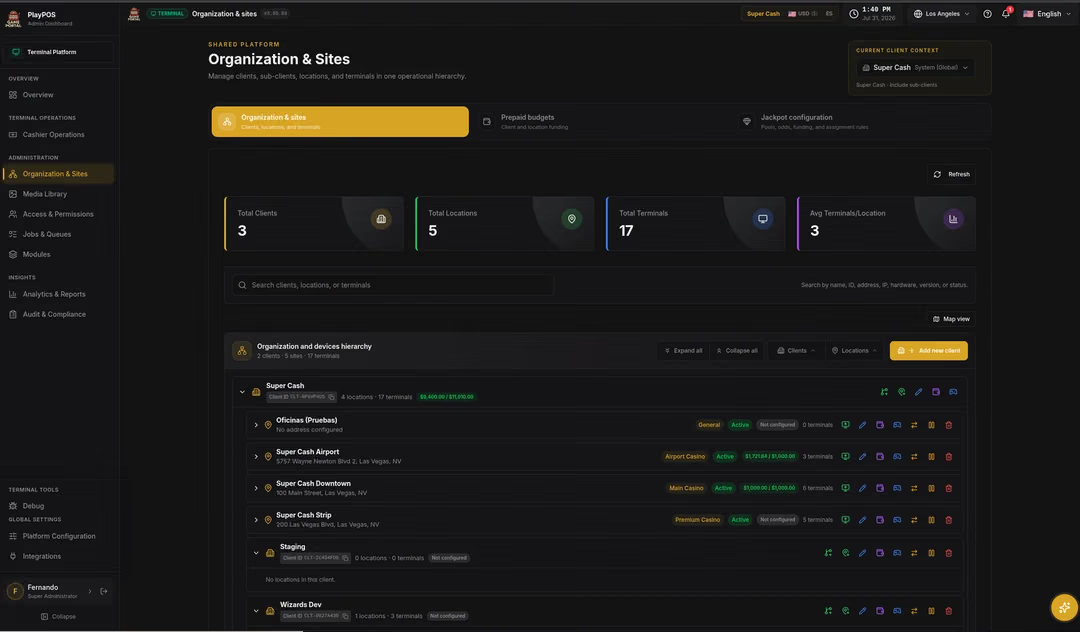
Create a tenant register with one stable internal identifier, lifecycle states, parent relationships, permitted markets, configuration ownership, data residency constraints and administrative roles. Keep player identity separate from tenant identity: a player account belongs within a business and regulatory context, while a platform administrator may have carefully limited authority across several contexts.
The AWS SaaS Lens definition of a tenant treats each customer using a shared SaaS system as a tenant and describes a tenant administrator who configures that customer’s environment. That is a cloud architecture reference, not an iGaming rule. It is useful because it forces the platform team to define the customer boundary before selecting databases, services or deployment units.
Write lifecycle behavior before onboarding automation. Define what pending, active, suspended, migrating and terminated mean for login, wagers, wallet calls, reporting, exports, support access, retention and recovery. A suspended tenant should not become a collection of ad hoc checks scattered across services.
Bind trusted tenant context to every request
Trusted tenant context should be established from authenticated platform state and carried to every service that makes an access decision. A tenant identifier supplied in a URL, form field, message or job payload is input to validate, not authority by itself.
AWS distinguishes tenant isolation from ordinary authentication and authorization: a user can be authenticated and authorized for a function yet still reach another tenant’s resource unless the architecture applies tenant context. The AWS SaaS identity guidance then makes tenant context a first-class part of identity that can flow through service layers. These are vendor-specific examples of a general contract, not a requirement to use a particular identity provider or token format.
At the entry boundary, resolve the current user, tenant membership, role, session state and permitted action from trusted records. Downstream services should receive signed or otherwise protected context and reject missing, conflicting, expired or unexpected values. Background jobs, scheduled reports, support tools and event consumers need the same rule even when no browser session exists.
OWASP recommends denying access by default and validating permissions on every request. For a multi-tenant platform, that means authorizing the action and the target object inside the trusted tenant boundary. Guess-resistant object identifiers can reduce discovery, but they cannot replace an ownership check.
Choose pool bridge or silo per critical resource
Isolation should be selected per resource because one platform rarely needs one universal topology. Compute may be pooled while high-risk data is separated; a shared application may use tenant-specific schemas; or a regulated or operational requirement may justify a dedicated stack.
For every resource, record whether it uses a pooled, bridged or siloed model, which enforcement mechanism applies and what failure would cross the tenant boundary. Include application services, databases, caches, message brokers, object storage, search indexes, analytics stores, secrets, encryption keys, network paths, backups and observability systems.
NIST SP 800-210 explains that cloud resource pooling serves multiple consumers through a multi-tenant model and provides access-control guidance across cloud service models. AWS describes pool isolation tradeoffs, including noisy-neighbor effects, broader failure impact and harder per-tenant consumption attribution. Neither source decides the correct iGaming topology. The buyer must connect the chosen model to product risk, applicable obligations and operating evidence.
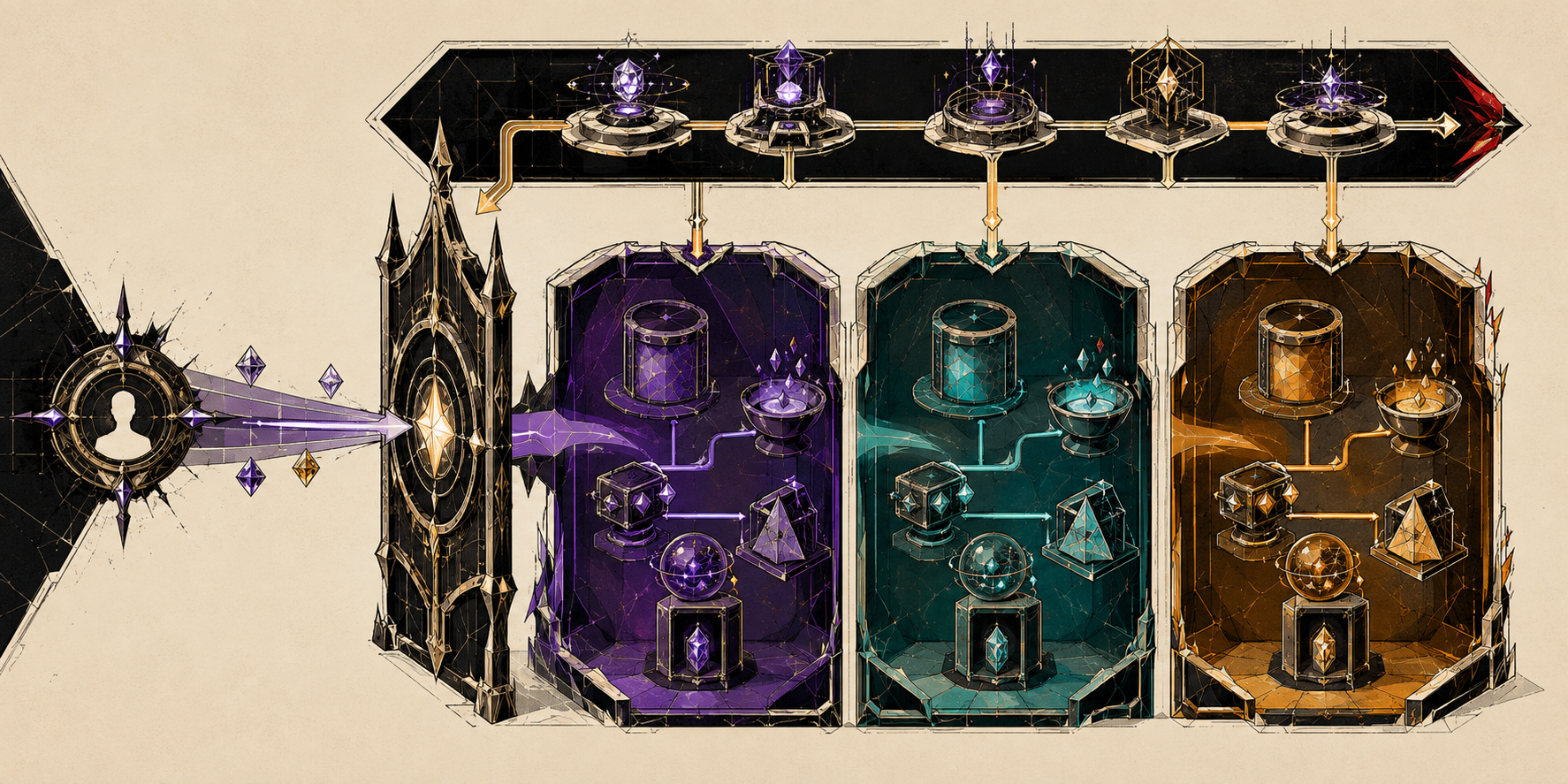
Hybrid choices are valid only when their transitions are explicit. If a shared service calls a siloed wallet store, the tenant contract must define how context is preserved, how credentials are scoped and how a retry avoids crossing either the tenant or financial-state boundary.
Separate the control plane from tenant application work
The control plane should manage tenant lifecycle without becoming an unrestricted route into tenant data or value-bearing operations. Onboarding, configuration, entitlement, suspension, deployment, support and observability need authority, but that authority should be narrower than a universal administrative bypass.
AWS separates the control plane from the application plane so common tenant management functions can be reasoned about independently of tenant-facing business services. Apply that distinction to iGaming by listing every control-plane action that can change a market configuration, credential, integration endpoint, game availability, limit, report or data route.
Use explicit service identities, purpose-limited permissions, dual control where justified, approval boundaries and immutable evidence for sensitive administration. Support impersonation should be replaced with scoped support sessions where possible, with the tenant, operator, reason, permitted actions and expiry visible before access begins.
Great Britain’s remote gambling security requirements apply specified security controls to critical systems that handle sensitive customer information, balances, random outcomes, gamble state and direct communication with those systems. The listed control areas include access, identity, privileged rights, information restriction, logging, network segregation, secure architecture and supplier relationships. This is jurisdiction-specific scope, not a universal rule that every platform must implement in one topology.
Isolate data and execution beyond the database
Tenant isolation should cover every place where data or work can persist, not only the primary database query. Cross-tenant faults commonly hide in caches, queues, batch jobs, exports, search indexes, analytics, logs, object paths, temporary files and support workflows that were designed after the main access layer.
Build a resource inventory from real request and event flows. For each store or processor, state how tenant context is derived, how it becomes part of the key or policy, how deletion and retention are scoped, how backups restore the boundary and how operators can inspect one tenant without widening access to all.
Treat configuration as tenant data with operational consequences. Market rules, integrations, credentials, content availability, limits, presentation and release versions should have explicit tenancy and effective-time boundaries. The iGaming non-production environment guide explains how to test those differences without allowing production credentials or live player data to leak into test systems.
Capacity also belongs in the contract. Set per-tenant or per-tier limits for requests, jobs, queue depth, storage, exports and expensive reports where shared exhaustion could affect another tenant. Global protection is still required, but a healthy platform should show which tenant or tier is consuming a constrained resource before the whole service becomes the only observable unit.
Prove isolation with negative tests and operations evidence
Tenant isolation should be accepted through deliberately mismatched identities, resources and actions, not through successful same-tenant journeys alone. The test asks whether a valid actor can cause any read, write, state change, message, export or resource consumption outside the intended tenant.
Build a matrix across user roles, service identities, tenant states, resource types and channels. Exercise direct APIs, indirect identifiers, queues, background jobs, caches, files, analytics queries, support tools, administrative functions, retries, timeouts, migrations, backups and recovery. Include attempts with missing context, two conflicting tenant values, stale membership, disabled tenants and valid object identifiers from the wrong tenant.

The expected result must include more than an error response. Confirm that no protected data appeared, no state changed, no event reached a wrong queue, no cache was polluted, no export was created and no secret or resource capacity was consumed outside policy. Retain the exact artifact, policy and fixture identities with the result.
Operations need a tenant-aware view without putting personal or secret data into metrics. AWS describes tenant-aware operations as the ability to inspect health and activity by tenant and tier. Connect that view to the iGaming incident response plan so containment can protect one tenant without corrupting shared state or hiding a wider event.
Turn boundaries into a buyer acceptance schedule
The buyer acceptance schedule should convert the architecture into named controls, testable evidence and stop conditions. A supplier statement that the product is multi-tenant or enterprise-ready does not reveal where trust is established, what is shared or what happens when isolation fails.
Require the tenant definition and lifecycle, resource inventory, pool-bridge-silo decision for each resource, identity and policy flow, control-plane authority map, data and retention rules, capacity protections, negative-test matrix, observability model, failure-containment results, open exceptions and release identities. State who owns each control across the operator, platform provider and third parties.
Procurement should also define material-change triggers. A new shared datastore, cache strategy, support tool, administrative route, identity provider, queue, analytics pipeline or deployment model may invalidate part of the isolation evidence even when the player interface looks unchanged.
The result is not a promise that multi-tenancy eliminates platform risk. It is a reviewable contract that shows which boundaries exist, why each isolation model was chosen and how the exact release proved them.
Frequently asked questions
What is tenant isolation in an iGaming platform?
Tenant isolation is the set of controls that prevents one operator or brand from reading, changing or consuming another tenant’s resources while the platform may share infrastructure. It must cover every data and execution path, not only login and database queries.
Is authentication enough for a multi-tenant platform?
Authentication is not enough because a valid user can still be routed to the wrong tenant resource. The platform must bind trusted tenant context to the identity and enforce that context again at every service, object and state-changing operation.
Should every iGaming tenant have a separate platform stack?
Not necessarily. A platform may pool, bridge or silo different resources according to risk, operational needs and applicable requirements. The contract should state the model for each critical resource and prove that shared components cannot cross tenant boundaries.
Which resources need tenant isolation?
Tenant isolation should cover player and operator data, wallet and transaction state, game and market configuration, caches, queues, files, secrets, logs, analytics, support tools, backups and administrative actions that can reach them.
How should tenant isolation be tested?
Tenant isolation should be tested with valid identities and deliberately mismatched tenant, resource and action combinations across APIs, jobs, queues, caches, exports, support tools and recovery paths. The expected result is a safe denial with evidence and no cross-tenant side effect.
What should a tenant isolation acceptance pack contain?
A tenant isolation acceptance pack should contain the tenant model, resource inventory, isolation pattern per resource, policy and identity flow, negative-test matrix, operational limits, failure-containment results, exceptions, artifact identities and approval records.
If you are commissioning a shared iGaming platform, talk to Wizards about defining the tenant boundaries, enforcement model and acceptance evidence before implementation fixes those choices in code.