




















Companies can take advantage of scalability and flexibility by using a cloud computing system. Here is what cloud hosting is, and why we use DigitalOcean for growing businesses. Everything below describes the products as they stood in August 2021.
What cloud hosting actually is
A cloud service provider is an intermediary company offering services such as cloud-based platforms, infrastructure, applications or storage to other companies, which normally pay only for what they use.
For a company, not being limited by the physical constraints of its own servers is the main benefit, because scalability and flexibility follow from it. Others are the ability to rely on multiple data centres, to customise servers to your preferences, and to respond to changing demand with responsive load balancing.
It is still worth paying attention to the security of information stored in the cloud, whichever provider you use.
DigitalOcean, and who it is built for
DigitalOcean is a cloud hosting provider offering a range of cloud computing services for running and scaling applications across multiple machines at once.
It stores data on hardware separated from your droplets, then makes many copies of that data and stores them in safe locations. That is how it reduces the risk of losing data when hardware fails.
DigitalOcean provides infrastructure for developers. This article records that in 2018 it was considered the third-biggest hosting company in the world, a ranking it attributes to no named source, and names Amazon Web Services and Google Compute Engine as its main competitors.
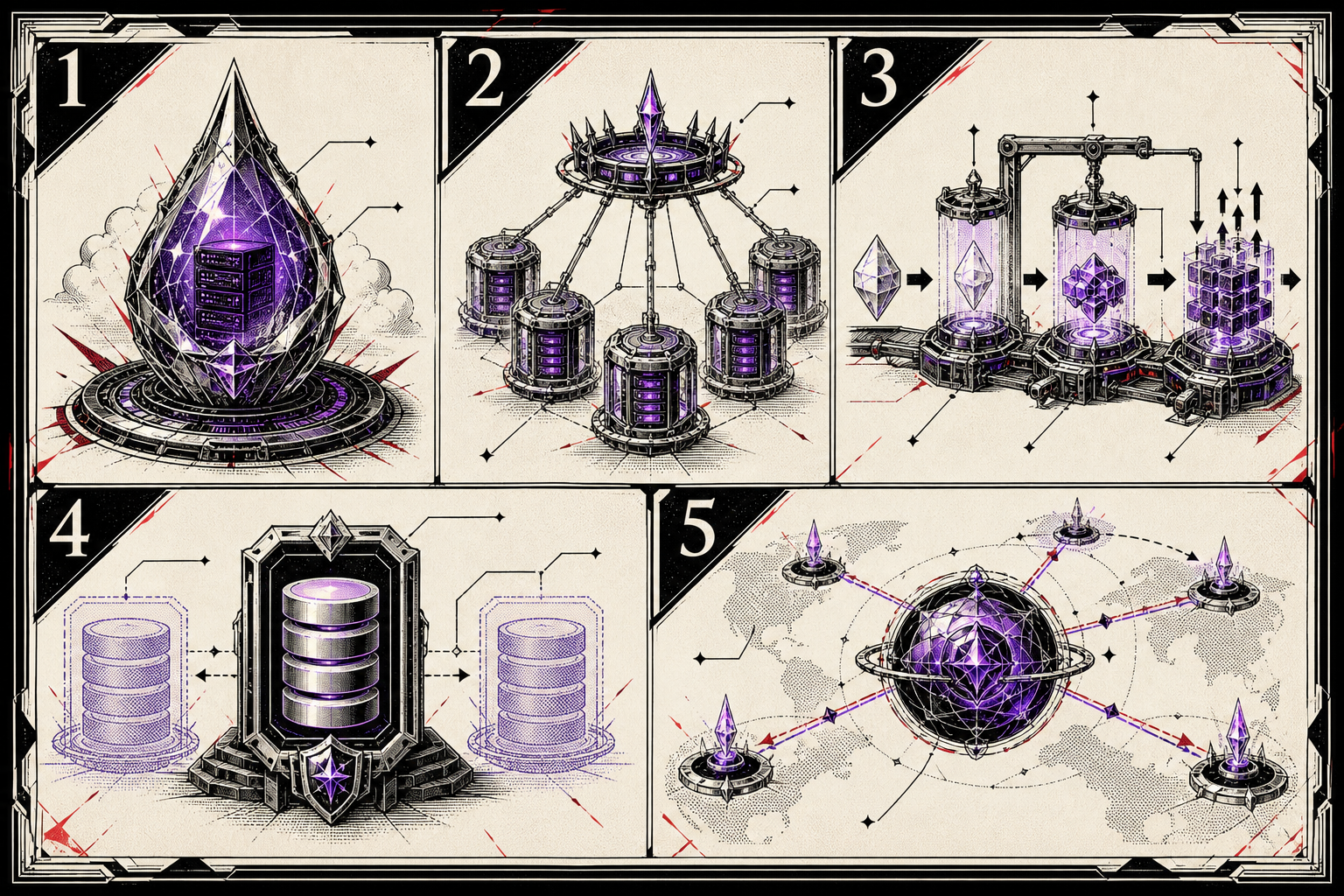
- Droplets are the individual server units
- Kubernetes coordinates hosts that run Linux containers
- App Platform builds, deploys and scales applications as a managed service
- Managed Databases move setup, backup and updating to the provider
- Spaces stores and delivers objects through storage with a built-in CDN
The five DigitalOcean products worth knowing
Droplets
A droplet is DigitalOcean’s term for its own infrastructure: each droplet you generate is a new server.
As of August 2021 there were five droplet plans: Basic, General Purpose Performance, CPU Optimized Performance, Memory-Optimized and Storage-Optimized.
Kubernetes
Kubernetes, also known as k8s, manages groups of hosts running Linux containers efficiently. It is easiest to think of it as a container orchestrator.
To maximise efficiency, Kubernetes schedules instances across the cluster knowing how much memory and storage each application needs.
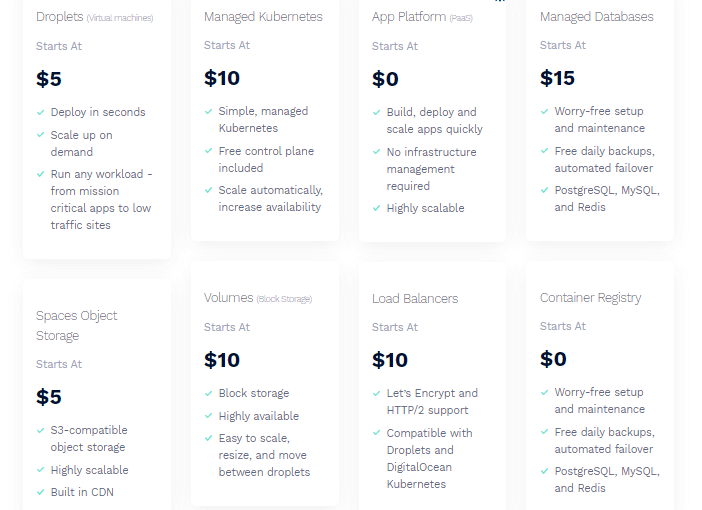
For a small business, DigitalOcean let you start Kubernetes at $10 per month as of August 2021, scaling up to a free control plane and low-cost bandwidth. That figure describes the offer at that date and is not a current quote.
App Platform
DigitalOcean handles the infrastructure, app runtimes and dependencies. The managed service lets you build, deploy and scale apps horizontally or vertically, quickly.
With App Platform you can build web apps, static sites, APIs and background workers.
Databases
You can build an application without taking on database administration: DigitalOcean handles setup, backup and updating.
On safety, data is automatically backed up daily, and restoring to any point within the previous seven days takes a few clicks.
Spaces
Spaces stores and delivers large amounts of information, and combined with a built-in content delivery network it reduces architectural complexity while still meeting infrastructure needs.
The article’s own comparison is that Spaces object storage saves over 90% on storage and bandwidth against other providers. That figure is quoted without a named source or a stated comparison basis, so read it as the vendor’s positioning rather than a measured result.
Five reasons developers like DigitalOcean
A user-friendly interface
Cloud providers often offer so many features that the interface becomes cluttered. DigitalOcean’s is both aesthetic and functional, with an economical number of buttons, links and one-click features. That does not mean it lacks depth; there are plenty of options for anyone who wants more control and customisation.
Performance without server management
DigitalOcean is built for a team that does not want to spend its time and resources on managing servers. High-quality performance, easy setup and deployment, and built-in security tools are the features that matter most in practice.
Accessible pricing
Pricing is what separates DigitalOcean from other cloud companies offering similar hosting. The platform is affordable for small startups and individual developers, who can choose hourly or monthly payment. The low cost has not come at the expense of performance, which is our own assessment of it rather than a benchmark.
Helpful documentation
The official documentation is one of the better ways to learn cloud hosting in general and DigitalOcean in particular. It carries tutorials, installation guides, how-to guides and walkthroughs, and it covers the things that actually trouble a developer.
An active community
DigitalOcean has one of the most active communities of any cloud platform, which is a practical advantage: you benefit from other users’ questions and the answers they got.
Why we chose DigitalOcean
There are many factors in choosing a cloud for your business, including the size of your company, your current infrastructure and platform, and where you are going next.
Global Wizards uses DigitalOcean because it offers simple solutions to complex problems, and because it lets our development team improve a client’s infrastructure with tools that are quick to learn. Our review of Kinsta hosting covers the managed-WordPress end of the same question.
Global Wizards offered a 60-day free credit of $100 for new users starting on DigitalOcean at the time this was published in August 2021. Check with us before relying on it; an offer from 2021 is not a current one.
If you are interested in this or related topics, visit our blog or contact us for more information.
Frequently asked questions
What does a cloud hosting provider do?
Cloud hosting is renting platform, infrastructure, application or storage services from a cloud service provider, normally paying only for what you use. The benefit for a company is not being limited by the physical constraints of its own servers: it can rely on multiple data centres, customise servers to its preferences, and respond to changing demand with responsive load balancing.
What is DigitalOcean?
DigitalOcean is a cloud hosting provider offering cloud computing services for running and scaling applications across multiple machines, aimed at developers. It stores data on hardware separated from your droplets, then makes copies and stores them in safe locations, which is how it reduces the risk of data loss when hardware fails.
What is a droplet on DigitalOcean?
A droplet is DigitalOcean’s term for its infrastructure unit: each droplet you generate is a new server. As this article described the product in August 2021, there were five droplet plans — Basic, General Purpose Performance, CPU Optimized Performance, Memory-Optimized and Storage-Optimized.
Which DigitalOcean products does this review cover?
Five: Droplets, which are the servers themselves; Kubernetes, for orchestrating groups of hosts running Linux containers; App Platform, a managed service for building, deploying and scaling apps; Databases, where setup, backup and updating are handled for you; and Spaces, object storage with a built-in CDN.
Why do developers like DigitalOcean?
Five reasons are named here: a user-friendly interface that stays uncluttered without losing control; performance that removes the need to spend time on server management; accessible pricing with hourly or monthly options that suit a startup or an individual developer; documentation with tutorials, installation guides and walkthroughs; and an unusually active community.
How much did DigitalOcean Kubernetes cost in 2021?
As this article described the offer in August 2021, DigitalOcean let a small business start Kubernetes at $10 per month, scaling up to a free control plane and low-cost bandwidth. That was the position at that date and is not a current quote; check the vendor before budgeting against it.