












A crash gamble game asks one question over and over: when do you get out? Players bet on a multiplier that climbs from 1x and crashes without warning, and everything that makes the format work — the pacing, the interface, the maths — is built around that single decision.
This is how one gets built, using Gold & Gear Meltdown, our own steampunk crash game, as the worked example.
What a crash gamble game is
A crash gamble game is a form of online betting in which participants wager on a multiplier that steadily increases before ultimately crashing.
Timing is everything: players aim to cash out at the optimal moment before the crash. That timing-dependent gameplay is what creates the experience, and the game’s appeal lies in its high-risk, high-reward nature rather than in anything it shares with the rest of the casino.
How crash gambling works
A crash game is not a traditional casino game like slots or table games; it is fast-paced by design and resolves in seconds.
The multiplier curve
The curve starts at a modest 1x and climbs steadily, and the player’s job is to bail out before it hits its critical point and crashes.
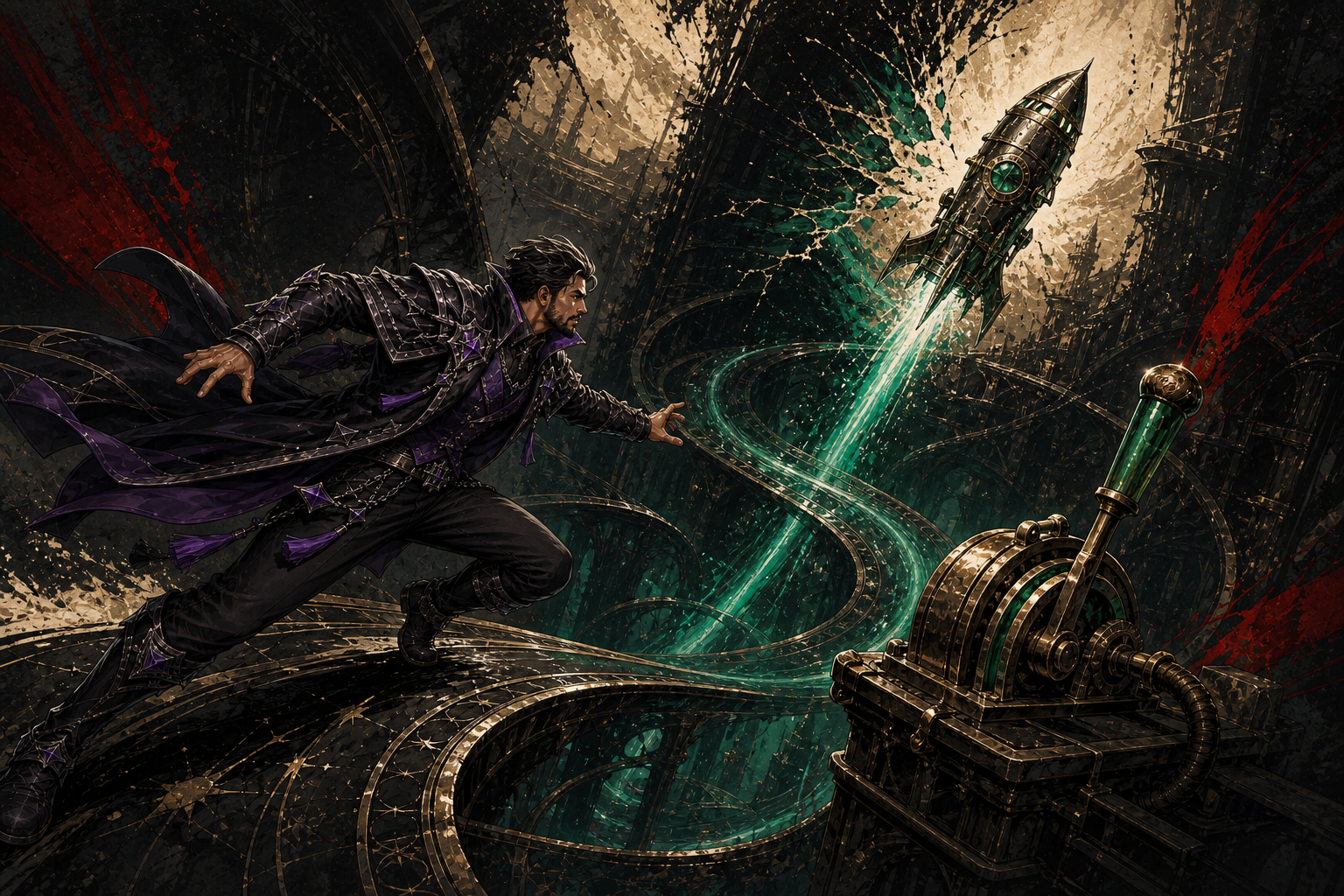
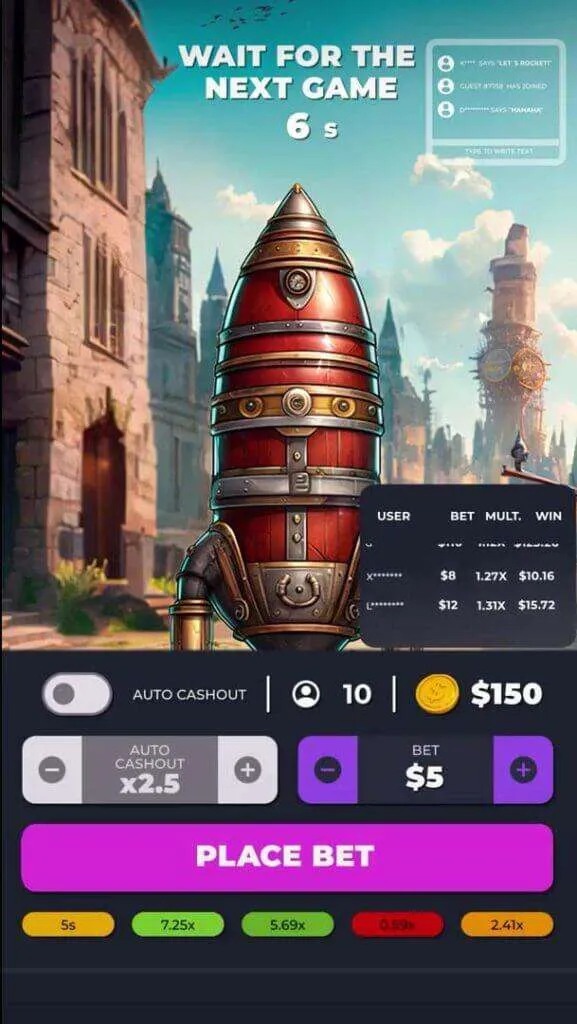
In Gold & Gear Meltdown what goes up is a rocket, and the bet has to be withdrawn before it comes down.
The withdraw button
A Withdraw button sits on screen throughout, and clicking it is the only move the game asks for.
The longer a player holds on, the bigger the multiplier — and the higher the risk of losing the stake outright.
Cashing out
Pulling out before the curve nosedives multiplies the stake by the current multiplier, and the winnings are credited to the player’s account in the casino.
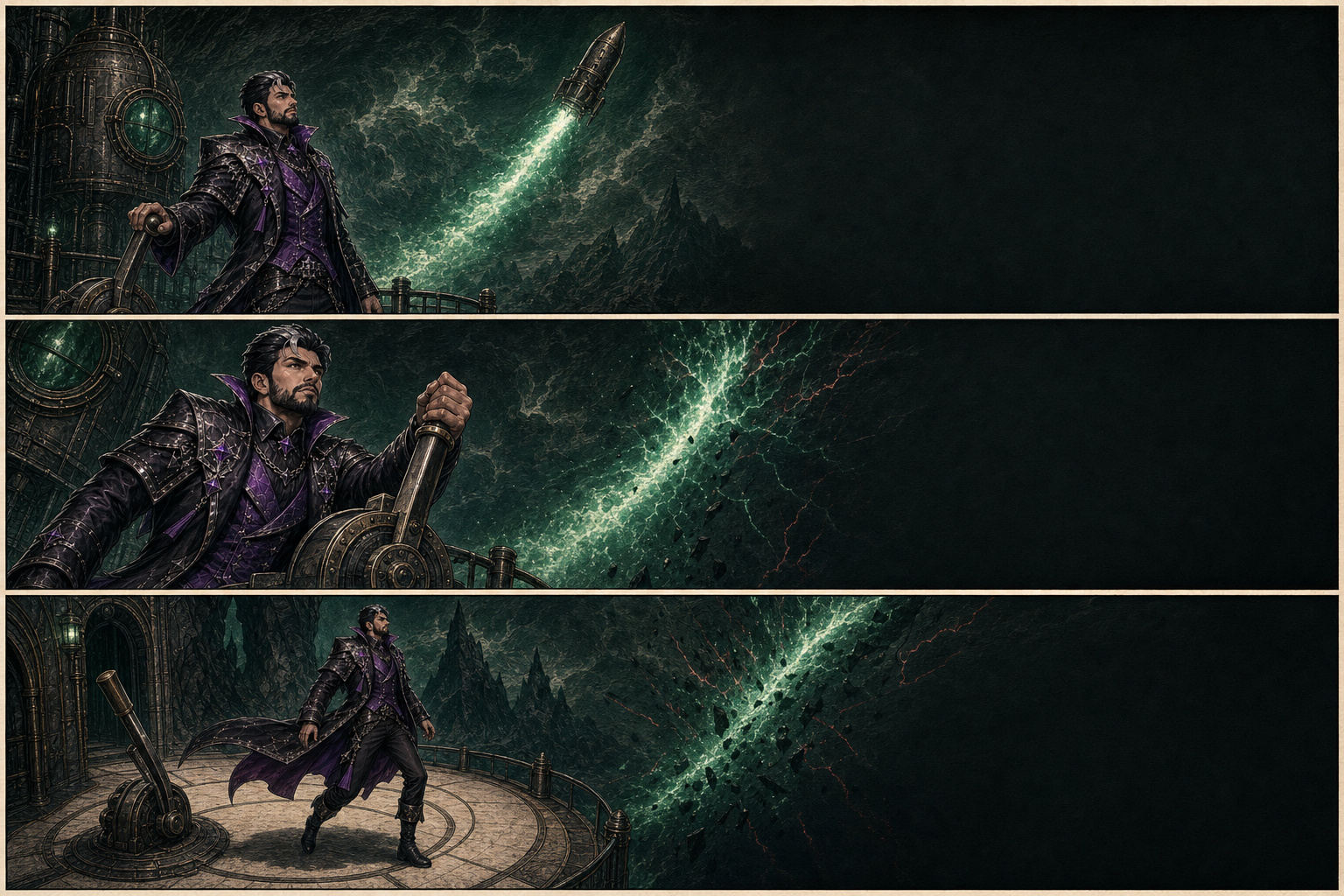
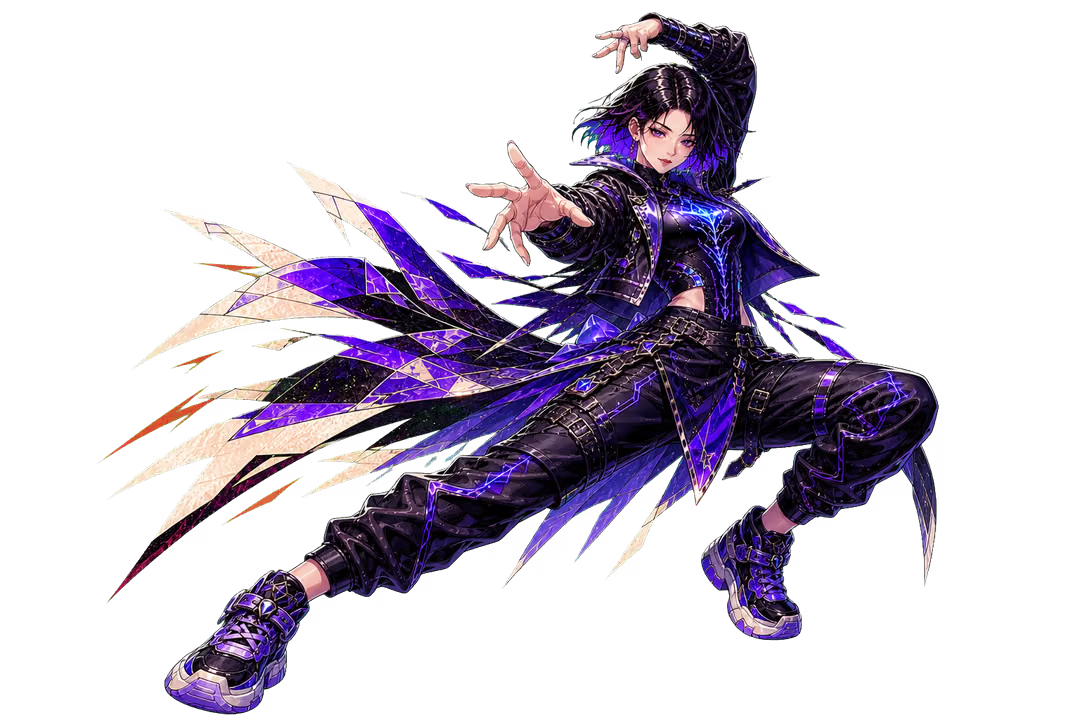
Nightfall WardenThe curve is rising.
Nightfall WardenThe crash is unknowable.
Nightfall WardenThe exit is the only decision.
Managing the risk
Mastering a crash game is a matter of straddling risk: a safe, small win by leaving early, or a longer ride that ends either in dazzling gains or a wipeout.
The article’s own guidance to players is worth keeping at full strength:
- Set loss and gain limits before playing, to keep control of your funds.
- Do not fall into the temptation of waiting indefinitely for a high multiplier; the curve could crash at any moment.
- Play responsibly, and only with money you are willing to lose.
- Remember that a crash gamble game is a game of chance and the outcomes are entirely random.
What Gold & Gear Meltdown does
Eleven features carry the game, and they sit in three groups: the world, the mechanic and the guardrails.
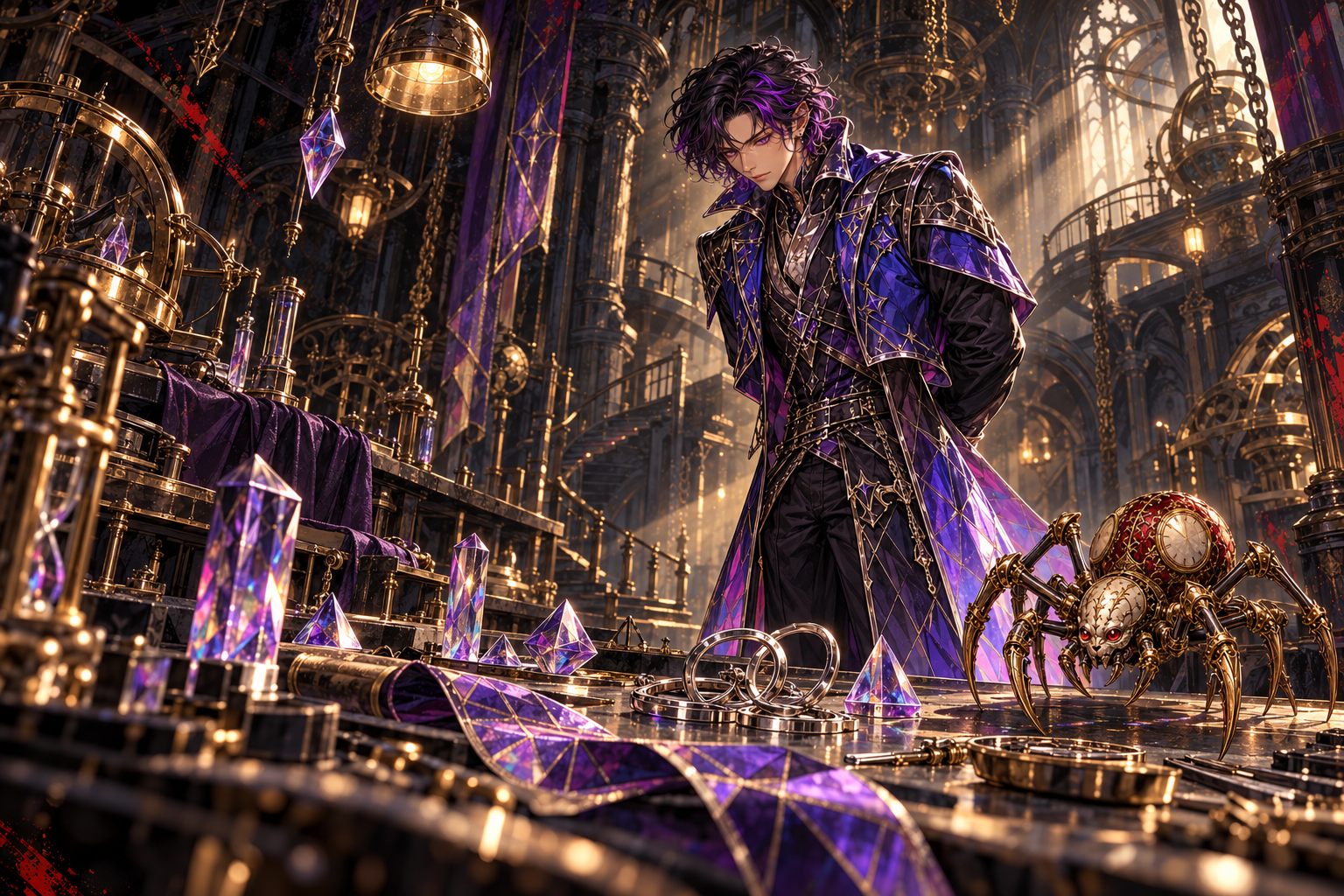
The world. A visual design that recreates a steampunk setting with gears, steam pipes and period-appropriate elements; a thematic rocket at the centre of the plot with detailed launch and flight animation; striking visual effects for the takeoff and the eventual meltdown, with extra animation when high multipliers are reached; and a soundtrack and thematic sound effects that hold the atmosphere.
The mechanic. The classic crash format — place a bet, withdraw before the meltdown — over a multiplier curve that starts at 1x and grows as the rocket ascends; a bet amount the player can adjust each round and a Withdraw button to choose the exit; a profit table showing multipliers and potential winnings; real-time statistics on the rocket and the multiplier; and a chance at a large jackpot or special prizes at certain points.
The guardrails. Responsible gaming features including loss and time limits, and mobile compatibility so the game runs on phones and tablets.
Why a studio would build one
A crash game is a different experience from a slot, and that difference is most of the commercial argument.
- Growing popularity of gambling games. The global gambling market has been experiencing steady growth, driven by increasing interest in online gaming platforms.
- Diversity in gambling preferences. Players seek varied experiences, and a crash game is a genuine alternative to traditional casino games such as slots or poker.
- Rising demand for unique concepts. Predicting the optimal moment to cash out is a novel challenge, and players are drawn to mechanics they have not seen.
- Targeting niche audiences. The steampunk aesthetic appeals to a specific audience that appreciates detailed, immersive environments.
- Player engagement and interactivity. Customising a bet and choosing when to withdraw gives the player real agency in the round.
- Visual impact. Rocket launches and meltdowns make the format visually captivating in a way a static reel is not.
- Strategic decision-making. The multiplier mechanic introduces risk assessment, which is what gives the game depth.
- Monetisation opportunities. In-app purchases, ad revenue, premium versions and virtual goods are all available to it.
- Mobile gaming dominance. The mobile market continues to dominate the industry, which is a wide audience for a game that fits a phone screen.
- Global accessibility. Online platforms reach an international audience directly.
- Data-driven iteration. Analysing player behaviour informs updates and lets the game be optimised over time.
- Responsible gaming practices. Implementing them demonstrates a commitment to player wellbeing, which matters increasingly in the industry’s ethical landscape.
The business model
A crash game earns from a commission on stakes first, and from a long list of secondary streams around it.
- Commission from bets. The primary source: the platform takes a percentage of the bets placed, which grows with the game’s popularity.
- In-app purchases. Virtual goods or currency — special themes, power-ups, customisation options.
- Premium versions or features. Unlocking features for a fee, for players willing to pay for more.
- Advertisement revenue. Banner, video or interstitial placements inside the interface.
- Sponsorship and partnerships. Featuring a brand’s products or logos, or building a themed version with them.
- Affiliate marketing. Promoting related products and earning a commission on each referral.
- Loyalty programmes and VIP memberships. Subscription tiers with exclusive perks.
- Jackpot entry fees. A small fee to enter jackpot rounds with larger prizes.
- Data licensing and analytics. Licensing accumulated player data, or using it internally for strategic decisions.
- Merchandise sales. Branded apparel, accessories or collectibles.
- Tournaments and events. In-game competitions with entry fees.
- Cross-promotion. Promoting other games in the same portfolio, driving acquisition across the ecosystem.
Diversifying is what makes the model sustainable, and it has to be balanced against the player experience, because a game that monetises harder than it entertains does not last in this market.
What it takes to build one
A crash game is a real-time multiplayer product, which is why the stack is heavier than the gameplay suggests.
Technology. React Native, SQL or MongoDB for the database, Nest, Firebase, Socket.io, Digital Ocean and Kubernetes.
Team. A back-end developer, a front-end developer, a UI/UX designer, an artist, a QA engineer and a project manager.
How long it takes
On average it can take approximately twelve weeks to develop a game like Gold & Gear Meltdown, and the timeline varies with complexity, team size and the technology used.
The eight stages inside that estimate:
- Conceptualisation and planning. Define the concept, mechanics and aesthetics; conduct market research and identify the target audience; plan features, functionality and monetisation.
- Design and artwork. Create the steampunk visuals — rocket designs, multiplier curves, interface elements — with concept art and storyboarding.
- Development. Set up the game environment and coding framework, implement the multiplier curve, the betting system and the withdrawal mechanics, and integrate the animation, sound effects and music.
- Testing and quality assurance. Rigorous testing for bugs, glitches and performance issues, and stability across devices and platforms.
- Beta testing and feedback. A beta release to selected testers or a closed community, with adjustments made from what they report.
- Polishing and optimisation. Fine-tune gameplay, visuals and interface, and optimise performance for different devices and screen sizes.
- Final testing and QA. One more round, to confirm the changes and optimisations introduced no new issues.
- Deployment and launch. Servers, domains and infrastructure, then release to the app stores or online platforms.
Building one with a team that has shipped one
From concept to deployment, a crash game is eight stages of work and one decision the player makes over and over.
If you want the same treatment for another format, we have written up bingo game development and slot game development in the same detail. When you are ready to have one built, partner with us.
Frequently asked questions
What is a crash gamble game?
A form of online betting in which participants wager on a multiplier that steadily increases before crashing. The player aims to cash out before the crash, which makes timing the whole of the game. Its appeal is its high-risk, high-reward nature rather than any mechanic borrowed from slots or table games.
How does crash gambling work?
The multiplier curve starts at 1x and climbs steadily. A Withdraw button lets the player leave at any point; leaving before the curve crashes multiplies the stake by the current multiplier and credits it to their account. The longer they stay, the larger the multiplier and the higher the risk of losing the bet outright.
How can players manage risk in a crash game?
By setting loss and gain limits before playing, and by not waiting indefinitely for a high multiplier, because the curve can crash at any moment. A crash gamble game is a game of chance and the outcomes are entirely random, so the article is explicit that it should be played responsibly and only with money the player is willing to lose.
What technology is needed to build a crash game?
The stack named here is React Native, SQL or MongoDB for the database, Nest, Firebase, Socket.io, Digital Ocean and Kubernetes. The team is a back-end developer, a front-end developer, a UI/UX designer, an artist, a QA engineer and a project manager.
How long does it take to develop a crash gambling game?
On average it can take approximately twelve weeks to develop a game like Gold and Gear Meltdown, across eight stages from conceptualisation to launch. The timeline varies with complexity, team size and the technology used, and that average is the studio’s own figure rather than an industry benchmark.
How does a crash gamble game make money?
Commission from bets is the primary source: the platform takes a percentage of the stakes placed. Around it sit in-app purchases, premium versions and features, advertising, sponsorships and partnerships, affiliate marketing, loyalty programmes and VIP memberships, jackpot entry fees, data licensing, merchandise, paid tournaments and cross-promotion with other games in the same portfolio.
Watch the video
Watch on YouTubeOpens YouTube in a new tab.