










A bingo game is built in five stages, monetised through several streams at once, and — for a relatively straightforward title — takes the Wizards team around three months. This article works through all three, using Cleopatra’s Cash Bingo, our own Ancient Egypt bingo game, as the worked example.
Bingo has outlasted most of what has been built beside it, transcending generations and cultures on gameplay that is simple to learn and hard to put down. What follows is what it takes to carry that into a game people can play anywhere.
What Cleopatra’s Cash Bingo is
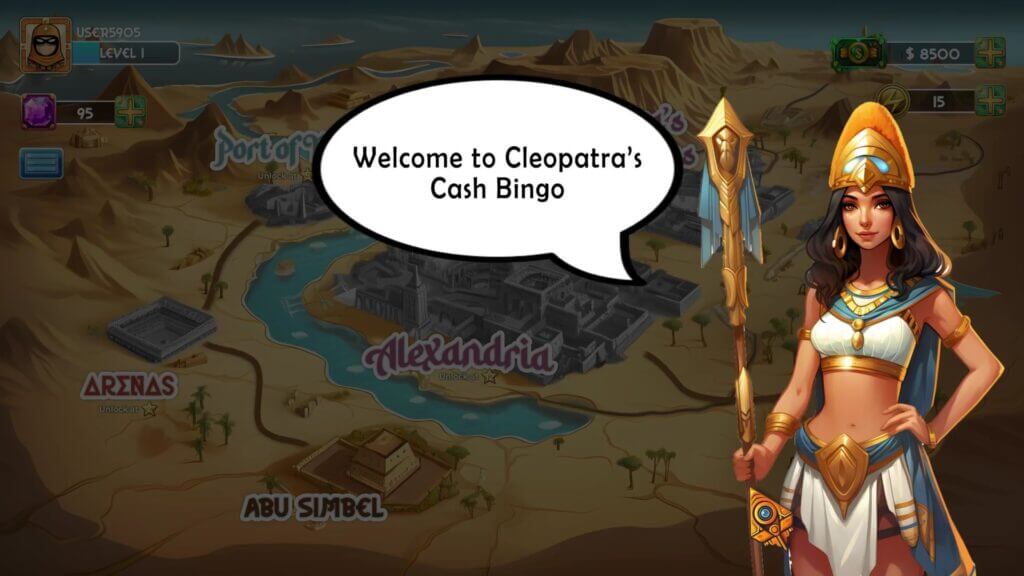
Cleopatra’s Cash Bingo is a digital adaptation of the classic bingo game, set in Ancient Egypt.
It takes the charm of the hall version and puts it where an online player is, so the game can be played whenever they like, alone or with people around the world. Everything else in this article is about how a game like that gets made.
How the game works
Four moves, and a player is playing.
- Login. Create a user account or join with a guest account.
- Choose your path. Pick between maps inspired by Ancient Egypt, where Cleopatra hosts the sessions.
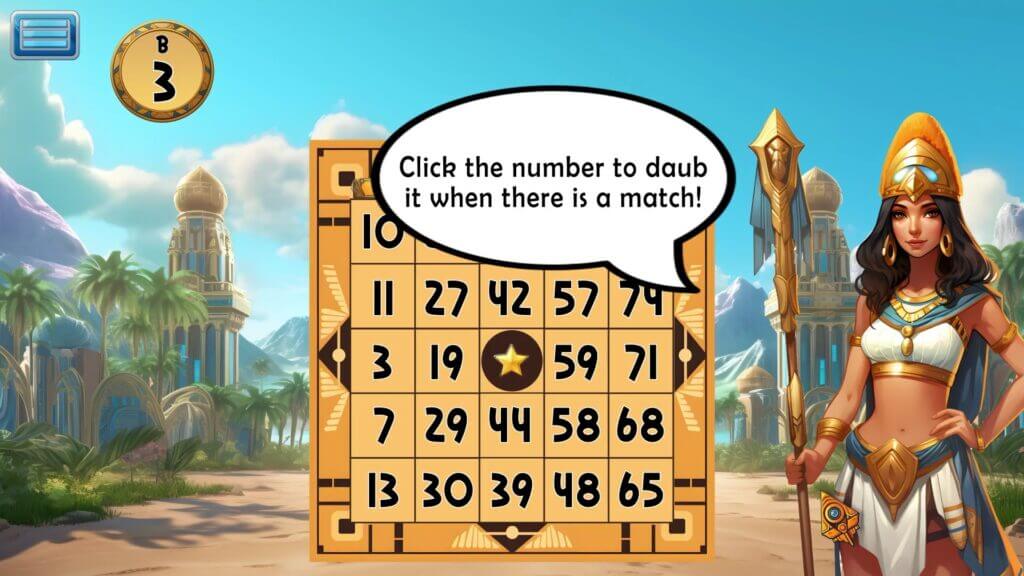
- Play with focus. Mark off the numbers as they are displayed on screen. Fall behind and the ticket is lost.
- Take the rewards. Filling any one line of the ticket pays. Crossing out every number on the card is the higher aim.
The features that make a bingo game worth returning to
Fifteen features carry Cleopatra’s Cash Bingo, and they fall into four groups: theme, progression, safety and community.
Theme. Backgrounds featuring Egyptian landscapes, pyramids, oases and the Nile; cards adorned with hieroglyphics, sphinxes, sarcophagi and pharaohs; Cleopatra herself as host, with animated interactions and commentary during play; and background music and ambient sound — the murmur of the river, the calls of exotic birds — behind it.
Rooms and variants. Different bingo rooms at varying bet levels, thematic rooms inspired by famous Egyptian cities and monuments, and special variations such as Pharaoh’s Bingo with rules of their own.
Progression. Daily rewards for logging in, Egyptian-themed bonuses such as hidden treasures, themed mini-games tied to Egyptian history, avatars a player can dress for the occasion, and a levelling system with achievements against the game’s historical backdrop.
Competition and community. Regular tournaments with cash prizes or virtual chips, online leaderboards, and social media integration so a player can share progress and invite friends.
Safety and support. Security measures and encryption to protect player data, responsible gaming options including deposit limits and self-exclusion, and a customer support service to address problems during play. Mobile compatibility was built in by our app development team rather than added afterwards, and regular updates and special events keep new content arriving.
Why a business would build one
Bingo reaches a wider audience than most casino formats, and that is the first of six reasons.
| Broad audience appeal | Bingo attracts players of all ages, which makes it a good way to reach a diverse player base. |
| Classic game, modern twist | A timeless game plus modern technology leaves room for innovative features and themes that keep players engaged. |
| Monetization opportunities | Several revenue streams at once, from in-app purchases and ads to premium subscriptions. |
| Strong community and social interaction | Bingo games foster social interaction, which can build a strong and engaged player community. |
| Brand recognition | A high-quality bingo game establishes a company as a reputable game developer. |
| Global reach | Bingo has global appeal, and with localisation the game can reach players anywhere. |
The business model behind a bingo game
A bingo game earns from a combination of streams rather than from one.
- In-app purchases. Items, power-ups, virtual currency or cosmetic enhancements.
- Advertisements. Non-intrusive ads players can choose to watch for in-game rewards, or an ad-free premium version.
- Premium subscriptions. Exclusive benefits such as ad-free play, daily rewards or access to special events.
- Virtual goods sales. Themed bingo cards, custom daubers and anything else that improves the experience.
- Special events and tournaments. In-game events that encourage spending and engagement.
- Sponsorships and collaborations. Partnerships with other brands or companies for in-game collaborations.
Which combination fits depends on the game and the audience, and choosing it is part of the design rather than something bolted on at launch.
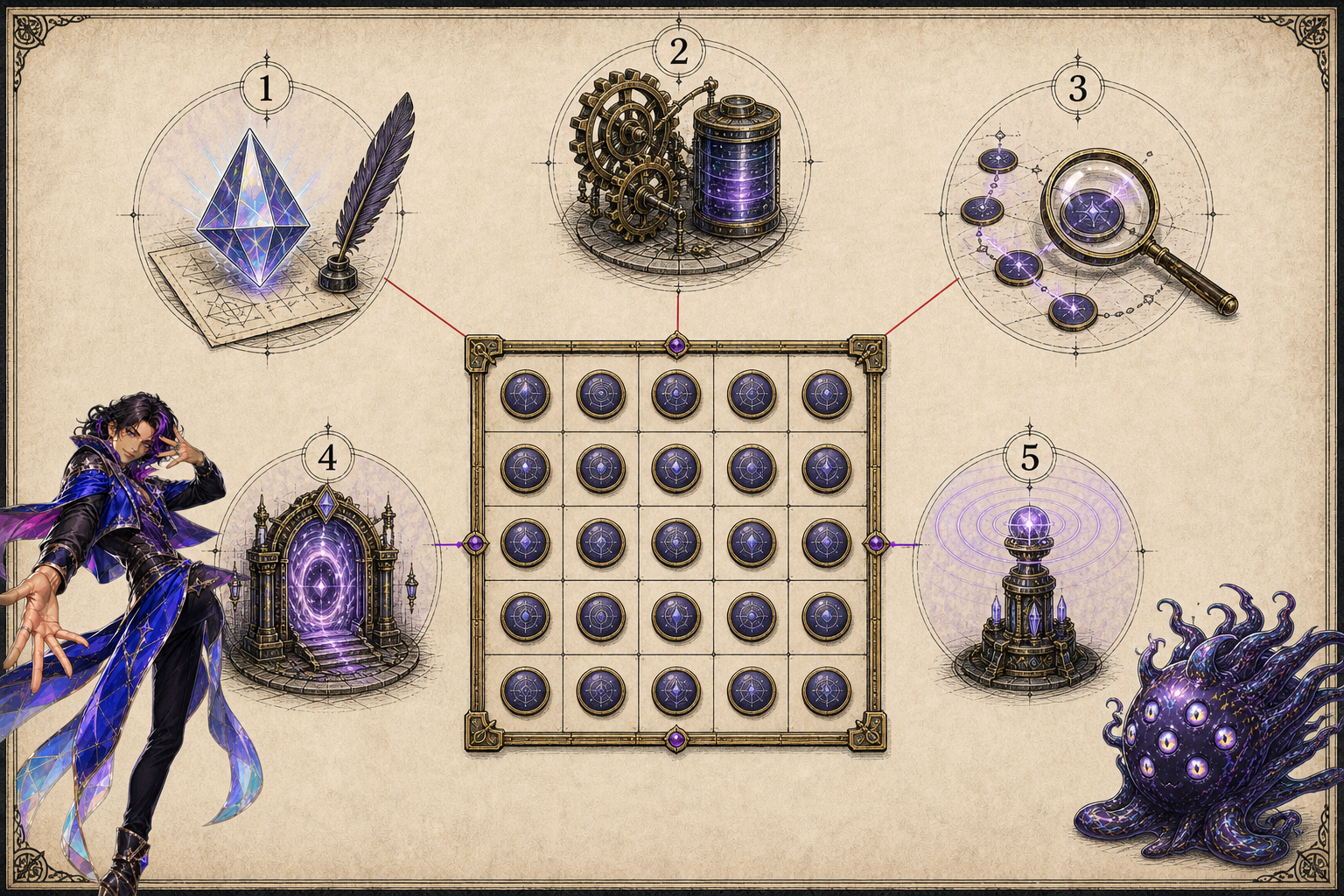
- Concept, visual identity and prototype
- Development, content and data systems
- Testing and refinement
- Release and distribution
- Updates, events and ongoing engagement
How a bingo game gets developed
Five stages, from the concept to the version players are still receiving updates for.
1. From imagination to immersion
The team shapes the essence of the concept and defines its visual identity, then builds functional prototypes to evaluate core mechanics, interactions and the overall flow.
That prototype is the foundation everything after it rests on, which is why it comes before any production art.
2. The development itself
The game’s universe is carved out through level and content design, and abstract ideas are translated into precise lines of code.
The data behind it sits in a database such as MongoDB or SQL, chosen for what the game has to store and how fast it has to read it back.
3. Testing and refinement
Exhaustive testing uncovers the concealed imperfections, and the mechanics are then refined precisely.
The aim is interactions that flow seamlessly and a game that meets the most stringent standards, because in this category a mechanic that feels unfair is indistinguishable from one that is.
4. Release
A launch is not a button. It is a game’s entrance onto a global stage, with a marketing approach behind it.
5. Endless engagement
After release the work is updates and feedback.
Continuous updates keep functionality steady, and player feedback is what tells you which part of the game to expand next.
How long it takes
For a relatively straightforward game, the bingo game software development team at Wizards takes around three months.
More intricate projects with unique features and advanced graphics could take longer. The time required varies significantly with complexity, team size and experience, which is why thorough planning and project management matter more here than speed does.
Building one with a team that has done it
Crafting a bingo game takes more than entertainment value: it takes an understanding of gameplay mechanics, of monetisation, and of what actually keeps a player engaged.
If you want the same treatment for another format, we have written up slot game development, crash games and AI-powered casino games in the same detail. When you are ready to have one built, talk to us.
Frequently asked questions
What is an online bingo game?
A digital adaptation of the hall game, playable alone or with people anywhere in the world. Cleopatra’s Cash Bingo, the Wizards title this article is about, sets that adaptation in Ancient Egypt, with Cleopatra hosting the sessions and Egyptian symbols on the cards.
How does an online bingo game work?
In four moves. A player creates an account or joins as a guest, chooses a room or map, marks off numbers as they are displayed on screen, and is rewarded for filling any one line of the ticket. Filling every number on the card is the higher aim, and the numbers arrive fast enough that falling behind costs the ticket.
Why should a business develop a bingo game?
Six reasons the article names: broad audience appeal across ages, a classic game that carries modern features well, several revenue streams at once, strong social interaction between players, brand recognition from a high-quality title, and global reach once the game is localised.
How does a bingo game make money?
Through a combination rather than a single stream: in-app purchases of items, power-ups, virtual currency and cosmetics; non-intrusive advertisements players can choose to watch for rewards, or an ad-free premium version; premium subscriptions; sales of virtual goods such as themed cards and custom daubers; paid events and tournaments; and sponsorships or collaborations with other brands.
What are the stages of bingo game development?
Five. Shaping the concept and its visual identity and building functional prototypes; developing the world through level and content design, with a database such as MongoDB or SQL behind it; exhaustive testing and refinement of the mechanics; release with a marketing approach behind it; and then continuous updates and player engagement.
How long does it take to develop a bingo game?
The Wizards team takes around three months to build a relatively straightforward bingo game. More intricate projects with unique features and advanced graphics could take longer, and the article states this as a range affected by complexity, team size and experience rather than as a fixed schedule.
Watch the video
Watch on YouTubeOpens YouTube in a new tab.