

















Many companies are integrating AI into their operations, and the gaming sector is doing the same. This article sets out what AI means in game development — the cycle it runs on, the types in common use, the tools a beginner can pick up, the games already shipping with it, and what it still cannot do.
What AI in game development means
AI in game development is the integration of intelligent algorithms and techniques to enhance the behaviour and decision-making of computer-controlled characters, such as non-player characters. It is not one technology but a family of them, applied wherever a game has to decide something without a human in the loop.
Most of it operates in a Sense/Think/Act cycle that repeats with new data as the situation evolves under the agents’ own actions:
- Sensing the environment. The agent perceives, or is informed about, elements around it that could affect its behaviour — nearby threats, collectible items, points of interest.
- Making decisions. The agent chooses a course of action from what it perceived, weighing factors such as safety, combat or evasion.
- Executing actions. The agent carries the choice out, such as moving toward an enemy or an item.
The types of AI used in games
Different types of AI contribute to more realistic and engaging gameplay, and most games combine several rather than picking one. Listing them all is close to impossible; the table below covers the ones most commonly used in game development.
| AI Type | Description |
| Pathfinding AI | Determines optimal paths for NPCs to navigate the game world, avoiding obstacles. |
| Decision-making AI | Enables NPCs to make intelligent decisions based on predefined rules or learned behavior. |
| Learning AI | Learns and adapts over time, improving performance through machine learning and neural networks. |
| Reactive AI | NPCs that react to player actions or environmental changes in real-time. |
| Fuzzy Logic AI | Utilizes fuzzy logic to make decisions based on imprecise or uncertain inputs. |
| Genetic Algorithms | Uses genetic programming principles to evolve and optimize behavior. |
| Swarm AI | Models the behavior of swarms or groups of entities, such as flocking behavior. |
| Natural Language Processing | Allows for interactive dialogues and understanding of player input in natural language form. |
AI tools a beginner can start with
There are many AI tools and platforms a developer can use to implement AI features in games, and several are free or free to try. The table below is a starting point rather than a shortlist.
| AI Tool | Description |
| Scenario.com | A free tool that generates game assets like characters, animations, textures, and sounds using AI. It also assists in creating game stories and scenarios through natural language generation and understanding. |
| Promethean AI | An AI platform for creating immersive VR and AR games. It aids in generating realistic and dynamic environments, objects, and effects using procedural content generation and computer vision. |
| Plask and Radical Motion | AI tools for producing realistic and expressive character animations through motion capture and deep learning. They can also assist in creating facial expressions and lip-syncing using computer vision and natural language processing. |
| Ludo.ai | An AI tool for developing intelligent and adaptive non-player characters (NPCs) using reinforcement learning and behavior trees. It also helps create dialogue and voice for NPCs through natural language generation and speech synthesis. |
| Stable Diffusion | AI tool that enhances game graphics and sound quality using neural networks and deep learning. Using computer vision and generative adversarial networks, they can also handle image and video processing tasks like upscaling, denoising, and super-resolution. |
How AI has changed game development
AI has changed six things about how games are built and played, and none of them is the one the headlines usually pick. They run from texture resolution to the language two strangers argue in.
Image quality enhancement
Machine learning has made it possible to upscale low-resolution textures rather than re-author them. Training neural networks on high-resolution image datasets improves the result while preserving a natural appearance.
Level generation with procedural content generation
Procedural Content Generation lets algorithms create diverse and unpredictable game worlds instead of hand-built ones. Designing planets from parameters such as distance from the star and the presence of particular elements is one example.
Advanced search inside a game
AI algorithms can analyse a player’s history, preferences and activity data to return more precise and pertinent search results in a game. The same analysis gives a studio a view of player preferences, playstyles and weapon usage.
Stabilising in-game complexity
AI helps balance how complex a game becomes by optimising its ecosystem and mechanics. In practice that shows up as fewer bugs and glitches reaching the player.
Real-time translation
Machine-learning translation lets players speaking different languages communicate as they play, which matters most for titles with a global player base.
NLP for chatbots and virtual assistants
Natural Language Processing lets chatbots understand and answer players’ questions in ordinary language, providing support and translation without a human on the other end.
Which games already use AI, and for what
Three widely played titles show three different uses of the same family of techniques — moderation, difficulty and texture resolution.
League of Legends
League of Legends employs a machine-learning system to prevent fraud and identify toxic behaviour in players’ chat posts. The program analyses chat messages and finds the patterns that point to insults, threats and harassment.
FIFA
FIFA uses machine-learning algorithms to examine team data and player behaviour, and to apply dynamic difficulty adjustment — the game adapts its difficulty to the player’s skill and behaviour, so the match stays challenging without becoming unfair.
The same systems analyse player movement and positioning so that on-field behaviour resembles that of human players, which is what makes NPC movement read as natural.
Grand Theft Auto 5
GTA 5 is the image-quality case. Its developers used machine-learning algorithms to upscale low-resolution textures, with deep learning and neural networks trained on high-resolution datasets to identify patterns and apply them to the lower-resolution originals.
- Limited pre-training before release
- Entertainment over optimal play
- Believable rather than alien behaviour
- Real-time frame budget
- Data-driven tuning available to non-coders
The limits of AI in game development
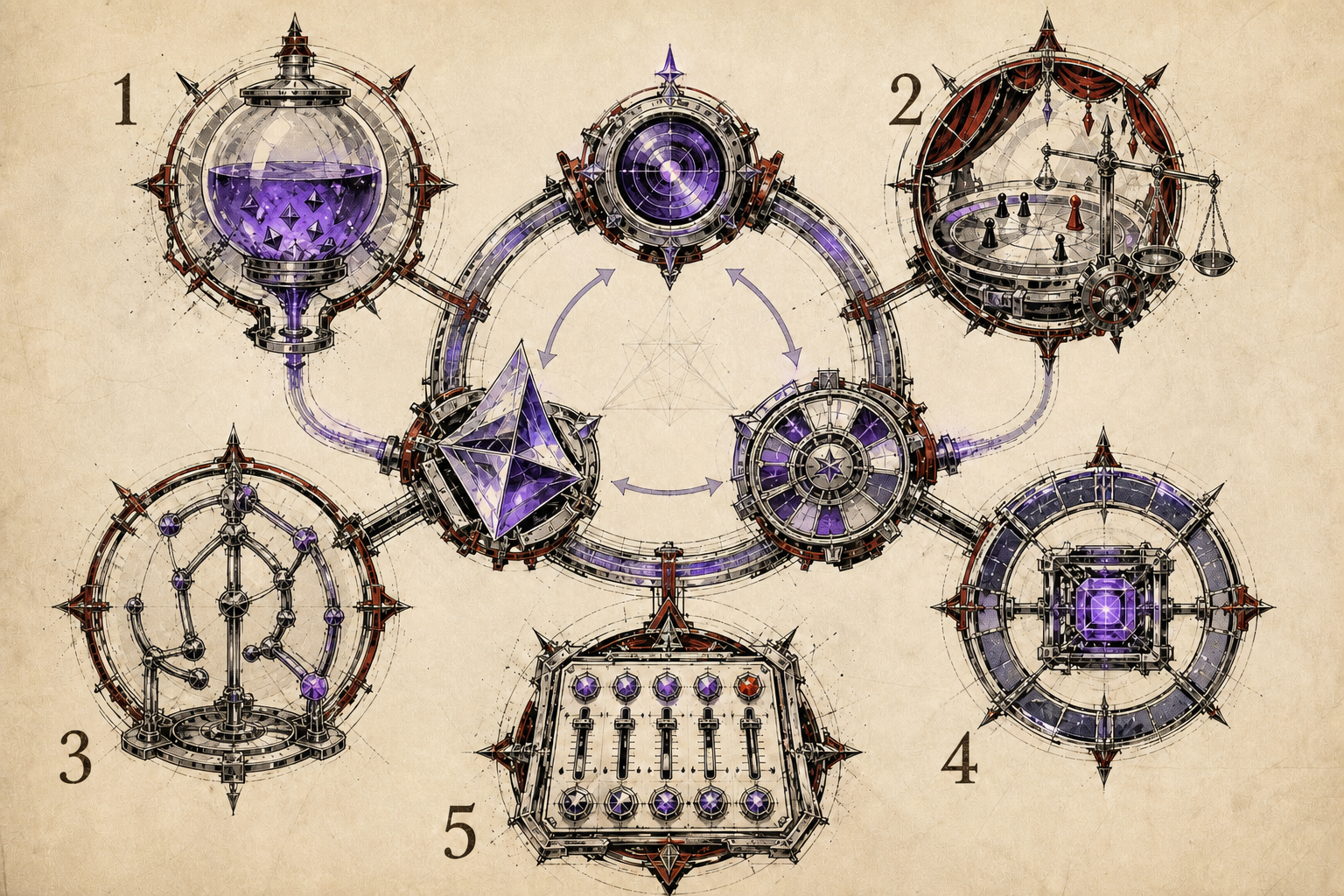
Game AI is constrained in ways that AI elsewhere is not, and the tightest constraint is the frame budget. Five limits are worth knowing before a project plans around any of this:
- Pre-training limitation. Game AI is not typically pre-trained the way a machine-learning model is. Building a neural network during development to learn from players is impractical, because the game has not been released and there are no players yet.
- Entertainment over optimisation. Games are designed to entertain and challenge rather than to be optimal. An agent trained to play optimally against humans often conflicts with what the designers intended.
- Realism requirement. Agents usually need to look realistic. Algorithms like AlphaGo can outperform humans, but the moves can seem alien, which is undesirable in a game simulating a human opponent — so the algorithm is tuned toward believable decisions rather than best ones.
- Real-time processing. The algorithm has to run in real time and cannot monopolise the CPU. Most games have between 16 and 33 milliseconds to process each frame of graphics, so a decision time of 10 milliseconds is already too long.
- Data-driven rather than hard-coded. A system driven by data lets non-coders adjust it and makes changes quicker to apply.
Where AI does not replace a game developer
In the present stages AI is not a replacement for developers, and the reasons are specific rather than sentimental. These are the parts of the work it does not cover:
- Multi-disciplinary collaboration. AI does not replicate the working synergy of artists, designers, programmers and writers, which is what innovative development runs on.
- Player-centric design. Developers understand player communities and design for a specific audience. AI lacks the nuanced reading of human desires and community feedback that a resonant game needs.
- Problem-solving and flexibility. AI can suggest solutions; developers bring the adaptability and critical thinking that unpredictable production problems require.
- Creativity and artistic expression. AI generates environments and characters competently, but not the intuition behind a distinctive one.
- Emotional depth and storytelling. Human developers weave narratives and build characters that land emotionally, which is beyond what AI does.
- Adaptive gameplay and dynamic interactions. AI can tailor gameplay to player behaviour up to a point; conceiving an adaptive experience is still a designer’s judgement.
- Quality assurance and holistic evaluation. AI tools detect bugs and optimise performance, but assessing how a game feels — gameplay to aesthetics — requires a person.
- Ethical considerations and cultural sensitivity. Content and character portrayal involve ethical decisions that need human empathy and an understanding of societal norms.
Whether AI can write the code as well as play the character is a separate question, and we have looked at it in can AI write its own code.
Where generative AI could go next
Generative AI could change game development further than the techniques above already have, by automating parts of production, enhancing graphics and visuals, and shaping gameplay mechanics. What that will amount to is not settled, and this section deliberately does not put a number on it.
These are tools, and the value comes from knowing how far to take each one. If you are weighing AI into a game project, talk to us and we will go through what your project actually needs.
Frequently asked questions
What is the role of AI in video game development?
By using AI, game developers strive to create more immersive and captivating gameplay experiences by simulating intelligent behaviour and adjusting game elements based on player actions and preferences.
What is the Sense/Think/Act cycle in game AI?
It is the loop a game agent runs, repeating with new data as the situation changes. The agent senses its environment — nearby threats, collectible items, points of interest — then decides on a course of action by weighing factors such as safety, combat or evasion, then executes that action, such as moving toward an enemy or an item.
What are some examples of AI-powered games?
GTA 5 uses machine learning to upscale low-resolution textures. FIFA uses it to balance complexity and adapt difficulty to player skill and behaviour. League of Legends uses it to identify toxic behaviour in chat. Minecraft uses machine-learning real-time translation so players speaking different languages can communicate, and PUBG analyses player behaviour to improve the experience.
What programming languages are commonly used for AI in game development?
Python, often paired with libraries like Pygame for its simplicity and robustness, and C++, frequently used with Unreal Engine for high-performance AI in many triple-A titles.
What are the main constraints of using AI in games?
Game AI is rarely pre-trained, because there are no players to learn from before release. Games are built to entertain rather than to play optimally, and an agent that plays perfectly can feel alien rather than realistic. The algorithm has to run in real time — most games have between 16 and 33 milliseconds to process each frame, so a decision time of 10 milliseconds is already too long. And a system that is data-driven rather than hard-coded lets non-coders adjust it.
Will AI replace game developers?
In the present stages, no. AI does not replicate the collaborative work of artists, designers, programmers and writers, the understanding of a player community, the creativity and emotional depth of storytelling, or the ethical and cultural judgement a game’s content requires. It is a tool that enhances what developers do.