


















Four new Wizards titles are live in the first-party demo lobby this week, and they could hardly be less alike. A cascading Egyptian lottery board, a 25-payline forest slot, a cartoon chicken crossing ten lanes of traffic and a rising crash curve now sit in the same catalogue, side by side, at four different RTP levels.
That spread is the story. A single lobby now carries a high-volatility lottery title, a low-volatility slot, a medium-volatility push-your-luck game and a low-volatility crash game, and each one asks the player a different question.
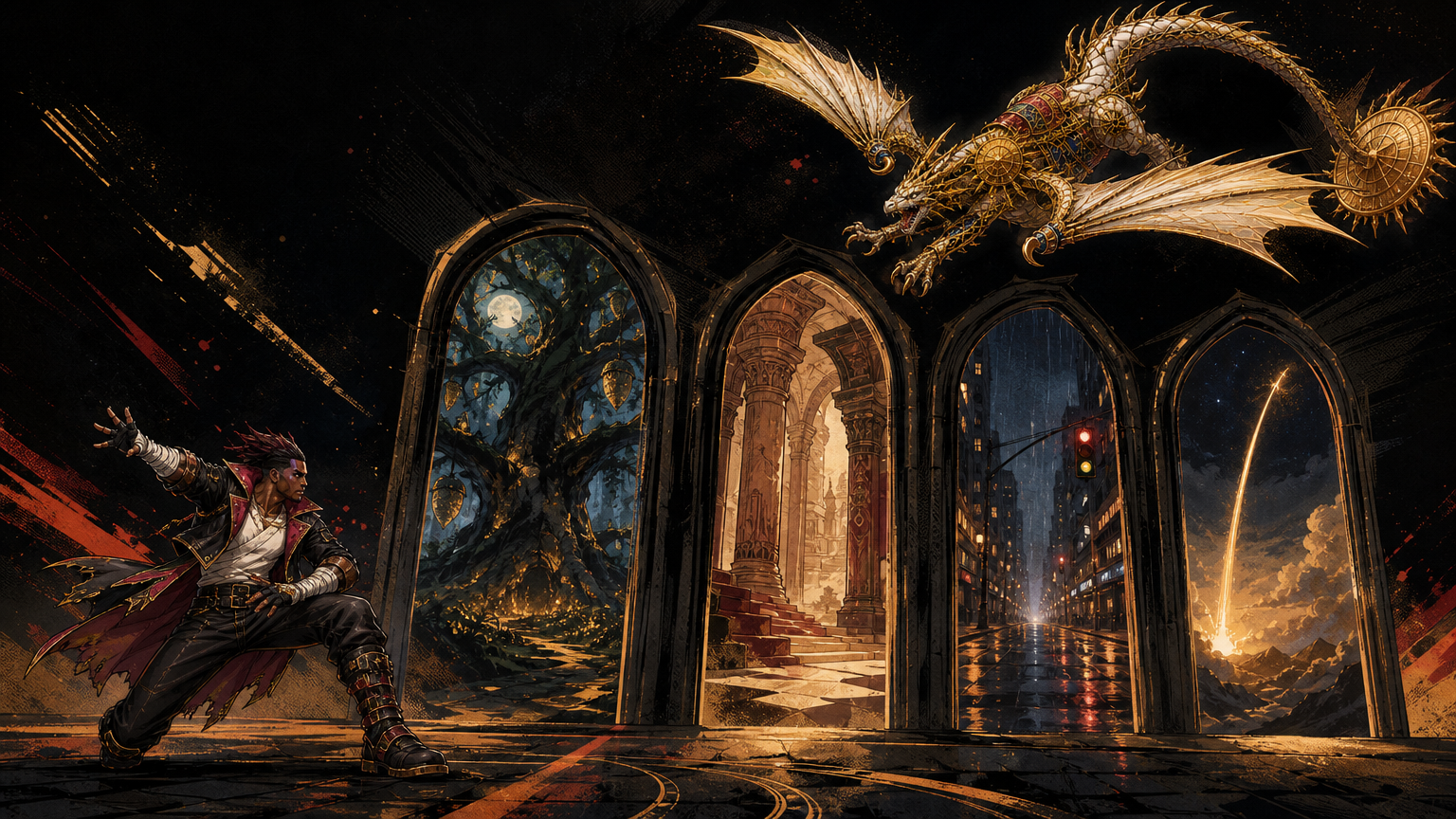
Four launches, one lobby
Sands Of Time and The Great Oak both went live on 17 September 2026, Royal Chicken followed on 16 September 2026, and Rei Da Sorte! has been running since 29 June 2026 and now shares the same lineup. All four are first-party Wizards games, all four are playable in the demo lobby, and every figure in this article was captured from those live demo builds on 21 September 2026.
The table below carries only values the live lobby publishes for the current demo build. Operator configuration can differ, and the authoritative figures are always the ones on the version you are playing.
| Game | Category | RTP | Volatility | Lobby release date | Lobby hit ratio |
|---|---|---|---|---|---|
| Sands Of Time | Lottery | 85% | High | 17 September 2026 | 29.08% |
| The Great Oak | Slot | 94% | Low | 17 September 2026 | 40% |
| Royal Chicken | Push Your Luck | 85.02% | Medium | 16 September 2026 | 28.08% |
| Rei Da Sorte! | Crash Game | 94% | Low | 29 June 2026 | 40% |
Sands Of Time: match anywhere, then let the board fall
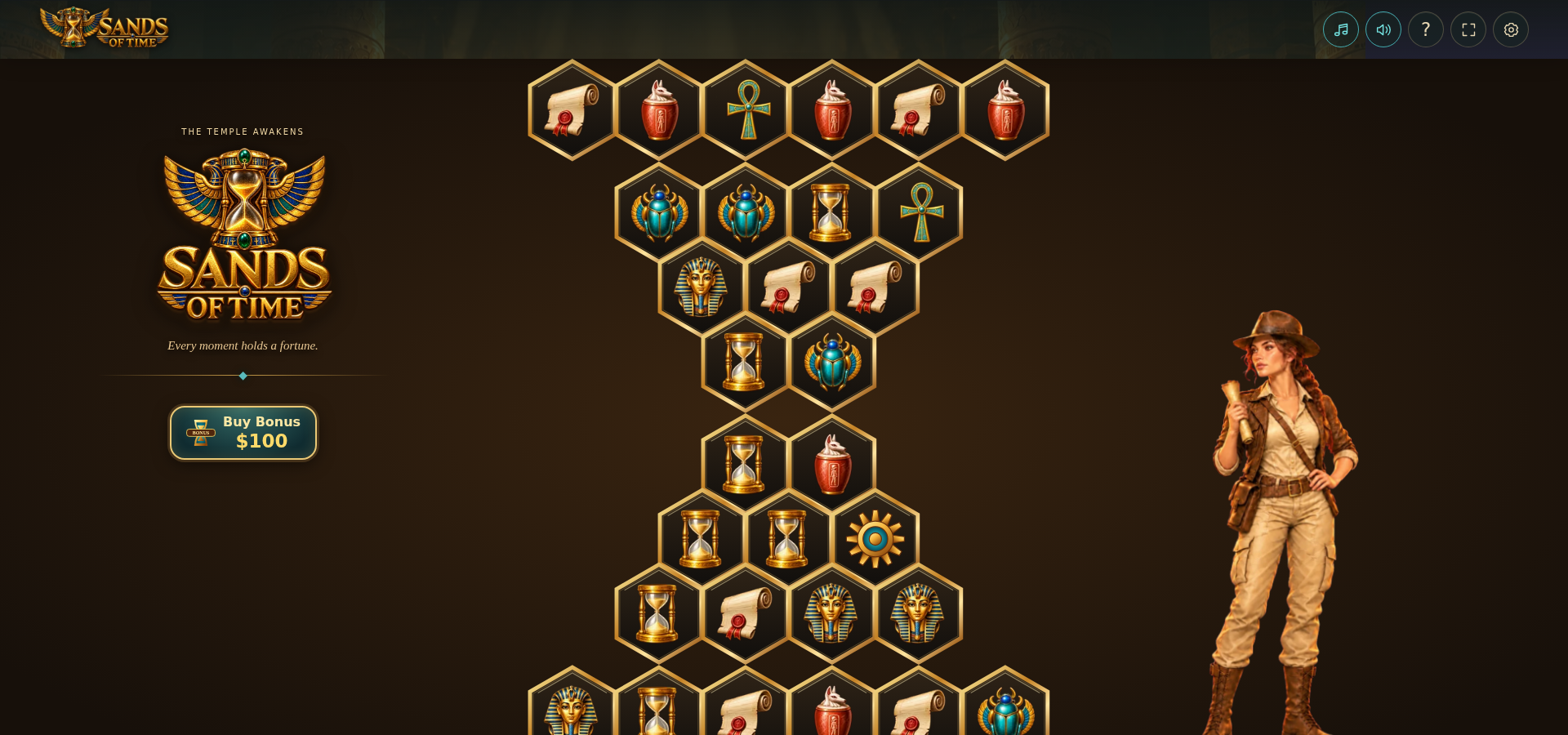
Sands Of Time is the most structurally unusual of the four. It is not a reel slot. The board is an hourglass made of hexagonal cells, and the demo explains the loop in three beats: land eight or more matching symbols anywhere on the board to win, watch the winning symbols vanish while new treasures tumble in from above, then collect the cascades that follow.
Four bonus symbols unlock 15 free plays, and the demo shell offers a bonus entry as well.
An eight-symbol threshold across a hex board is a different reading task from counting paylines. The player scans the whole hourglass instead of tracking a line, and every win reshapes the board underneath it. At an 85% RTP with high volatility, that is a game built for the session where one long cascade arrives, not for the steady drip.
The Great Oak: a 25-payline forest with a respin inside it
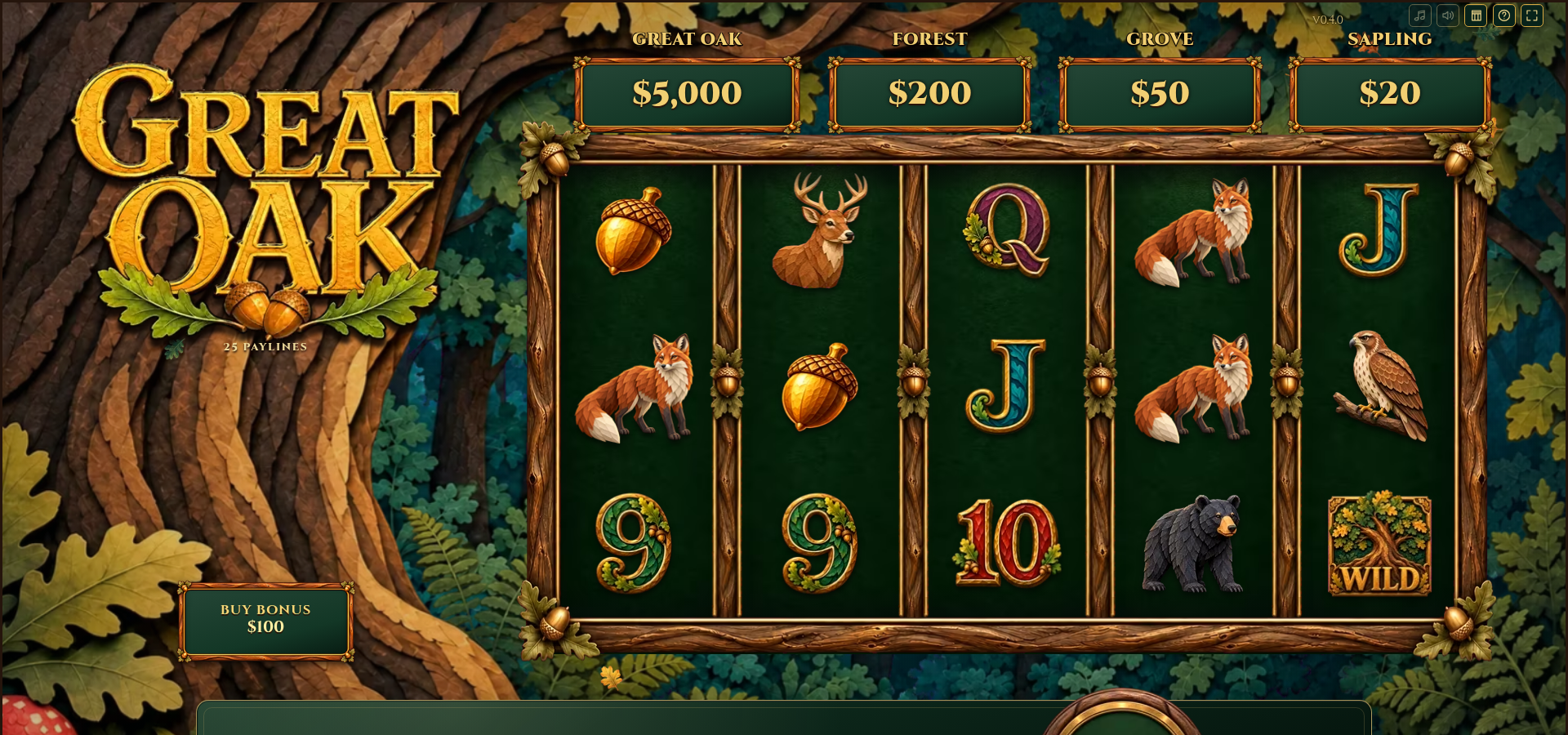
The Great Oak is the most familiar shape in this release and the calmest. It is a 5 by 3 slot with 25 paylines, and the board sits under a twisting oak canopy with acorns falling through the reels. The high symbols are woodland animals, the low symbols are card ranks, and the wild is the oak tree itself.
It is also the highest RTP of the four at 94% and the lowest volatility, and the game’s own published description names the Money Respin Bonus among its features. Those three facts point the same way: this is a title for players who want a long session with a wide, steady hit rate rather than a rare explosion.
Royal Chicken: ten lanes, rising multipliers and one honest decision
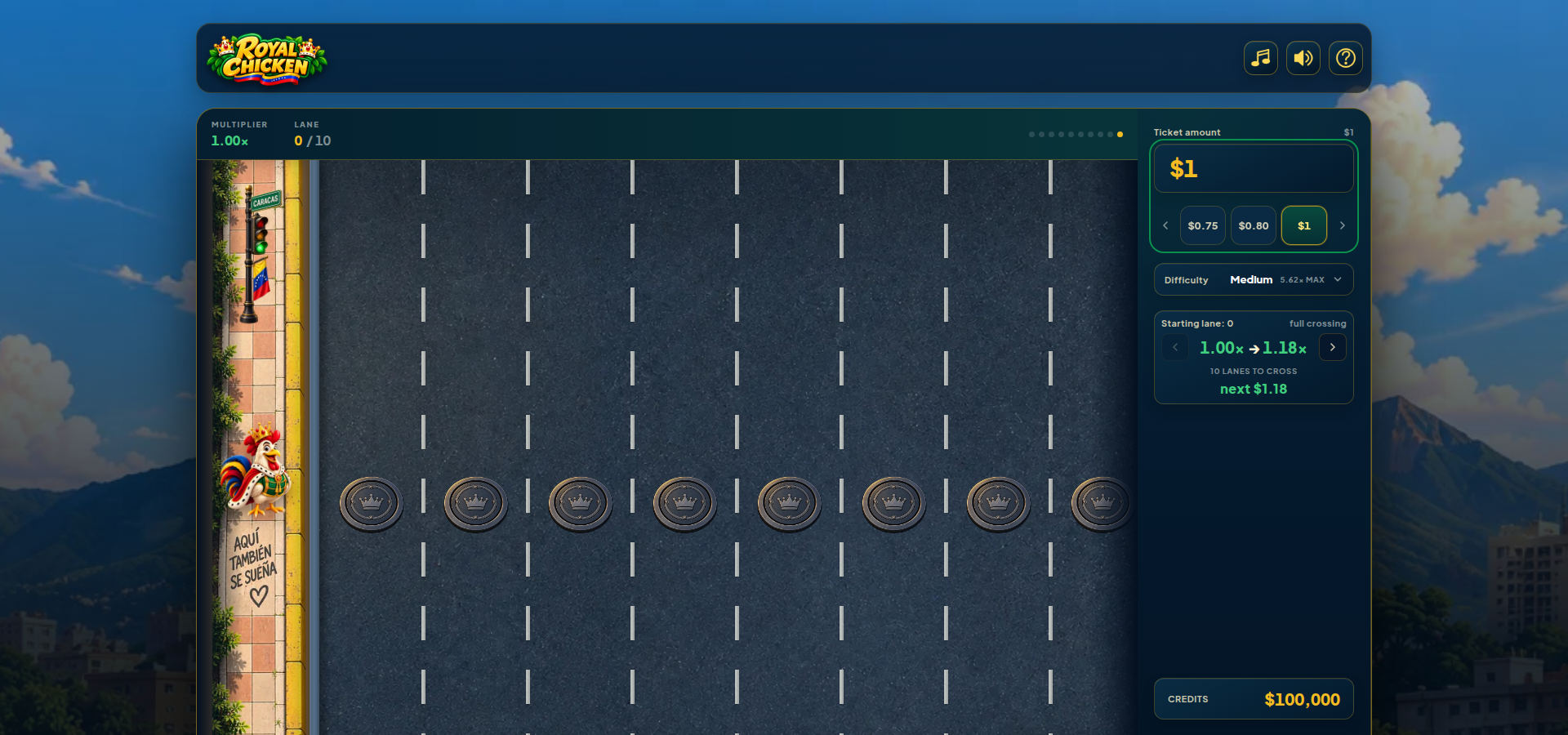
Royal Chicken is a push-your-luck game, and it explains itself quickly. A crowned chicken stands at the edge of a ten-lane road. Each lane crossed lifts the multiplier, and at any point the player can stop and bank the current amount instead of risking the next step. The demo labels the difficulty as medium and shows the multiplier ladder climbing lane by lane.
The genre lives on that decision. Nothing here is hidden math: the ladder is on screen, the current multiplier is on screen, and the exit is always available. That transparency is exactly why push-your-luck has become such a reliable format for short mobile sessions.
Rei Da Sorte!: a rising curve with a proof attached
Rei Da Sorte! is the crash game of the set and the longest-running of the four: it has been in the lobby since 29 June 2026 and now shares the same lineup as the three September releases.
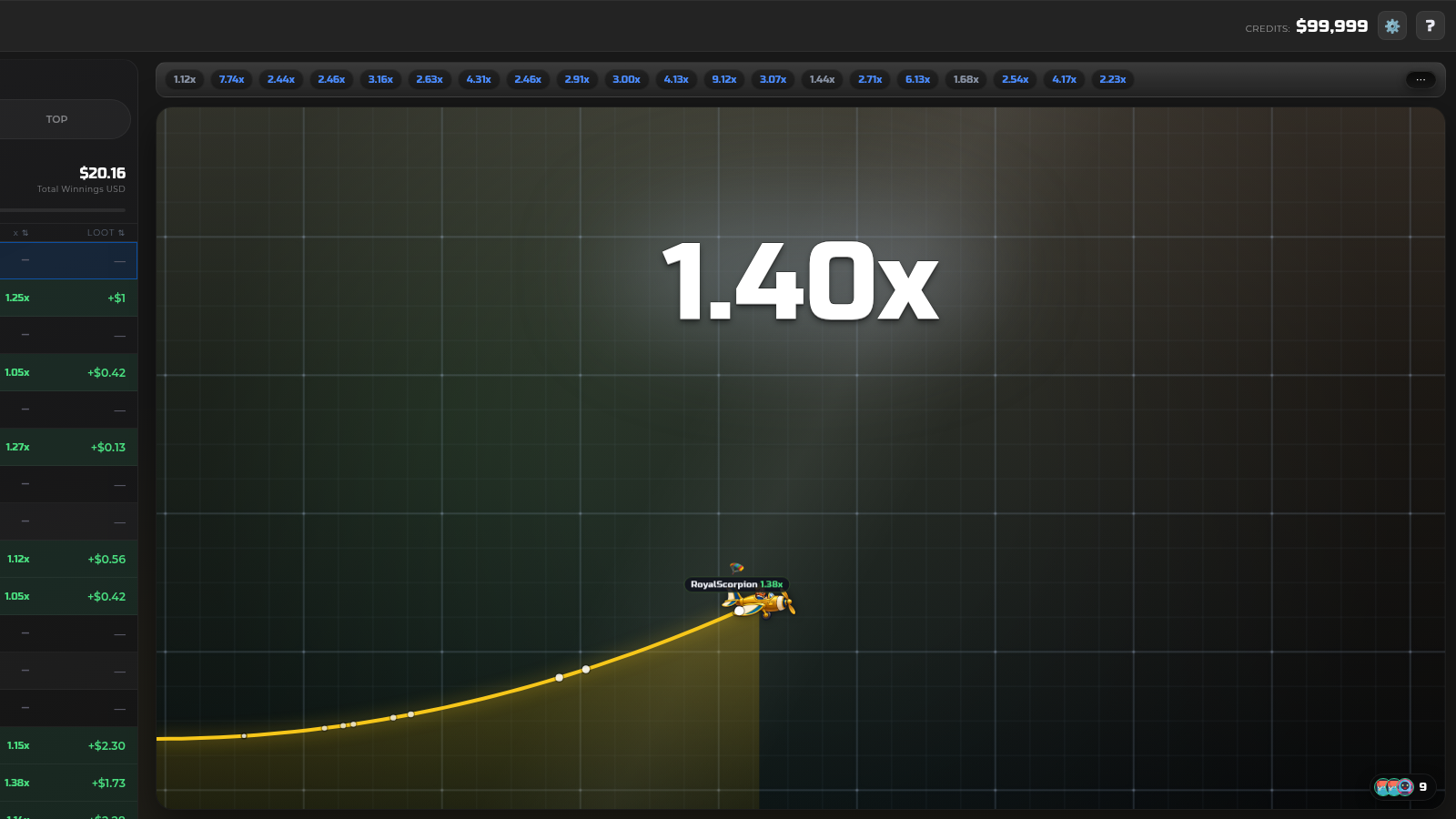
The demo shows the familiar shape. A multiplier curve climbs from 1.00x, a marker travels the curve, and the player cashes out before the round ends. The shell also states that the game is provably fair, which is the part worth noticing for platform teams: crash rounds are short, social and repeated, and the credibility of the round history is the product.
What the spread means for platform teams
Four launches in one week is a useful reminder of what a game platform actually absorbs. The four titles differ in board geometry, in win detection, in round length and in session shape, and a catalogue that carries all of them has to handle each of those differences without special-casing one game at a time.
The practical questions are the familiar ones. Does the integration layer read the round state the same way for a cascade board, a payline slot, a lane-by-lane crossing and a thirty-second crash round? Does the back office carry the same session, wallet and reporting semantics for all four? Does the player see one lobby, one balance and one history, whatever the mechanic underneath?
That is the work behind a launch week, and it is the part our teams spend most of their time on. If your roadmap has a game format in it that your platform was not built around, talk to the Wizards game development team, or read how we approach crash game development, lottery and instant games and casino game development first.
Every title in the set is playable right now with demo credits: play Sands Of Time, play The Great Oak, play Royal Chicken or play Rei Da Sorte!. The same demos also open from every card in the game catalogue.
Frequently asked questions
Which games joined the Wizards lobby this week?
Sands Of Time (lottery), The Great Oak (slot), Royal Chicken (push your luck) and Rei Da Sorte! (crash game) are all live in the Wizards demo lobby as of 21 September 2026.
What is the RTP of each new game?
The live lobby publishes 85% for Sands Of Time, 94% for The Great Oak, 85.02% for Royal Chicken and 94% for Rei Da Sorte! for the current demo build. RTP is a configuration value, so the figure on the version you are playing is the one that applies.
Do these four games share the same volatility?
No. Sands Of Time is high volatility, The Great Oak and Rei Da Sorte! are low, and Royal Chicken is medium. The set was clearly built to cover different session lengths rather than one audience.
Can I try the new games before integrating them?
Yes. Each catalogue card opens the first-party demo build in the browser, and the four figures in this article were captured from those demo builds on 21 September 2026.