







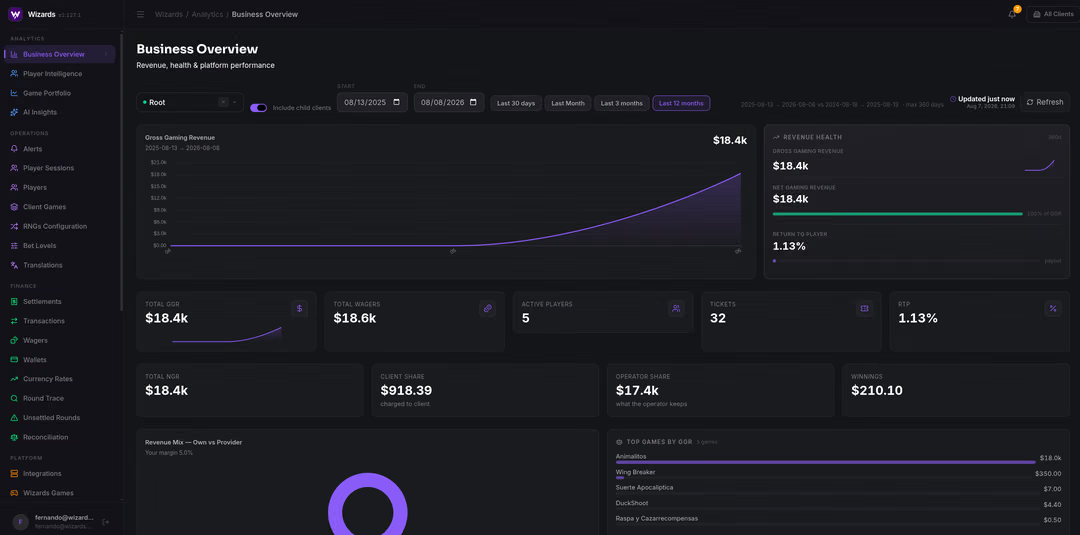
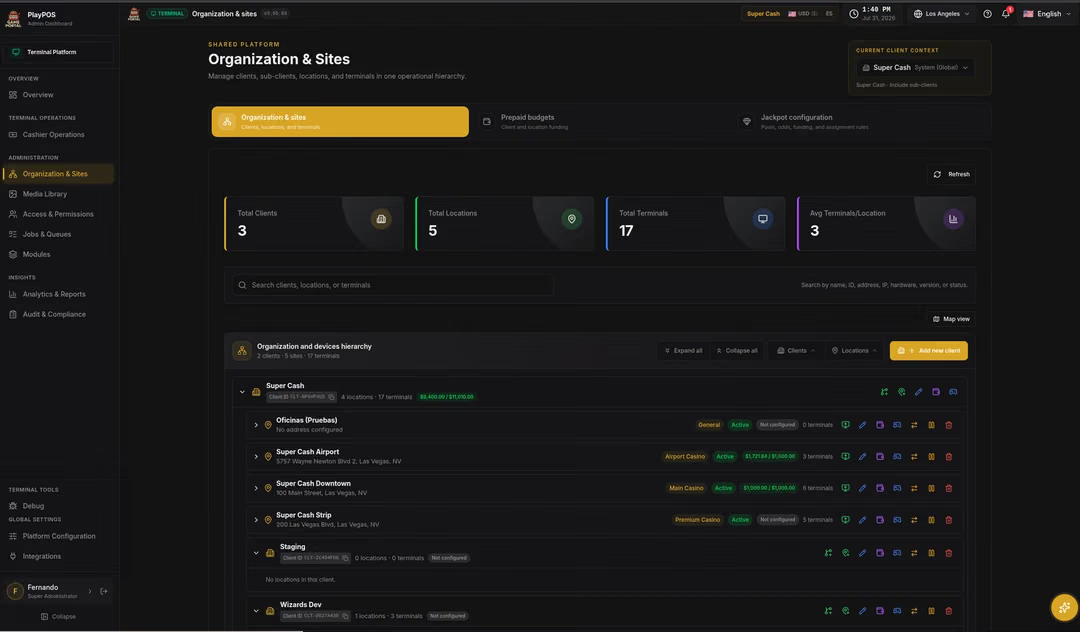

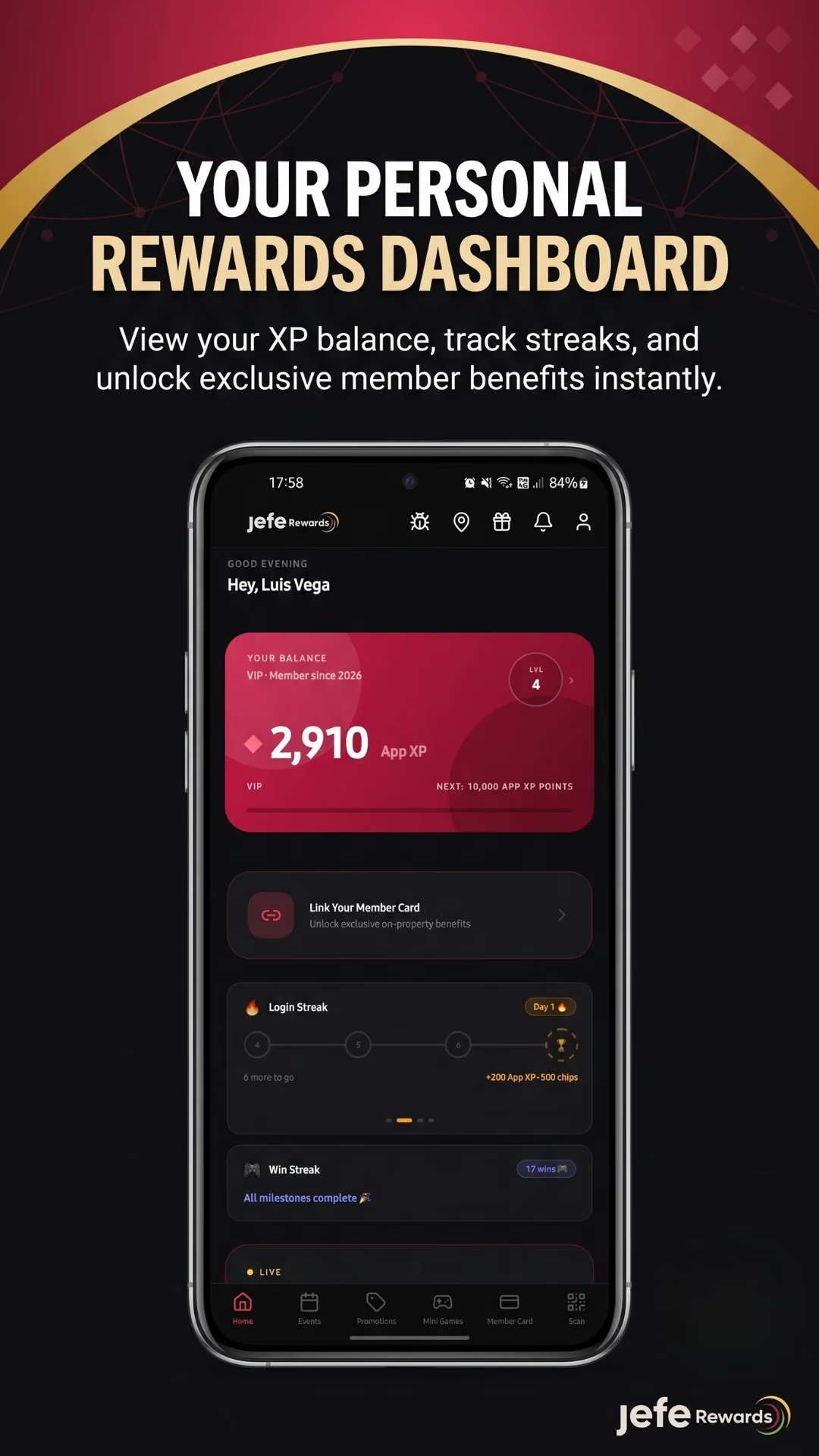










A commissioned slot can clear every build gate and still sit unlisted for a fortnight. What blocks it is rarely the game. It is the lobby tile that was drawn at one size while the lobby renders three, the display name that was never agreed in the market’s own language, the help screen that exists only in English, the marketing sentence that legal will not sign because nobody can point at the number behind it, and the demo build nobody decided about.
Those are delivery artefacts. They are cheap to produce at the end of a project and expensive to assemble after the fact, which is why the list belongs in the brief rather than in the week before launch.
The pack is a delivery list, not a build
A go-live pack is the set of files and decisions a catalogue needs in order to show a game to a player in a specific market. It is not the source repository, and it is not the submission package either — the submission package is what goes to the platform for approval, while the go-live pack is what the operator, distributor and lobby need afterwards.
The distinction matters because the two have different owners, different deadlines and different failure modes. A submission can be complete while the pack is empty, and the game then exists and cannot be placed.
Item one: the build the pack points at
Every other item in the pack refers back to one exact build. That means the front build version and the approved maths version, written down as identifiers rather than as “latest”, because on Engine the approved figures are the game: base RTP, per-mode RTP where the title carries more than one mode, the maximum win and the single-round standard deviation are fixed at approval, and a change afterwards is accepted only to fix a confirmed bug.
A pack that says “current build” has no defence when a lobby tile, a help screen and a live round disagree. The maths model requirements describe the document set that makes this reference checkable, and the stage-gate register describes the point at which it should already be written.
Item two: catalogue metadata, per locale
Catalogue metadata is the least glamorous item and the one most often rewritten by the receiving side. It covers the display name in each market language, the short descriptor used under the title in the lobby, the theme and feature tags the catalogue filters on, and the volatility and RTP descriptors the catalogue is allowed to display.
Two constraints are worth fixing in the brief. First, the display name is a marketing decision, not a translation: a name that works in English may collide with an existing title, read as a different genre, or be unhelpfully long in a narrow lobby card. Second, the descriptors must match the approved maths rather than the studio’s impression of it, which is why this item and the claims sheet are written by the same person.
Item three: lobby artwork at the sizes the lobby renders
Lobby art is where a game most often looks unlike itself. The feature illustration, the portrait loading screen, the square icon and the wide banner are four different compositions, and a single master cropped four ways reads as four different games.
The practical fix is to ask the receiving catalogue for its actual asset specification before art production starts, and to deliver against that specification rather than against an assumed set. Where a platform overlays its own type on a tile, the delivered artwork has to arrive without baked-in title lettering or it will double up on the finished card.
A text-free variant of each tile is worth having in the pack even where the platform does not require it, because promotional placements outside the lobby frequently do.
Item four: the per-locale text set
The in-game strings, the help and paytable screens, the mode names and the localised promotional copy are one set, not four independent jobs. They have to arrive in the same file structure with the same message identifiers so that a marketplace can swap a language without touching the build.
The localisation architecture covers how the client carries strings, formats and fallbacks; the go-live pack is the delivered output of that architecture. Two checks belong in the pack itself: that every shipped locale covers every visible string with no fallback to English on a screen the player will definitely open, and that no text was baked into artwork that would otherwise need re-exporting for the next language.
Item five: the demo build decision
Whether a free-play build is published beside the real-money game is a decision that should be made once, in writing, before launch. It affects the catalogue entry, the marketing links, and in some markets the way the game may be promoted at all.
The pack should state whether a demo exists, which build and maths version backs it, and which routes the demo is allowed to appear on. A demo that drifts from the approved build is worse than no demo: it shows a version of the game that no regulator ever saw.
Item six: the claims sheet
The claims sheet is a short list of sentences about the game that are approved for marketing use, each with the evidence that supports it: the RTP figure and the approval record behind it, the volatility descriptor drawn from the approved distribution, the maximum win, and the feature list.
What does not belong on it is anything the maths cannot support — an expected return framed as a promise, a comparison against unnamed competitors, a win frequency quoted from a prototype rather than from the approved model. Where a market restricts how a game may be described, the restrictions belong on the sheet beside the sentences they limit, so that the marketing team is working from the same document the compliance review signed.
Item seven: support and monitoring handoff
A game that is live and unobserved is a game whose first incident will be diagnosed by whoever answers the email. The pack should name the contact on each side, the escalation path, the meaning of each error the client can surface, and what the game’s own reporting does and does not measure.
This is also the place to record what the receiving platform will monitor on its own side, so that the two graphs are not mistaken for each other during an incident.
Item eight: asset provenance and licence record
Every shipped picture, font and sound carries a provenance entry: who made it, under what terms, and whether it can be used in marketing as well as in the game. A studio that generated or licensed art internally still has to hand over that record, because the operator’s marketing team will reuse the art in places the studio never sees.
Provenance is also what makes a later art change safe. Without it, replacing a symbol means re-clearing rights under time pressure.
What has to be frozen before the lobby sees it
The pack has a boundary inside it. The build reference, the maths version, the mode index and the display names in each approved language are frozen at launch: changing any of them after publication is a new submission or a new market entry, not a catalogue edit.
The rest is configurable within the limits the platform sets — lobby art within the specification, promotional copy within the claims sheet, which locale is shown by default. Which settings an operator can own without a new certificate draws that line in more detail, and the difference between the two sides of it is exactly what the pack should make explicit.
Where the pack sits against the tests and the submission
Three artefacts are frequently confused, and each has a different reader:
- The submission package goes to the platform so the game can be approved.
- The integration tests are run by the aggregator or platform to prove the game behaves inside its own environment.
- The go-live pack is what the catalogue, the marketing team and the support desk consume.
A launch that treats them as one item will discover the difference in the week it is supposed to go live. A launch that treats them as three items with three owners finishes each one when it is actually finished.
What the pack cannot do
It cannot make a game perform. It cannot substitute for the aggregator’s own acceptance work, for the operator’s reconciliation reporting, or for whatever the market’s regulator requires of the operator specifically. And it cannot repair a brief that never named the asset sizes: art delivered at one size can be re-cropped, but a composition that was never designed for a square card will stay a crop.
It is also not a substitute for the brand brief that started the project. The brief sets the intent; the pack is the evidence that the intent was delivered.
A short list to send with a quote request
The useful preparation is small: the catalogue’s asset specification, the market and language list, the strings you need localised, whether a demo is planned, and who signs the claims. With those five, comparing proposals becomes a comparison of deliverables rather than of adjectives, and a slate of games shares one pack structure instead of producing four.
The studio engagement route describes how production is structured around these deliverables. If you are assembling the asset and locale list for a commission and want it defined against your catalogue, request a project quote with the list you already have.
Questions buyers ask
What is a go-live pack for a commissioned slot?
It is the delivery set a catalogue needs in order to list the game in a specific market: the exact front build and approved maths version, per-locale display names and descriptors, lobby artwork at the sizes the lobby renders, the localised text set, the demo decision, an approved claims sheet, the support handoff and the provenance record for every shipped asset. It is separate from the platform submission package and from the aggregator’s own integration tests.
Who produces the lobby artwork, the studio or the operator?
Usually the studio, because it already holds the art system, but the specification belongs to the receiving catalogue. The brief should name the sizes, whether type is overlaid by the platform, and whether a text-free variant is required, otherwise the studio delivers a master that has to be cropped into four compositions that were never designed.
Does every market need its own build?
Not necessarily its own build, but it does need agreed per-market metadata and text. Where a market’s regulator requires a certified build with its own configuration, the pack has to name that exact approved build rather than “latest”, and the maths version has to match the approval record for that market.
What can change after the game is listed?
Lobby art within the catalogue’s specification, promotional copy within the claims sheet, and which locale displays by default. The build reference, the approved maths, the mode index and the approved display names in each language are frozen at launch: changing them is a new submission or a new market entry, not a catalogue edit.
How long should the pack take to assemble?
It depends on how much of it was specified in the brief. Assembling lobby art, four locales of strings and a claims sheet at the end of a project is a compressed production job; naming all four at the start spreads the same work across phases that already exist. No fixed duration is claimed here, because the deliverable list is the variable.