







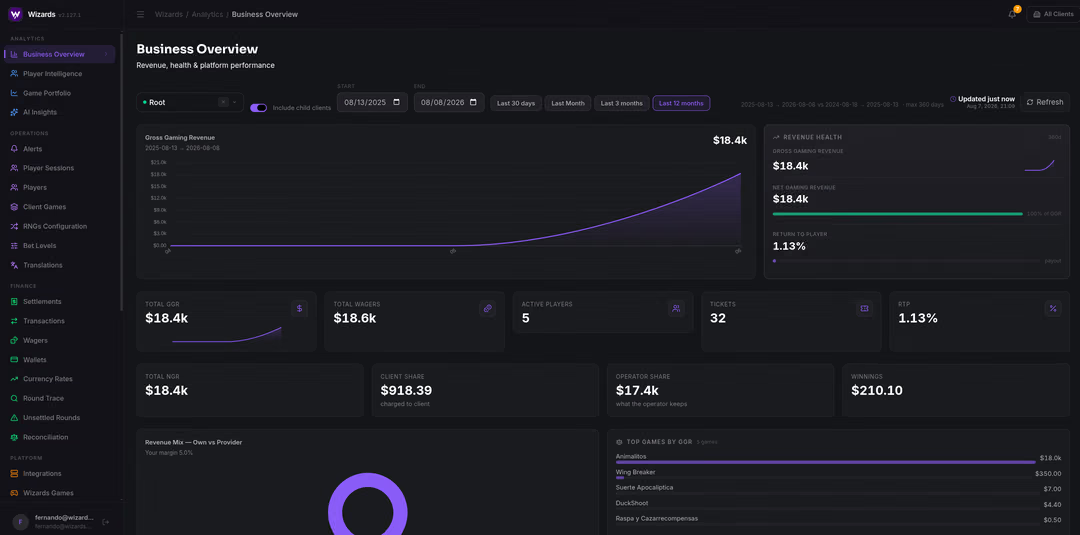
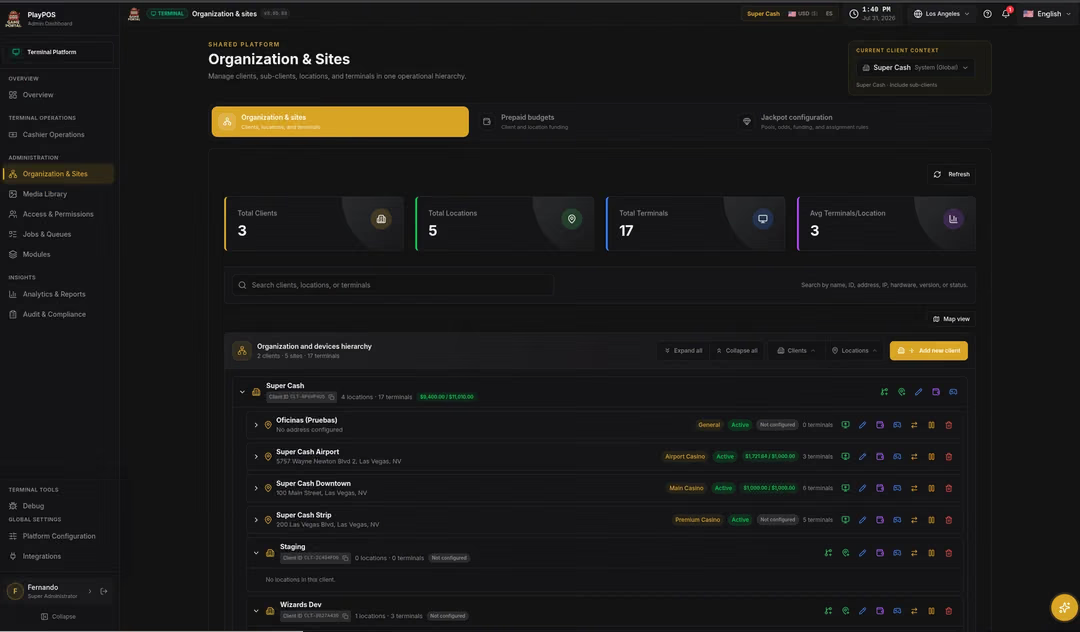

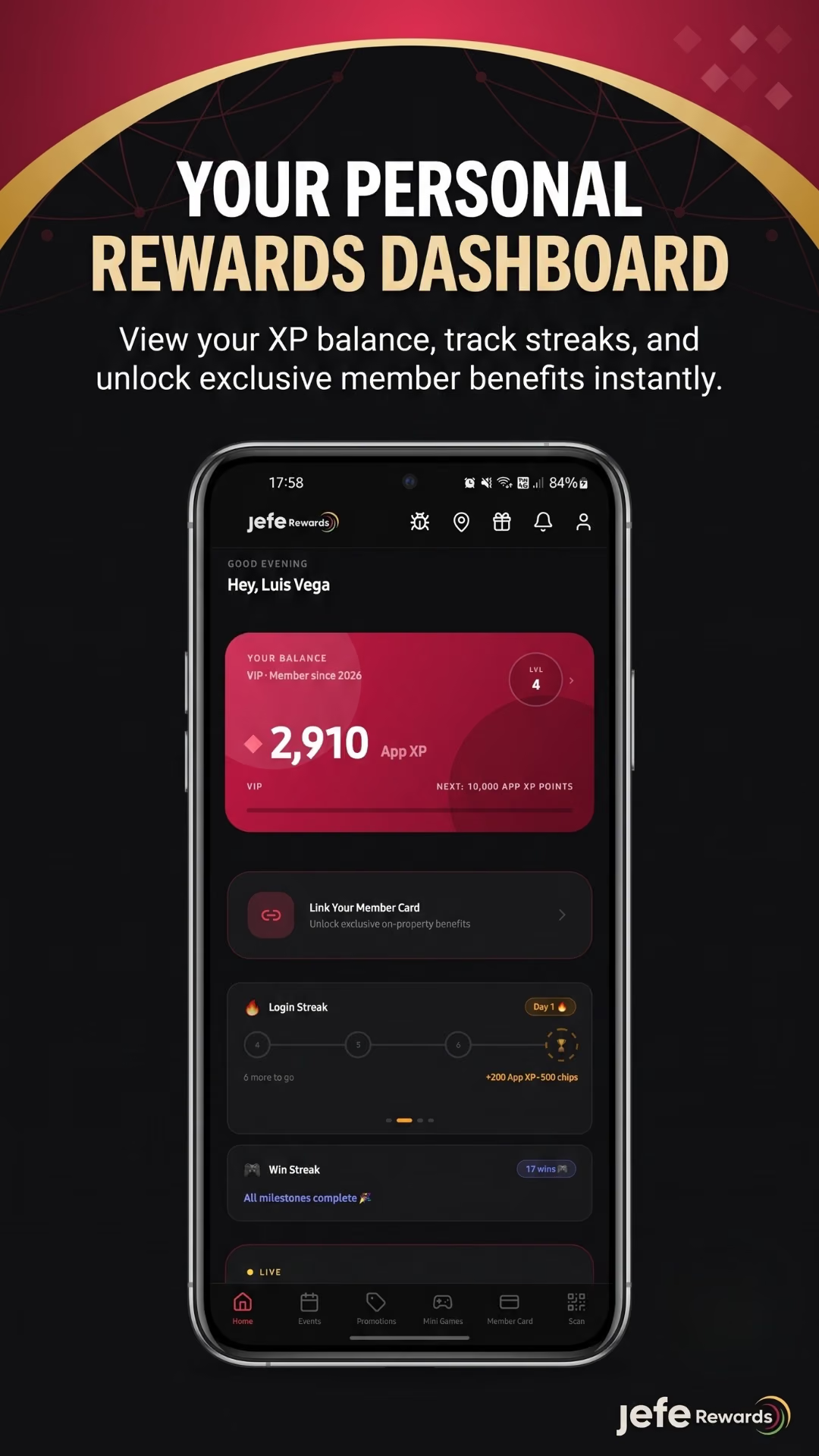











High Player Acquisition Cost (PAC) has made the traditional churn-heavy model unsustainable for modern casino operators. The strategic implementation of gamification in iGaming offers a technical framework to bridge the gap between initial deposit and long-term Lifetime Value (LTV). While these features increase engagement, operators must balance reward frequency with mathematical volatility to ensure that incentive layers do not cannibalize the house edge or violate local bonus regulations.
Effective gamification is not a superficial layer of graphics but a data-intensive infrastructure that tracks player behavior in real-time to trigger meaningful interactions. Selecting an experienced iGaming & Digital Marketing Solutions Provider ensures that these systems are integrated without compromising platform stability or core performance. By treating engagement as a measurable product feature, stakeholders can transform passive users into loyal brand advocates through structured progression and sophisticated data architecture.

How gamification shifts iGaming from transactional to experience-driven
Gamification in the betting sector represents a shift from a purely transactional model to an experience-driven ecosystem. It functions as a system of extrinsic and intrinsic incentives that reward players for actions beyond the core betting mechanic. For a Product Manager, this means creating a roadmap where player milestones directly correlate with increased session frequency and reduced churn rates.
The relationship between structured milestones and retention is primarily driven by the psychology of progress. When players perceive they are advancing toward a goal, their propensity to abandon the platform decreases significantly. This transition from a simple bet-and-win cycle to a model based on status and achievement allows operators to build a more resilient relationship with their user base.
From a business perspective, the strategic impact is measured through the extension of the player lifecycle. By rewarding loyalty and activity rather than just deposit volume, operators can stabilize their revenue streams. This approach creates a competitive moat that makes it harder for players to migrate to another platform where they would have to start their progress from zero.
Core mechanics that drive measurable LTV growth
To achieve a positive return on investment, product teams must select mechanics that align with specific business KPIs. These elements should not be viewed as mere games within games but as tactical tools designed to influence user behavior patterns. Implementing the following components can significantly enhance the stickiness of the platform and the average revenue per user.
- Progression systems: These include levels and experience bars that track real-time activity to provide a sense of continuous growth and long-term platform commitment.
- Social proof and competition: Leaderboards and real-time tournaments foster a community environment that leverages natural competitive drives to increase daily active user metrics.
- Personalized missions: Leveraging historical data allows operators to offer bespoke challenges that align with individual preferences, ensuring high completion rates and relevant rewards.
Each of these mechanics serves a distinct purpose in the retention funnel. While progression systems focus on long-term loyalty, social features drive short-term engagement spikes during peak hours. Personalized missions are particularly effective at reactivating dormant users by providing them with specific, achievable goals that resonate with their past playing habits and preferences.
Technical requirements for real-time engagement layers
Implementing a gamification layer requires a robust technical architecture capable of handling high-velocity data streams. CTOs must ensure that the system can process player actions instantly to trigger rewards without introducing latency to the core gaming experience. An event-driven architecture is often the most effective way to manage these complex interactions across thousands of concurrent sessions.
Seamless integration is critical to avoid the high costs of rebuilding a legacy casino or sportsbook platform. Modern gamification modules should connect via flexible APIs, allowing the engagement layer to sit on top of the existing iGaming platform infrastructure without decoupling the primary betting engine from the gamification logic. This modular approach facilitates easier updates and maintenance over time.
Data consistency and security are paramount when rewards and status are involved. The infrastructure must be audit-ready and resistant to exploits, ensuring that all progression and prizes are calculated accurately based on verified game outcomes. High scalability is also a requirement to handle the sudden traffic surges typical during major sporting events or large-scale marketing campaigns.

Navigating compliance and responsible gaming in gamified products
As regulators increase their focus on player protection, gamification must be implemented with a strong compliance-first mindset. Operators need to distinguish between mechanics that provide genuine value and those that could be perceived as encouraging excessive or compulsive play. Transparency in the terms and conditions of every gamified promotion is essential to maintain licensing in strict jurisdictions.
In markets like the United Kingdom or Spain, the use of rewards must be carefully calibrated to avoid being classified as prohibited inducements. Best practices suggest focusing on non-monetary rewards or status-based incentives that do not directly require increased spending. Clear communication regarding how points are earned and the actual value of rewards helps mitigate regulatory risks and builds user trust.
Interestingly, gamification can serve as a powerful tool for promoting responsible gaming. Operators can implement badges for players who set deposit limits or take cooling-off periods, turning safety features into a part of the user experience. By rewarding healthy gaming habits, platforms can demonstrate their commitment to player welfare while simultaneously improving their long-term sustainability and brand reputation.

Build versus buy decisions for iGaming operators
The decision to develop an in-house gamification engine or partner with a third-party provider is a critical strategic crossroads. Building an internal solution allows for maximum customization and total control over the roadmap. However, the hidden costs of specialized technical maintenance and the significant time-to-market delay often outweigh the benefits for small to medium-sized operators.
Modular third-party solutions offer a significantly faster deployment cycle, allowing operators to test and iterate on engagement strategies within weeks rather than months. These providers bring industry-wide experience and pre-certified modules that reduce the burden on internal engineering teams. This allows the operator to focus their resources on core business growth and marketing rather than backend infrastructure management.
When evaluating vendors, stakeholders should prioritize scalability, ease of API integration, and the ability to maintain brand alignment. Operators looking to complement their engagement layer with strong casino game development capabilities will find that a vendor offering both areas under one roof delivers the most cohesive player experience. Balancing operational efficiency with the need for a unique user experience is the key to making a profitable build-versus-buy decision.
Future-proofing retention through data-driven gamification
The evolution of retention strategies relies on the continuous analysis of user behavior data. Operators should not view gamification as a set-and-forget feature but as a dynamic system that requires constant optimization. A/B testing different mechanics and reward structures allows for a data-driven approach to understanding what truly motivates specific player segments in a saturated market.
As the iGaming landscape becomes increasingly competitive, a sophisticated gamification layer becomes a defensible advantage. By aligning the technical stack with the psychological drivers of the modern player, operators can build a platform that is both engaging and sustainable. Success lies in the ability to balance innovative design with technical reliability and a deep commitment to regulatory standards and player safety.
To stay ahead of market trends, operators need partners that understand both the technical and strategic nuances of the industry. If you are ready to build or upgrade your retention architecture, our team at Wizards can help you design and implement a gamification strategy that is both commercially effective and regulation-ready. Reach out and let’s talk about what the right approach looks like for your platform.
FAQs about iGaming gamification and player retention
Which gamification mechanics have the biggest effect on retention?
Three do different jobs and are chosen against different KPIs. Progression systems — levels and experience bars tracking real-time activity — work on long-term loyalty. Leaderboards and real-time tournaments drive short-term engagement spikes during peak hours. Personalised missions built on historical data are the ones that reactivate dormant users, because they set a specific achievable goal that matches how that player already plays.
What technical infrastructure should be in place before integrating an external engagement layer into an existing iGaming platform?
Operators should ensure their core betting engine supports real-time data exports via stable APIs or webhooks. A robust event-driven architecture is necessary to feed player actions into the engagement layer without creating latency in the game loop. Additionally, having a centralized user identity system is critical for tracking progress across different game providers or verticals. Proper documentation of the current data schema and a dedicated staging environment for stress testing the integration are also essential prerequisites to avoid disrupting the live user experience during deployment.
How do operators balance gamification rewards against the mathematical margin?
Balancing incentive layers requires a careful alignment between product and finance departments. Instead of purely monetary bonuses, sophisticated operators often focus on status-based rewards or non-cashable tokens that enhance experience without direct financial liability. If monetary rewards are used, they must be factored into the total marketing spend as a percentage of the gross gaming revenue. Using data-driven simulations helps predict the potential impact of rewards on the house edge, ensuring that the cost of increased retention does not exceed the incremental lifetime value generated.
What kind of internal team is typically required to manage and optimize iGaming retention features on a daily basis?
Beyond initial development, successful operation usually requires a cross-functional team to manage the system effectively. A Product Manager is needed to design the roadmap of missions, while a Data Analyst monitors the impact on key metrics like churn and average revenue per user. Marketing specialists are often responsible for configuring the actual campaigns and reward distributions within the backend. For smaller operators, many of these roles can be streamlined if the chosen solution offers automated tools for player segmentation and reward delivery.
How can betting operators maintain a consistent player experience across mobile and desktop when using complex progression systems?
Consistency relies on a server-side approach to logic rather than client-side implementation. By processing all milestones and rewards on the backend, the platform ensures that a player’s progress is updated instantly regardless of the device they use. This requires seamless synchronization of the user session across different frontends. Operators should prioritize solutions that use lightweight API calls to fetch player status, ensuring that the visual elements of the progression system load quickly on mobile devices without consuming excessive bandwidth or processing power.
What specific technical indicators suggest that a gamification provider may struggle with high-volume traffic during major events?
Operators should look for signs of high latency in the provider’s API response times during historical peak hours. If a vendor lacks a proven track record of handling concurrent sessions in the tens of thousands, their infrastructure may cause reward lag, where players complete missions but do not see immediate feedback. Another red flag is the lack of independent security certifications or a transparent disaster recovery plan. CTOs should demand load testing results and clear service level agreements regarding uptime and data processing speeds.