







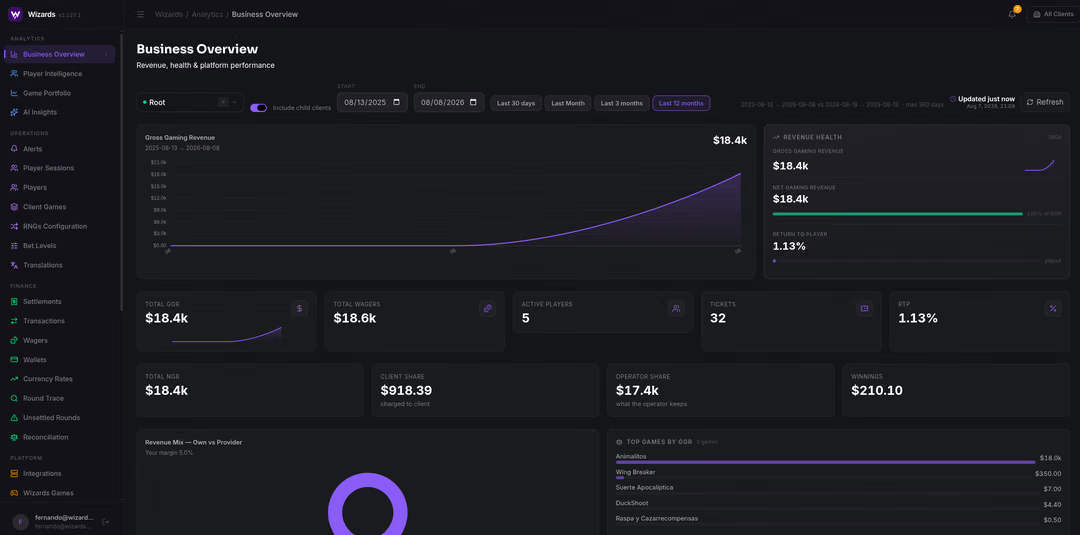
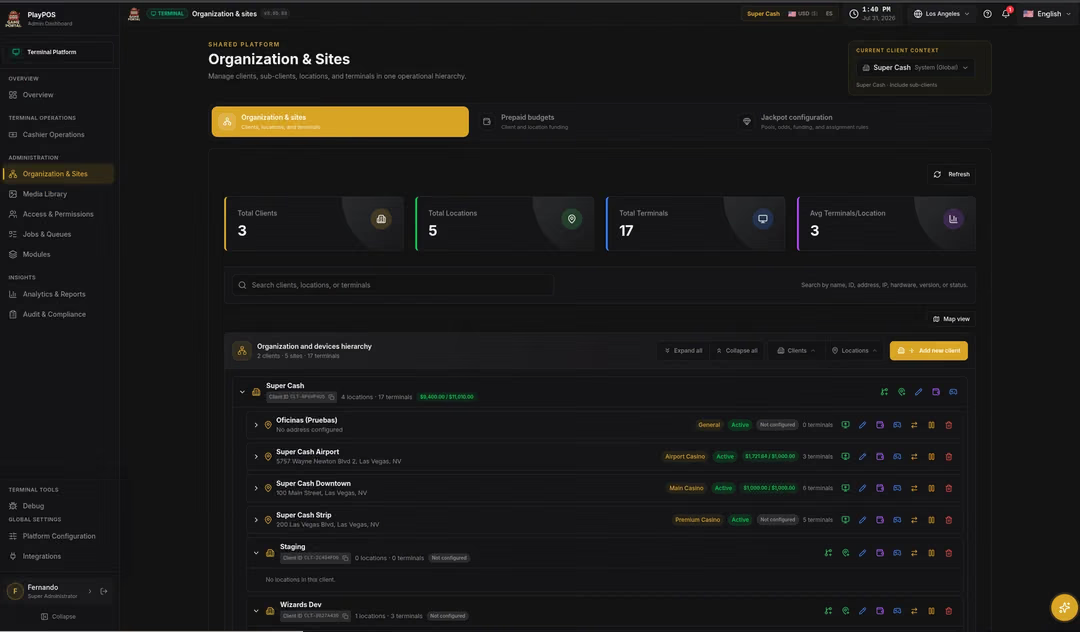













Development cycles in the iGaming industry require long-term foresight because the infrastructure built today defines the competitive capacity of tomorrow. As we analyze the iGaming trends 2026, the focus transitions from merely adding features to architecting intelligence into the core platform. Operators must recognize that late adoption of modular systems leads to significant technical debt in highly regulated environments where agility is a requirement.
Successfully navigating these structural shifts requires a partner capable of merging high-level software engineering with deep industry insight. For mid-to-large scale operators, collaborating with a specialized gaming company is essential for building sustainable growth models. This strategic alignment ensures that infrastructure remains resilient while adapting to the evolving demands of data-driven player management and global regulatory expansion.

The technological pillars of iGaming trends 2026
Artificial Intelligence is evolving from a marketing buzzword into a functional necessity for real-time CRM performance. Static segmentation is increasingly expected to give way to hyper-personalization engines that adjust game lobbies and bonusing dynamically. This shift allows operators to optimize margins by delivering precise value to specific player profiles without manual intervention or broad-market discounting strategies that erode profitability.
The architectural move toward microservices and API-first logic is no longer optional for those seeking scalability across multiple jurisdictions. Decoupling the frontend from the backend enables faster deployment cycles and easier integration of third-party tools. This modularity ensures that a platform can evolve without the risk of a total system failure often associated with legacy monolithic structures during high-traffic events.
Edge computing is becoming a key standard for reducing latency in high-stakes environments like live dealer sessions and real-time sports betting. Processing data closer to the user minimizes the delay between an event and the settlement, which is critical for maintaining game integrity. For CTOs, this technology represents a meaningful improvement in user experience and operational reliability across diverse geographic locations.
What operators should prepare for in the regulatory landscape?
Compliance is increasingly becoming a technical feature rather than a separate legal hurdle that slows down the business. Automated KYC and AML workflows are becoming standard requirements in expanding regulated markets, and building the right iGaming compliance infrastructure now reduces the margin for human error while keeping operations within strict regulatory bounds without increasing operational headcount.
The technical requirements for market entry are becoming more complex as authorities demand greater transparency. To maintain a competitive edge, operators must integrate specific systems that handle the following requirements:
- Automated KYC: Reducing onboarding friction while maintaining strict identity verification standards across multiple jurisdictions and player demographics.
- Real-time Reporting: Implementing data streams that provide regulators with immediate access to operational metrics and tax data.
- Predictive Protection: Using behavioral analysis to detect early signs of problem gambling and triggering automated safety protocols.
Data sovereignty and real-time reporting are two major challenges that require robust infrastructure planning today. Governments are demanding more transparency and immediate access to betting data to monitor market health and tax obligations. Implementing online casino fraud detection systems and real-time reporting pipelines that feed regulatory bodies is vital for maintaining licenses in Tier-1 jurisdictions and avoiding heavy fines.
Bridging the gap between Web2 stability and Web3 transparency
The integration of decentralized finance components is focused on improving operational efficiency rather than speculative asset trading. Stablecoin integration for cross-border settlements provides a faster and more cost-effective alternative to traditional banking rails for global operators. This approach simplifies liquidity management and reduces the friction associated with currency conversions and international wire transfers in emerging markets.
Transparency is becoming a marketable asset, with provably fair technology gaining traction even within traditional, non-crypto casino environments. By allowing players to verify the outcome of a game, operators build a layer of trust that was previously impossible. This technical transparency serves as a powerful retention tool in markets where player skepticism toward traditional RNG systems remains a barrier.
Smart contracts are also changing the way affiliate commissions and B2B settlements are handled within the ecosystem. These self-executing agreements ensure that payments are triggered instantly upon meeting predefined KPIs, eliminating disputes and manual auditing. This level of automation streamlines the supply chain and allows management to focus on higher-value strategic tasks rather than administrative overhead.

How will player behavior influence 2026 product design?
Product design for the coming years must account for the shift from traditional gambling to broader social entertainment. Gamification strategies are moving beyond simple badges and leaderboards toward community-driven experiences where social interaction is the primary engagement driver. Features like group play or shared jackpots foster a sense of belonging that increases the long-term value of the user base through collective participation.
Content is becoming increasingly snackable to cater to mobile-first audiences who prefer short, high-frequency gaming sessions. Optimizing game design for quick interactions allows operators to capture market share during transition times throughout the player day. This strategy requires lightweight assets and ultra-fast loading times to ensure that the entertainment experience remains seamless across all hardware specifications and mobile networks.
Hardware evolution is introducing new ways for players to interact with gaming platforms through voice and gesture-based controls. While still emerging, these technologies offer significant accessibility benefits and create a more immersive interface for next-generation devices. Operators who prepare their frontends for multimodal interactions today will have a distinct advantage as consumer hardware becomes more sophisticated.

The move from acquisition-heavy to LTV-focused operations
The high cost of player acquisition is forcing a strategic pivot toward maximizing Lifetime Value through advanced data science. Churn prediction models that trigger automated interventions are becoming essential for maintaining a healthy active user base. By identifying at-risk players before they leave, operators can deploy targeted incentives that preserve the relationship and the long-term revenue stream of the platform.
Data-driven portfolio optimization allows product managers to make objective decisions about which games to sunset and which to promote. Analyzing performance metrics across different demographics helps in refining the library to match actual player demand rather than following industry hype. This efficiency ensures that server resources and marketing budgets are allocated to the most profitable content in the portfolio.
Customer support is also undergoing a transformation through automation that maintains brand trust while reducing operational costs. AI-driven support agents can resolve routine inquiries instantly, leaving complex issues for human specialists to handle with more care. This balance improves the overall user experience and ensures that players feel supported at every touchpoint of their journey without increasing the support budget.
Building a future-proof roadmap around iGaming trends 2026
Transitioning toward a future-proof operation requires a fundamental mindset shift from being a traditional operator to becoming a data-tech enterprise. The trade-off between building in-house and choosing specialized partners will define the speed of innovation for most companies in the sector. Prioritizing modularity allows for rapid pivots as new markets open, ensuring that the technology stack does not become a bottleneck for expansion.
A modular, API-first approach is one of the most effective ways to integrate the upcoming iGaming trends 2026 into an existing workflow. Operators who engage early with dedicated iGaming consulting build the technical foundation needed to navigate these complexities without sacrificing current operational stability. Success in the next two years will belong to those who treat their technology as a dynamic asset rather than a static cost center.
FAQs about iGaming technology strategy and 2026 planning
What is edge computing used for in an iGaming platform?
Edge computing reduces latency in the places where latency changes the outcome — live dealer sessions and real-time sports betting. Processing data closer to the user shortens the delay between an event and its settlement, which is what keeps game integrity intact when the bet and the event are seconds apart, and it holds that reliability across geographies rather than only near the origin server.
When is the ideal time to begin the transition toward 2026 technology standards?
Decisions made today directly impact the operational flexibility of 2026, as the development cycles for core infrastructure typically span 18 to 24 months. Waiting until a trend becomes a market requirement often leads to rushed implementations and high technical debt. Operators should evaluate their current legacy systems now to identify which components require modular decoupling. This early assessment allows for a phased migration, ensuring that the platform remains stable while progressively adopting the API-first architectures and AI-driven engines necessary to remain competitive in a rapidly evolving global market.
What are the primary risks of maintaining a monolithic architecture during this industry shift?
Maintaining a monolithic platform often results in significant scalability bottlenecks and slower time-to-market for new regulatory features. As jurisdictions introduce complex data sovereignty and reporting requirements, a non-modular system typically struggles to adapt without affecting the entire operation. This rigidity creates a high risk of vendor lock-in and increased maintenance costs over time. Transitioning toward microservices mitigates these issues by allowing independent updates to specific modules. This approach ensures that a technical failure or a necessary update in one area, such as a payment gateway, does not compromise the overall user experience.
How should technical leaders prepare their data infrastructure for next-generation personalization?
Effective hyper-personalization relies on the quality and accessibility of real-time data rather than just the volume of information collected. Technical leaders must ensure their infrastructure can handle high-velocity data streams from multiple touchpoints without creating silos. This requires implementing a unified data layer that integrates seamlessly with AI models for instant player profiling. Before deploying advanced machine learning tools, it is crucial to audit existing data hygiene practices. Ensuring that data is clean, structured, and compliant with privacy regulations allows for more accurate predictive modeling, which ultimately improves player retention.
What factors typically influence the decision between building in-house or selecting a specialized partner?
The choice between internal development and third-party partnership often depends on the core competencies of the organization and the desired speed of innovation. Building in-house offers maximum control but requires a significant commitment to maintaining a large team of specialized engineers capable of keeping up with emerging tech like blockchain or edge computing. Conversely, working with a specialized provider can accelerate time-to-market and reduce operational risk through proven, modular solutions. Operators should assess their internal bandwidth and long-term strategic goals to determine which components are proprietary differentiators and which are better handled by expert collaborators.
How does the evolution of RegTech affect the operational headcount for compliance teams?
While the complexity of global regulations is increasing, the adoption of automated compliance tools often shifts the focus of internal teams rather than simply reducing headcount. By automating routine KYC and AML workflows, operators allow their compliance officers to handle more complex, high-risk cases that require human judgment. This technical evolution helps prevent burnout and minimizes the risk of human error in high-volume markets. Integrating these automated systems directly into the platform architecture ensures that compliance becomes a scalable asset, allowing the business to enter new regulated jurisdictions without a proportional increase in staff.