

















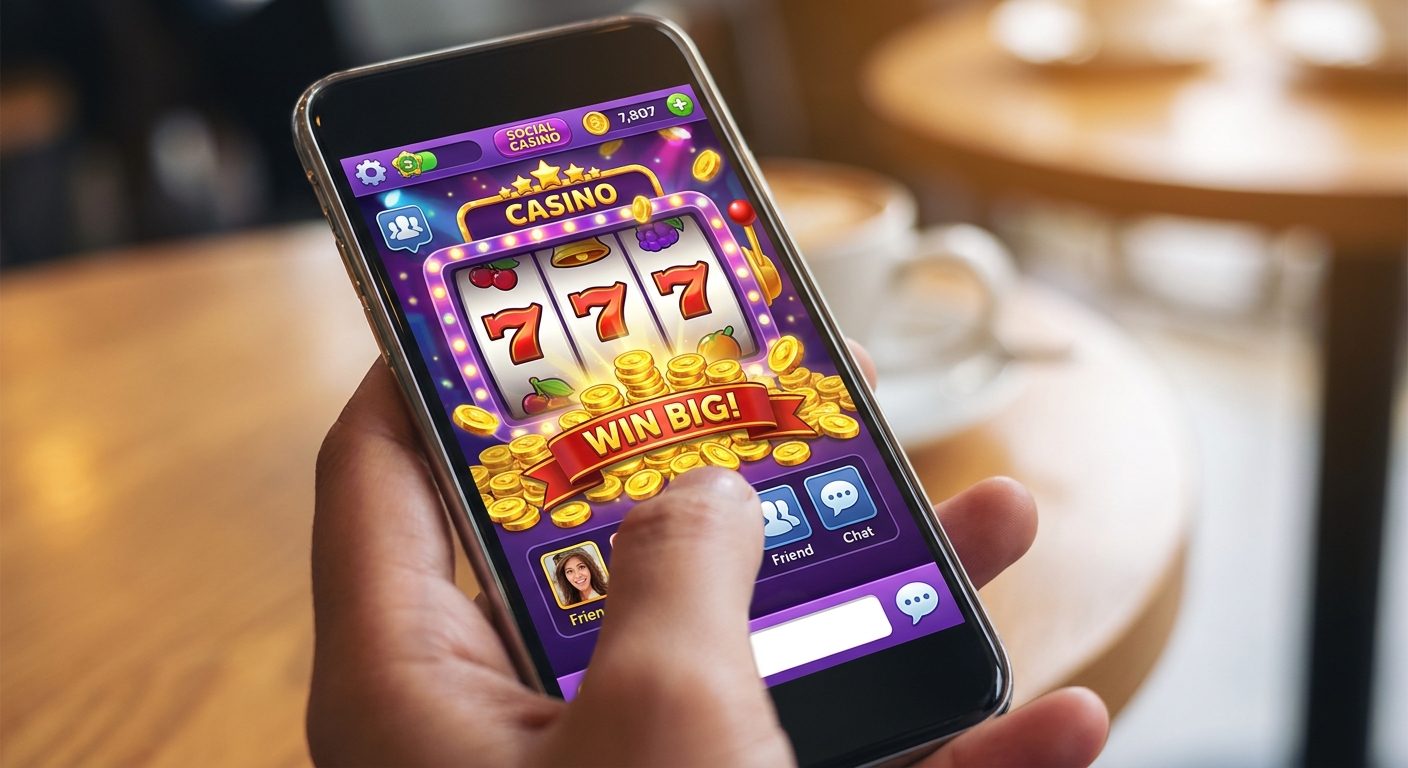

A social casino runs entirely on virtual currency, where players engage for entertainment only — no real money wagered, no prizes to cash out. For iGaming operators, understanding what is a social casino opens a non-gambling pathway to expand brand reach and engage new audiences.
The concept goes further than game mechanics — it’s a strategic opportunity to diversify revenue streams and reach demographics that stay away from real-money platforms. Building effectively starts with casino game development services designed for social engagement, not traditional wagering.

How Social Casinos Differ from Real-Money Gambling Platforms
Understanding social casinos starts by identifying their core difference from real-money gambling: the absence of real money being wagered or won, shifting the focus entirely to entertainment value.
Social casinos utilize virtual currency, often provided freely to players daily, which cannot be converted into real cash. This model eliminates the financial risk associated with traditional gambling, positioning social casinos as pure entertainment products rather than avenues for monetary gain.
Consequently, these platforms generally bypass the stringent gambling licenses required for real-money operations. This distinction is foundational to their market entry and operational flexibility.
However, the regulatory landscape is not entirely uniform. While most jurisdictions do not classify social casinos as gambling, some, like Washington, Idaho, and Michigan in the US, have imposed specific disclosures or restrictions, particularly when in-app purchases are involved. Operators must navigate these nuances carefully to avoid inadvertently blurring the lines.
| Feature | Social Casino | Real-Money Gambling |
|---|---|---|
| Currency Used | Virtual coins, chips, or credits | Real money (fiat or cryptocurrency) |
| Payouts | No real-world cash or prizes | Real-money winnings or losses |
| Primary Focus | Entertainment, social interaction, progression | Financial gain or loss, thrill of wagering |
| Regulatory Needs | Generally no gambling license (jurisdiction dependent) | Strict gambling licenses and compliance |
| Monetization | In-app purchases, ads, subscriptions | House edge, rake, wagering volume |
What business models drive revenue in social casinos?
Unlike traditional gambling platforms that depend on the house edge, social casinos generate revenue through player engagement and value-added experiences — a fundamentally different economic model.
The primary monetization strategy for social casinos is the freemium model. Players typically receive a daily allowance of free virtual currency to play games. However, for those who wish to extend gameplay, unlock special features, or gain an advantage, various in-app purchases are available.
- Virtual Currency Sales: Players can purchase additional virtual coins, chips, or gems with real money to continue playing or to access higher stakes within the social game environment.
- In-Game Features and Bonuses: Offering premium content such as exclusive slots, bonus rounds, avatar customizations, or ad-free experiences for a one-time purchase or recurring fee.
- Rewarded Advertising: Integrating ads that players can choose to watch in exchange for virtual currency, extra spins, or other in-game rewards, providing a non-intrusive revenue stream.
- Subscription Models: Some social casinos offer subscriptions for perks like increased daily bonuses, exclusive access to new games, or removal of advertisements, fostering recurring revenue from dedicated players.
For operators building these platforms, our gambling game development team focuses on creating engaging mechanics that encourage in-app purchases through compelling gameplay and social incentives, rather than relying on player losses.

Why Add Social Casinos to Your iGaming Product Portfolio?
The strategic upside extends well beyond the freemium model. A social casino opens access to markets where real-money gambling is restricted, attracts demographics that traditional platforms rarely reach, and diversifies revenue in ways conventional gambling cannot replicate.
The global social casino games market is projected to reach $15.6 billion by 2034, making it one of the defining iGaming trends shaping 2026 that operators can no longer ignore. This market allows operators to engage audiences in regions where real-money gambling faces heavy restrictions or is entirely prohibited, opening up new demographics and brand exposure.
- Market Expansion and Audience Diversification: Accessing new geographical markets and attracting casual players who seek entertainment without financial risk, including younger demographics.
- Player Acquisition Funnel: Social casinos can serve as a powerful top-of-funnel tool, introducing players to casino-style games and potentially guiding them towards real-money offerings where legally permitted.
- Enhanced Retention and Brand Building: Fostering a loyal community around the brand, leveraging social interactions and free-to-play mechanics to keep players engaged over extended periods.
- Cross-Promotion Opportunities: Creating synergies between social and real-money platforms, allowing for organic cross-promotion to existing player bases or leveraging the social casino as a testing ground for new game features.
- Innovation Testing: Experimenting with new game mechanics, themes, and social features in a lower-risk environment before committing resources to real-money versions.
Exploring social casinos reveals their potential as a strategic asset for growth and differentiation. Engaging iGaming consultants for product strategy can help integrate this offering seamlessly into your existing portfolio.
What challenges might you encounter with a social casino offering?
While social casinos present compelling opportunities, operators must anticipate potential difficulties. Understanding these challenges proactively helps in mitigating risks and ensuring a smooth integration into your product portfolio.
- Navigating Regulatory Grey Areas: Despite generally not requiring a gambling license, some jurisdictions scrutinize in-app purchases, particularly if virtual items could be perceived as having real-world value, or if social casinos closely mimic gambling mechanics, potentially leading to specific restrictions.
- Technical Integration Complexities: Integrating a social casino platform requires robust backend systems capable of managing virtual economies, large player bases, and diverse game content, often necessitating distinct technical infrastructure from real-money operations.
- Distinct Game Design and Virtual Economy Management: Success depends on game design that prioritizes engagement and progression over payouts, coupled with a carefully balanced virtual economy that encourages purchases without frustrating players or making the game feel pay-to-win.
- Ethical Design and Responsible Gaming: Failing to promote healthy play patterns and provide tools for self-regulation puts long-term player trust and brand reputation at risk.
Addressing these challenges upfront — from virtual economy design to regulatory monitoring — is what separates a social casino that scales from one that stalls.
How do social elements enhance player engagement and brand loyalty?
Despite those challenges, social mechanics remain the platform’s core competitive advantage. They drive retention, loyalty, and the kind of engagement that real-money platforms struggle to replicate through wins alone.
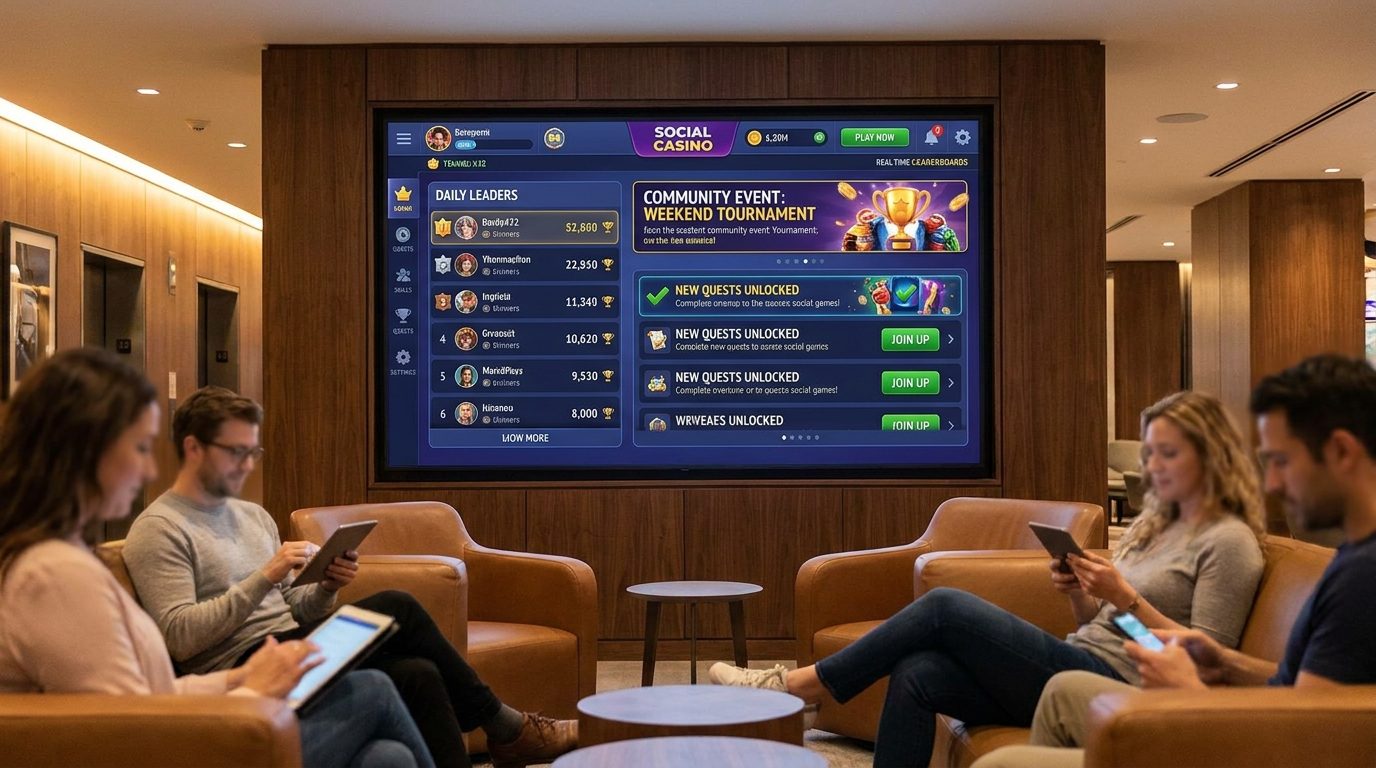
The very nature of a social casino is built upon fostering community and interaction, which are powerful drivers of player retention. Features like multiplayer modes, real-time chat, and leaderboards transform solitary gaming into a shared experience — a dynamic similar to gamification in iGaming that increases playtime and overall satisfaction.
- Multiplayer Modes and Collaborative Play: Allowing friends to play together, share virtual gifts, or compete in team-based challenges significantly deepens engagement.
- Leaderboards and Competitive Events: Global and friend-based leaderboards, coupled with regular tournaments, tap into players’ competitive spirit, encouraging them to return frequently to improve their standing.
- In-Game Chat and Social Sharing: Integrated communication tools enable players to interact, share strategies, and celebrate wins, while social sharing options allow them to broadcast achievements to broader networks, acting as organic promotion.
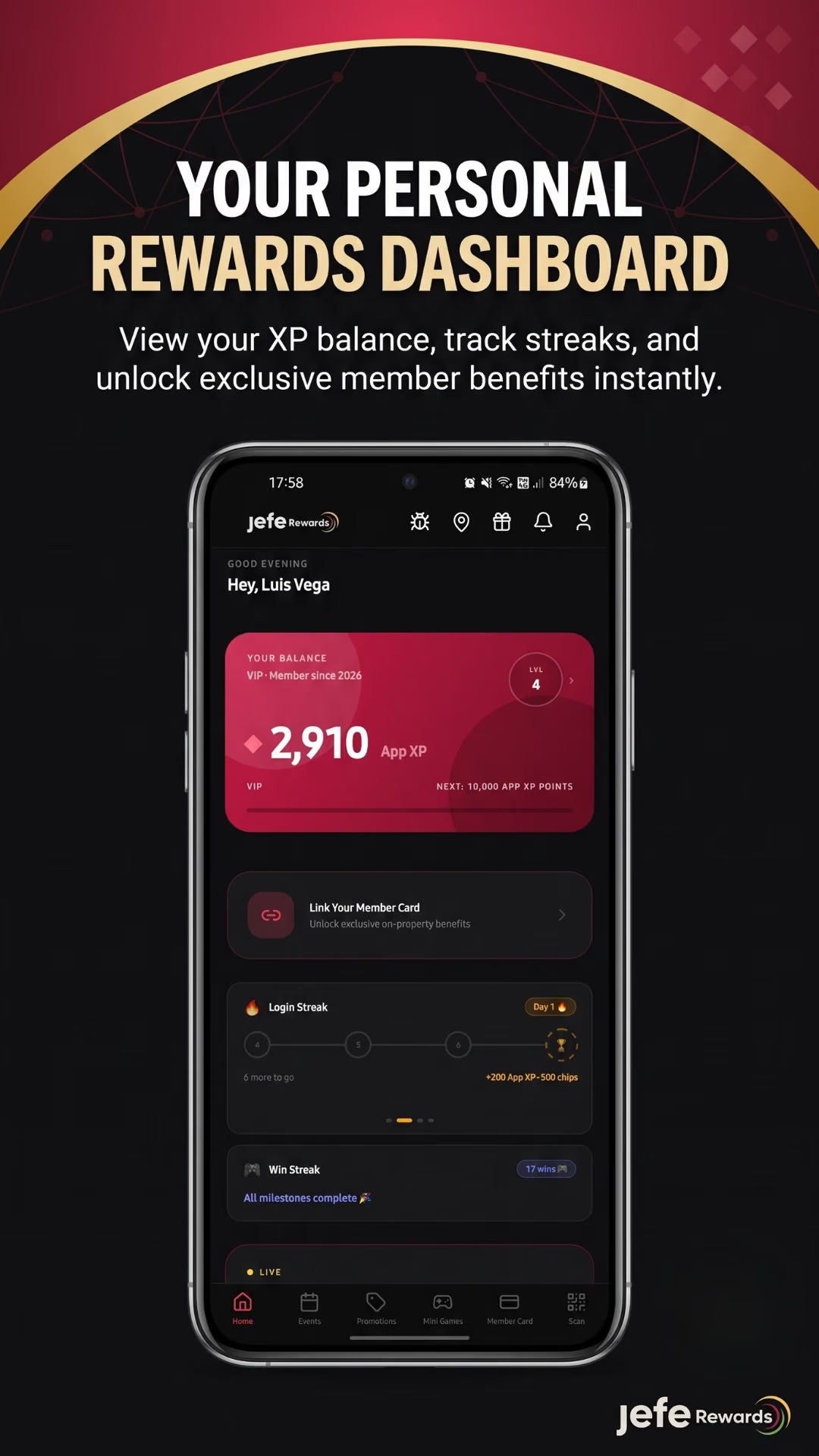
- Community Events and Progression Systems: Regular in-game events, daily bonuses, and tiered progression systems provide continuous incentives for players to log in, participate, and invest time in their virtual casino journey.
These social elements, when effectively integrated, cultivate a strong sense of community and belonging, driving sustained engagement and building profound brand loyalty. Our iGaming marketing team helps operators design these features for maximum impact and visibility.
A social casino is one of the clearest ways to diversify revenue, expand reach, and build an engaged community that complements real-money operations. If you’re ready to explore a social casino launch or expansion, our team is ready to discuss your product strategy and next steps.
Frequently asked questions about social casinos for iGaming operators
Can social casinos convert players to real-money gambling platforms?
Yes, social casinos can serve as a valuable acquisition funnel. They introduce players to casino game mechanics in a risk-free environment, cultivating interest and brand loyalty. Where legally permitted, operators can leverage cross-promotion strategies to guide engaged social players towards real-money offerings, expanding their overall player base effectively.
How do player motivations differ between social and real-money casinos?
Players primarily seek entertainment, social interaction, and achievement in social casinos, engaging for progression rather than financial gain.
In contrast, real-money gamblers are driven by the thrill of wagering, the potential for monetary wins, and often the strategic challenge involved, though entertainment also plays a role.
What kind of regulatory oversight applies to social casino in-app purchases?
While generally not classified as gambling, in-app purchases in social casinos can attract scrutiny. Some jurisdictions, like specific US states, impose disclosures or restrictions if virtual items are perceived to have real-world value or closely mimic gambling mechanics, necessitating careful compliance navigation.
Do social casinos require the same level of security as real-money platforms?
While financial transaction security differs, social casinos still demand robust cybersecurity. Protecting player data, virtual currency integrity, and intellectual property is paramount. Our team focuses on secure architecture to prevent fraud and ensure a trusted environment, essential for maintaining player confidence and brand reputation.
How can an iGaming operator test new game features within a social casino?
Social casinos provide an excellent low-risk environment for A/B testing new game mechanics, themes, and social features. Operators can gather player feedback and performance data without impacting real-money operations. This allows for iterative development and refinement before committing substantial resources to real-money versions, optimizing success.
What are typical player acquisition costs for social casinos compared to real-money gaming?
Player acquisition costs for social casinos can be significantly lower than for real-money gaming due to broader market reach and less stringent advertising restrictions. The freemium model attracts a wider audience, and organic social sharing contributes to viral growth.
While monetization differs, a lower CPA makes social casinos an attractive entry point.