
















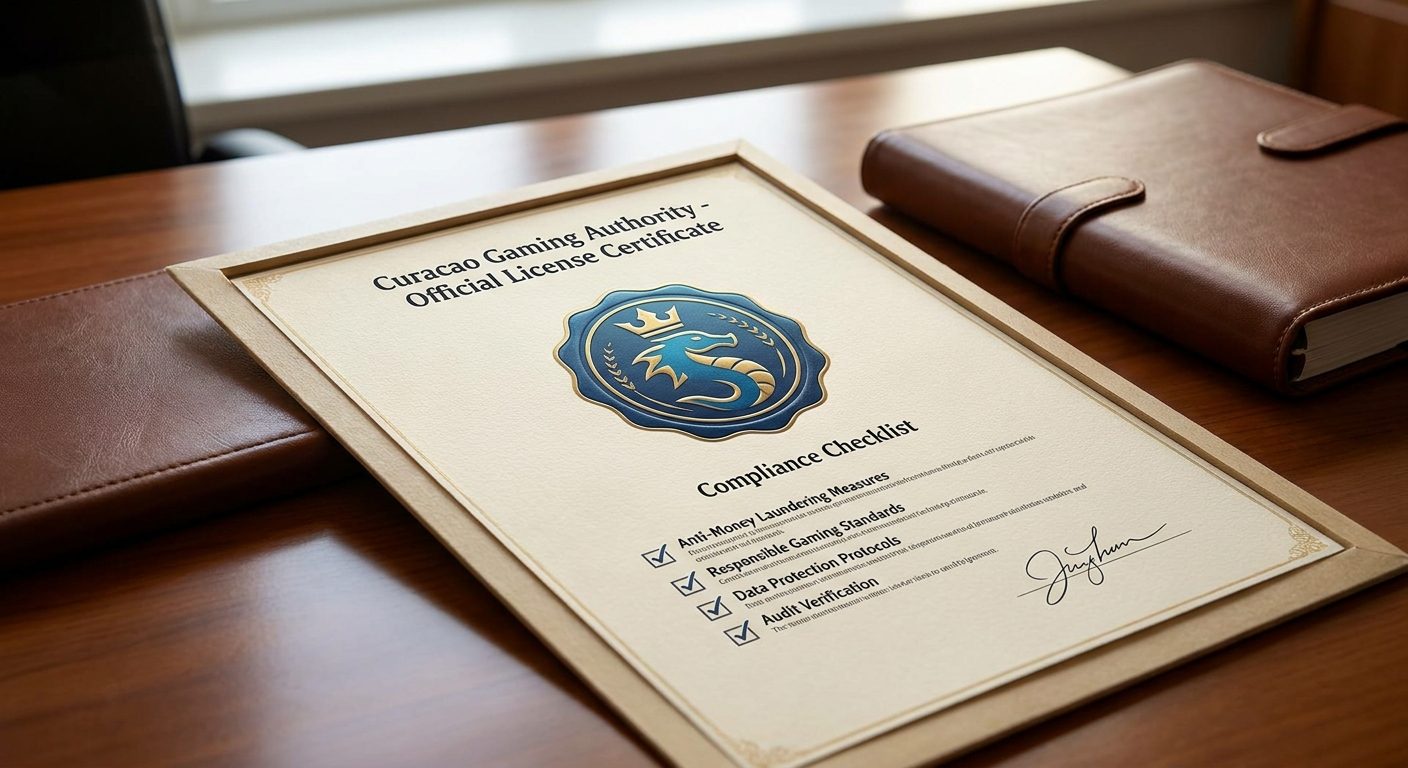

The Curacao Gaming License, once recognized for its accessible and cost-effective framework, has undergone a significant overhaul with the National Ordinance on Games of Chance (LOK) coming into full effect in 2025-2026. This reform replaces the old master/sub-license system with a direct, more stringent regulatory approach under the Curaçao Gaming Authority (CGA).
This transition means operators now face new requirements, including mandatory local substance and enhanced compliance, which significantly impacts the actual costs and operational realities compared to previous years. Operators need updated insights into gambling certification services and local regulatory landscapes to avoid compliance gaps.

How the Curacao Gaming License Changed with the LOK Framework
Instituted on December 24, 2024, the LOK abolished the previous master/sub-license model that let master holders issue numerous sub-licenses with patchy oversight. All licenses are now issued directly by the Curaçao Gaming Authority (CGA), the sole supervisory body for B2C and B2B iGaming operations.
The shift was driven by international pressure and the Dutch government’s push to move Curacao beyond its “rubber stamp” reputation. The new framework demands clearer accountability, stricter compliance, and a more rigorous application process — and operators holding sub-licenses had until the end of 2025 to transition directly under the CGA.
Under the LOK, the CGA now issues two primary direct license types:
- B2C Gaming License — This is for operators running online casinos, sportsbooks, lotteries, and other direct-to-consumer gambling activities. It unifies all gaming verticals under a single authorization.
- B2B Supplier License — This category applies to software developers, platform providers, payment processors, and other service providers to the iGaming industry. It ensures that critical suppliers also adhere to Curacao’s new regulatory standards.
What are the Real Costs of a Curacao Gaming License in 2026?
Evaluating a Curacao Gaming License today extends beyond simple application fees; operators must consider the total cost of ownership under the LOK framework. The publicized government and supervisory fees represent only one part of the financial commitment, with other mandatory expenses significantly increasing the overall investment.
The initial application fee for both B2C and B2B license types is €4,592, which is non-refundable. Beyond this, annual fees vary by license:
| License Type | Application Fee | Annual Fees (Approx.) | Notes |
|---|---|---|---|
| B2C Gaming License | €4,592 | €47,450 | Includes government license fee and CGA supervisory fee. |
| B2B Supplier License | €4,592 | €24,490 | Primarily the CGA supervisory fee. |
However, the full financial picture includes substantial operational and compliance overhead. Operators typically face an estimated $80,000 to $200,000 in total first-year expenses. This range covers:
- Mandatory professional services, including legal counsel for setup, ongoing compliance officers, and accounting services.
- Costs associated with establishing physical presence and local staffing in Curacao.
- Independent certification of gaming software and RNGs.
- Technical infrastructure, cybersecurity measures, and data protection compliance.
- Costs for UBO registration and other administrative necessities.
A notable financial advantage remains the absence of gambling-specific gaming taxes on gross gaming revenue in Curacao. Nevertheless, the increased regulatory scrutiny and additional requirements mean that the total annual cost of maintaining this license is now considerably higher than under the old system, reflecting a greater commitment to robust operation.

New Compliance and Operational Requirements in Curacao
The reformed framework introduces several new requirements that close gaps in the old system and reshape how operators run day-to-day.
A central new obligation is the mandatory local substance requirement. This entails establishing a physical office in Curacao and employing local personnel responsible for core operations. While the general requirement for local staffing commenced on January 1, 2026, enforcement of specific local staff numbers (scaling up to three by the fifth year) has been nuanced, with full enforcement delayed until April 1, 2027.
Furthermore, the LOK significantly enhances Anti-Money Laundering (AML), Know Your Customer (KYC), and Counter-Terrorism Financing (CTF) standards. These are now aligned with Financial Action Task Force (FATF) guidelines, requiring operators to:
- Implement a robust risk-based approach to player onboarding and transaction monitoring.
- Appoint an independent compliance officer.
- Establish comprehensive controls for virtual assets, particularly for crypto-focused operations.
A new Responsible Gaming Policy, effective from 2025, mandates strict player protection measures: age verification protocols, self-exclusion tools, customizable deposit limits, and a dedicated Responsible Gaming Officer on staff. Operators must demonstrate a clear commitment to player welfare.
On the technical side, standards require independent certification of gaming software and Random Number Generators (RNGs) — typically through GLI certification or equivalent testing bodies — to ensure fairness and integrity. UBO transparency and proof of sufficient capital to cover potential player claims also became prerequisites for securing and maintaining the license.
Value for Operators Under Curacao’s New Framework
Despite higher costs and tighter requirements, the new framework still delivers concrete advantages for operators willing to meet the bar.
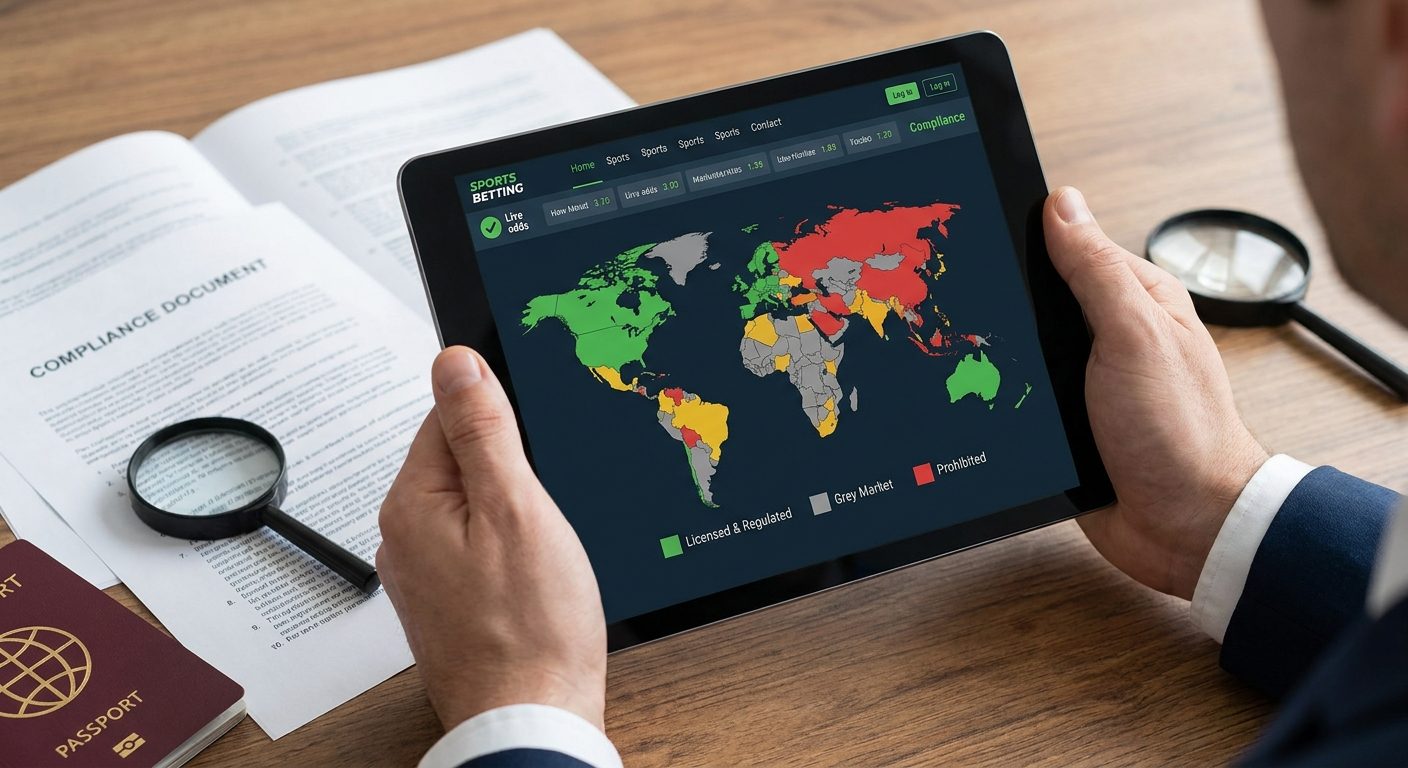
One primary benefit is the unified license scope, covering all gaming activities, including online casinos, sports betting, and lotteries, under a single authorization. This streamlines operations for diversified portfolios. The license continues to offer broad global market reach, enabling operators to target players in numerous jurisdictions, particularly in emerging markets across Latin America, Asia, and Africa, albeit with careful consideration of specific local prohibitions.
Compared to some highly regulated jurisdictions, Curacao often provides comparatively faster market entry, even with the updated application process. This speed, combined with the new, higher compliance bar, contributes to enhanced credibility. This improved regulatory standing directly influences your ability to secure partnerships with payment providers, banking institutions, and game developers, as many have become more selective in recent years due to past perceptions of Curacao.
Stricter AML/KYC and responsible gaming practices give operators a more defensible position with banks and partners that increasingly scrutinize licensing depth before signing.
Navigating Your iGaming License Application Review in Curacao
Operators applying for a Curacao Gaming License go through a two-phase assessment. The path mirrors the broader licensing process in regulated markets: a thorough review of submitted documentation — financial standing, business plan, and compliance policies.
Upon successful initial review, the Curaçao Gaming Authority (CGA) issues a temporary license valid for around 12 months. The provisional period lets operators launch while the CGA finishes its deeper systems and process review before granting the full license. In early 2026, some operators hit “regulatory limbo” — extended provisional periods without confirmed end dates — creating real operational uncertainty.
Extended provisional status can affect crucial business relationships. Payment processors, banking partners, and game providers meticulously scrutinize an operator’s licensing status, preferring stability and full accreditation. A prolonged temporary license could:
- Delay partnership agreements — Many providers require a full, permanent license before committing.
- Impact financial services — Banks might impose stricter conditions or refuse services if the licensing status is unclear.
- Limit game content — Some game developers may restrict access to their portfolios for operators without a confirmed full license.
To mitigate potential issues during the review period, operators should maintain transparent communication with the CGA, meticulously document all compliance efforts, and choose partners who understand this reformed licensing system.
Is Curacao’s iGaming Framework Right for Your Business?
Deciding if a Curacao Gaming License aligns with your iGaming business objectives in 2026 requires a balanced evaluation of its reformed framework, increased costs, and enhanced requirements against its enduring benefits. The “new” Curacao license is no longer simply the cheapest or fastest option; it now demands a serious commitment to compliance.
This license may still be a suitable option for:
- Established crypto casinos seeking a reputable, yet agile, regulatory home.
- New global operators primarily targeting growth markets in Latin America, Asia, and Africa, where Curacao holds significant recognition.
- B2B suppliers looking for a streamlined license to serve a broad base of operators.
However, operators seeking access to highly regulated European markets, or those prioritizing maximum prestige, might consider alternative jurisdictions like Malta, which offers a different level of market acceptance and regulatory oversight. While the initial costs of this license have increased, Curacao still offers a unified scope across all gaming activities and access to international markets without gross gaming revenue taxes.
Aligning your business model with the new regulatory realities is the real decision point. Mapping the path forward usually means working with an iGaming consulting team that knows the LOK specifics.
Securing a license under the new LOK framework depends on understanding both the regulatory shifts and their practical implications. Reach out to discuss your specific needs around certification, compliance, or gambling platforms and software — we’ll help you map the path that fits your operation.
Frequently asked questions about Curacao’s gaming license
What does local substance practically mean for iGaming operations in Curacao?
It means a physical office in Curacao staffed with local personnel handling core operations. Staff numbers scale over the first few years, but the principle is clear: the CGA wants real operations on the island, not brass-plate setups built to satisfy paperwork.
How does a temporary Curacao license affect securing crucial iGaming partnerships?
A prolonged temporary license can complicate partnerships. Payment processors, banks, and game developers often prefer dealing with fully accredited operators due to due diligence. This uncertainty may delay agreements, lead to stricter service conditions, or limit access to certain game content. Maintaining open communication with the CGA is advisable.
What types of businesses fall under the Curacao B2B Supplier License?
The B2B Supplier License is for entities supporting iGaming operators. This typically includes software developers, platform providers, content creators, game aggregators, and payment processors. It ensures that crucial service providers within the ecosystem also meet Curacao’s new regulatory standards, enhancing overall industry integrity and trust.
Does the absence of gross gaming revenue tax make the Curacao license more cost-effective overall?
While Curacao maintains no gross gaming revenue tax, the total cost of ownership has increased significantly. Mandatory operational expenses, compliance officers, local substance, and software certification contribute to annual outlays. Operators must weigh the tax saving against these substantial new regulatory and operational costs to assess true cost-effectiveness compared to other jurisdictions.
What is the process for transitioning from an old Curacao sub-license to a new direct license?
Sub-license holders had until the end of 2025 to migrate to a direct CGA license. The transition required a full application that met all new LOK requirements and a successful pass through the two-phase assessment — no grandfathering of old sub-license terms.
How does the new Responsible Gaming Policy protect players under the Curacao license?
The 2025 Responsible Gaming Policy gives players the same toolkit expected in tier-1 jurisdictions: age verification, self-exclusion, customizable deposit limits, and a dedicated Responsible Gaming Officer on the operator’s side. It closes one of the gaps that previously made the Curacao license a weaker fit for banks and serious partners.