



















Product managers are increasingly pressured to bridge the gap between traditional gambling mechanics and the high-engagement genres preferred by younger generations. This search often leads to an exploration of the RTS game meaning, which describes a genre where players manage resources and units in real-time to defeat opponents. However, integrating these complex systems into a casino ecosystem involves a massive trade-off between player immersion and the predictable turnover required by regulated operators.
While the depth of strategy games creates significant player loyalty, the core architecture of the genre often conflicts with the commercial scalability needed by a modern gaming company. Transitioning from high-velocity slots to slow-burn strategic loops presents technical and mathematical challenges that can jeopardize an operator’s bottom line if not handled with extreme precision. Most B2B frameworks are designed for rapid cycles, making the integration of long-form strategy a risky endeavor for standard portfolios.

The core RTS game meaning and its strategic pillars
To understand the friction between these two worlds, we must first look at the technical definition of the genre. Real-time strategy games require players to make constant decisions without the pauses found in turn-based systems. In a B2B context, this “real-time” aspect creates a continuous flow of data that is difficult to sync with the discrete “bet” events typical of iGaming. The system must process thousands of micro-actions simultaneously while maintaining a stable connection.
The genre is traditionally built upon three main pillars that define the user experience and the technical overhead. These elements work together to create a high skill ceiling, which is a desirable feature in video games but a significant operational risk in gambling:
- Resource collection: The management of gold, mana, or minerals to fund the player’s expansion and unit production.
- Base building: The construction of infrastructure that unlocks new technologies and defensive capabilities during the match.
- Unit management: The tactical movement and deployment of individual actors to achieve specific combat objectives.
In a standard RTS, the player has high agency, meaning their choices directly dictate the outcome of the match. In contrast, iGaming relies on a Random Number Generator (RNG) to limit agency and ensure a house edge. This fundamental conflict makes it difficult to port RTS mechanics directly into a gambling product without stripping away the very elements that make the genre appealing to strategy fans.
The RNG vs skill certification barrier
Beyond the definition, the first major hurdle for any operator is how these mechanics interact with gambling licenses. Certification labs such as GLI or BMM require absolute transparency and predictability in how game outcomes are determined. Mapping thousands of individual unit interactions and pathfinding decisions to a certified RNG is a monumental technical task that most current game engines are not optimized to handle in a regulated environment.
Achieving a “Provably Fair” status becomes significantly harder when dealing with real-time complex systems. In a slot machine, the result is a single random number; in a strategy game, the result is the culmination of hundreds of variables. Regulators often push back against skill-based outcomes in most jurisdictions, fearing that expert players could eliminate the house margin entirely, which disrupts the fundamental math models of the casino floor.
Operational velocity and the problem of game length
Even if the technology is certified, the business model must still make sense for the gaming floor. The business model of a casino relies on high turnover, with most traditional games resolved in under five seconds. An RTS match typically lasts between 15 and 40 minutes, which drastically reduces the Gross Gaming Revenue per active user. For an operator, time is literally money, and long sessions are often counter-productive.
This creates a significant concentration risk where players spend their time focusing on a single long match instead of placing multiple bets. To compensate for the lack of volume, the margin on a single strategy match would need to be massive, which would likely alienate the player base. Strategy games demand 100% of a user’s attention, preventing the “multi-tabling” or side-betting behavior that often drives revenue in other verticals.

UX and cross-platform accessibility challenges
The operational mismatch is further complicated by how modern players actually consume iGaming products in a mobile-first market. Real-time strategy games historically require “hotkeys” and high precision, which do not translate well to a six-inch smartphone screen. Since over 70% of B2B traffic is mobile, any game mechanic that requires complex mouse-and-keyboard inputs is essentially a dead product for a global operator.
Furthermore, the learning curve for these products is exceptionally steep compared to the instant gratification found in Crash games or slots. Casino players generally want to understand the rules within seconds, while an RTS requires a lengthy tutorial to master resource management and unit counters. Managing an army on a small screen while trying to monitor a betting interface creates UI clutter that degrades the overall user experience.
Hybrid alternatives for strategy-focused portfolios
While full RTS is a poor fit for the gambling industry, there are ways to leverage strategic elements to attract the same demographic. Operators can implement Tower Defense lite mechanics where the outcomes are still dictated by RNG but the visual “skin” suggests a strategic progression. This allows the player to feel a sense of tactical growth without disrupting the underlying math model or the session velocity.
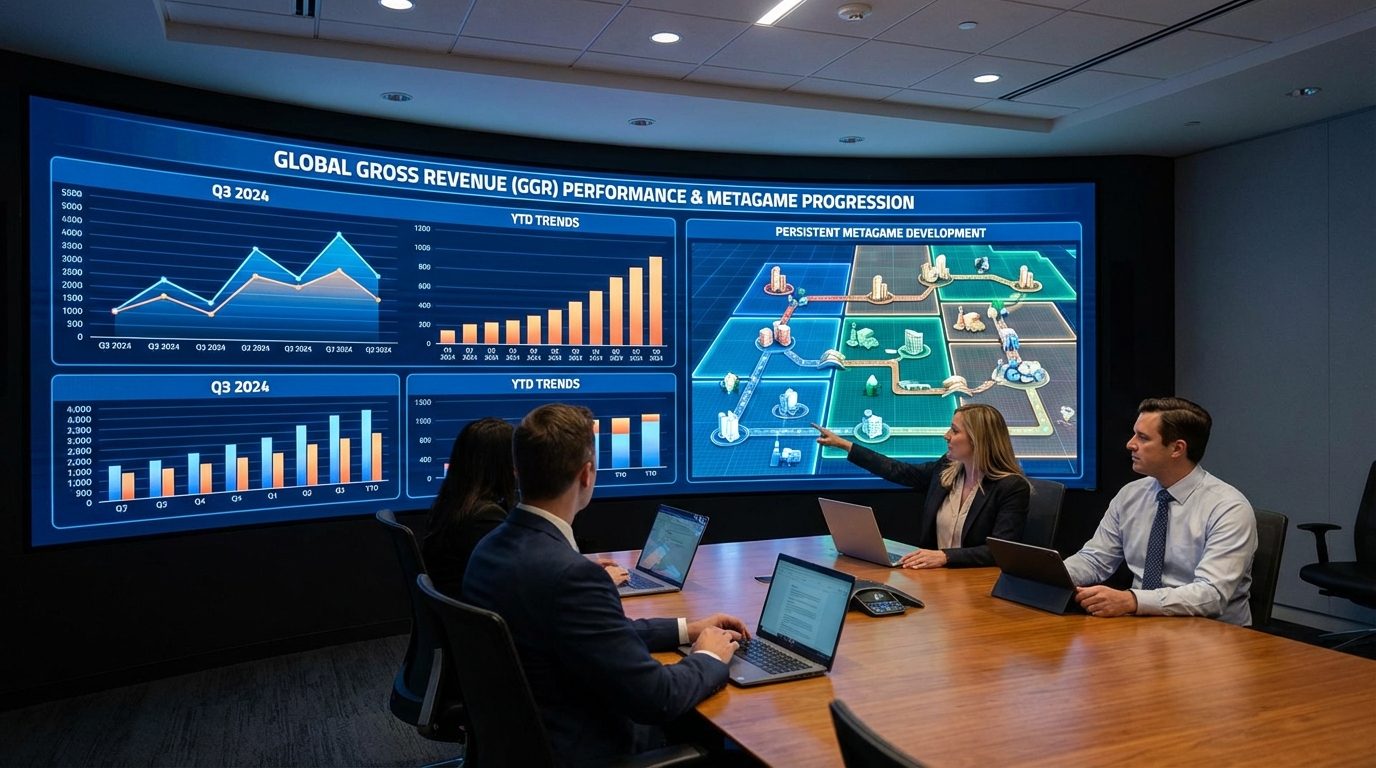
Another viable path is the implementation of metagame layers, such as building a persistent base or upgrading a kingdom, that do not affect the core RNG loop. These strategy skins for Crash or Mine games provide the psychological rewards of the genre while maintaining high turnover. Metagaming is currently the most viable path for product managers who want to innovate without the technical and regulatory headaches of a full real-time engine.
Evaluating RTS mechanics for your product roadmap
Deciding whether to innovate in this space requires a clear view of the trade-offs between player retention and operational turnover. While the RTS game meaning offers deep engagement, it is often better suited as a “meta” layer rather than a core game mechanic. Operators must prioritize math-first development to ensure that any strategic component remains compliant with jurisdictional requirements and delivers a consistent house edge.
In conclusion, the most successful strategy-iGaming hybrids are those that simplify the “real-time” aspect and focus on the “strategy” skin. By choosing strategic gamification over full mechanical complexity, a gaming company can attract younger audiences while protecting its GGR. Innovation should always serve the bottom line, and in the case of RTS, less complexity often leads to a more sustainable and profitable product roadmap.
FAQs about skill-based mechanics and RTS in iGaming
What are the three pillars of a real-time strategy game?
Resource collection, base building and unit management. Resource collection is the management of gold, mana or minerals funding expansion and unit production; base building is the infrastructure that unlocks new technology and defensive capability during a match; unit management is the tactical movement and deployment of individual actors. Together they produce the high skill ceiling that makes the genre appealing in video games and makes it an operational risk in gambling.
When is it commercially viable to implement real-time strategy elements in a casino portfolio?
Implementation typically makes sense when used as a retention-focused metagame layer rather than a core wagering mechanic. Operators often find success by decoupling the strategy skin—such as base building or resource management—from the underlying RNG loop. This approach allows for the psychological engagement of the genre without sacrificing the high turnover and predictable house edge required for GGR stability. If the strategic depth directly influences the financial outcome, the product often faces significant regulatory hurdles that can delay the time-to-market.
What are the primary certification challenges for games featuring complex unit pathing and real-time interactions?
Testing laboratories, such as GLI or BMM, prioritize math models that are repeatable and transparent. Real-time unit interactions introduce thousands of variables that can make it difficult to prove a consistent Return to Player (RTP) percentage. For a product to pass certification, developers must often abstract these interactions so that the visual battle is merely a representation of a pre-determined RNG result. Failing to simplify these mechanics early in the development cycle often leads to rejection during the technical auditing phase.
How does a high skill ceiling change the operator risk profile?
In a B2B context, a high skill ceiling represents a volatility risk. If a player’s proficiency can significantly negate the house advantage, the game ceases to be a sustainable gambling product under most current licenses. While skill-based gaming is an emerging niche, most jurisdictions require that the random element remains the dominant factor. Operators must carefully balance player agency with mathematical certainty to ensure that expert players do not erode the margin, which is why strategy-lite models are generally preferred.
Why do long-form strategy sessions often fail to meet GGR targets in a standard iGaming environment?
Modern casino floors are optimized for velocity, with many products resolving bets in seconds. A game that occupies a player for twenty minutes on a single wager drastically reduces the bets per minute metric, which is a key driver of Gross Gaming Revenue. Unless the game features high-frequency micro-betting opportunities within the match, the operational cost of hosting the session often outweighs the profit. Operators must evaluate whether the increased player retention justifies the lower turnover compared to high-velocity products.
What are the most common UX pitfalls when adapting RTS game meaning for mobile-first gambling?
The most frequent mistake is attempting to port complex control schemes—like multi-unit selection or precise targeting—to a smartphone interface. Since most B2B traffic is mobile, high-precision requirements often lead to player frustration and high churn rates. Understanding the RTS game meaning in a mobile context requires simplifying the user interface to one-touch actions or automated sequences. Overloading a small screen with resource counters and betting slips creates cognitive friction that distracts from the gambling experience, leading to poor commercial performance.