





















Crypto casinos moved from novelty to infrastructure over 2025, and the shift shows up in five places at once: payments, fairness, finance models, personalisation and the shape of the platform itself. This piece summarises what industry reporting converged on through the year, which game formats are drawing players, and how the operators in Las Vegas are responding.
The five changes in one place
- Trusted crypto casinos are taking a growing share of online gambling.
- Blockchain technology is what makes fairness and transparency checkable rather than claimed.
- AI is personalising player experience to raise engagement.
- Decentralised finance models are reshaping how a casino is funded and operated.
- Las Vegas operators are adapting in order to stay competitive.
Where these findings come from
Five pieces of industry reporting sit behind this summary, and they are worth naming because the conclusions below are theirs rather than ours: Trusted crypto casinos are taking over online gambling in 2025 (Morningstar/GlobeNewswire, 3 September 2025); Crypto casinos become mainstream: fast, decentralized and personalized (European Business Review, 2 September 2025); Biggest casino industry trends: DeFi, AI, and transparency drive growth (Yogonet International, 25 April 2025); Rise of modular casino systems accelerates iGaming transformation (Blackjack Review, 16 May 2025); and Five major forces shaping the future of crypto iGaming (Rapidpace, August 2025).
Crypto payments became standard, not optional
Bitcoin, Ethereum and stablecoins are now integrated into online casinos as standard practice, driven by players wanting faster and more secure transactions. A player bets and is paid in the currency they already hold, which removes a conversion step from both ends of the session. For the operator it means more transparent transactions and less dependence on traditional banking, and it opens the door to users who came for efficiency and security rather than for the game.
Provably fair gaming and the trust gap
Blockchain-backed games let a player verify the fairness of each round independently, which closes the trust gap between player and operator rather than papering over it. In a crowded market that is a genuine differentiator, and it sits well with regulatory scrutiny: a platform that can demonstrate accountability has less to explain. Our report on zero-knowledge proofs and on-chain verification standards covers how that verification is being certified.
Decentralised casino models
Fully decentralised platforms let users stake digital assets directly inside the ecosystem, with lower transaction fees and more privacy than a custodial account allows. The DeFi model is not only a trend in how players are paid; it changes how they relate to the platform, because autonomy over funds is the thing being offered. Operators who adopt it are reaching a technically literate audience that a conventional loyalty programme does not.
AI-driven personalisation
AI analyses behaviour and preference to deliver personalised game recommendations, offers and interfaces that respond to individual patterns, which is what turns a casual visitor into a returning one. Because the models keep learning from interaction, the offering adapts continuously rather than being configured once a quarter. The gain is retention; the risk is a recommendation that feels like surveillance, which is why the privacy controls have to be visible.
Modular and scalable platforms
Modular casino systems are gaining ground because they let an operator change part of the product without rebuilding it. A new game type or payment method can be deployed without overhauling the platform, which is what makes a fast response to a market shift possible at all. Scalability is the other half: as a casino grows, the same architecture carries more traffic and a wider catalogue without performance degrading.
Mobile-first and immersive play
Mobile is the primary access point for most players, so platforms are being redesigned around intuitive navigation and immersive gameplay on a phone rather than adapted to it. Augmented and virtual reality have started to attract a younger demographic on top of that. Designing mobile-first meets current behaviour and positions an operator for whatever the next interface turns out to be.
Regulatory modernisation and compliance
Compliance is being automated rather than staffed. AI and digital tooling are how Know Your Customer and Anti-Money Laundering obligations are being met at scale, which cuts both cost and the risk of a breach going unnoticed. The benefit a player sees is indirect but real: a platform whose responsible-gaming standards are enforced by system rather than by policy is one they can wager on with more confidence.
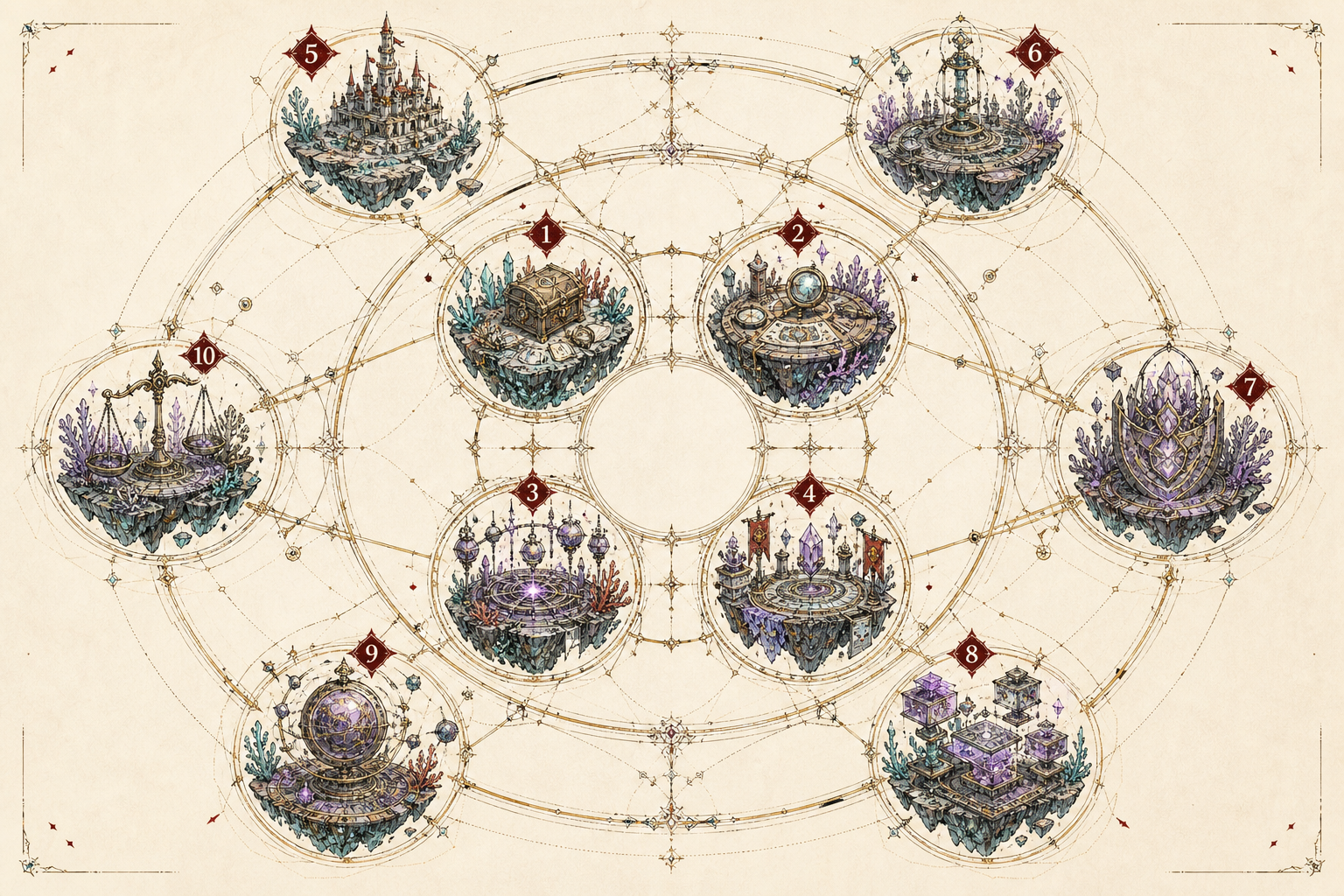
- Collectible-reward game loops
- Inspectable table mechanics
- Live and social event play
- Modular competitive play
- Cryptocurrency settlement
- Inspectable execution
- AI personalization with player protection
- Modular scalability
- Mobile and immersive delivery
- Regulatory stewardship
The game formats drawing players
Four formats stand out in the current catalogue, and each of them is a different answer to the same question about what blockchain adds to a game:
- Slot games with NFT rewards. Slots that pay in unique digital collectibles as well as cash, which can be traded or sold. The appeal is ownership rather than the payout.
- Blockchain-verified table games. Poker and blackjack with provably fair mechanisms, aimed squarely at players who have been uncertain about traditional online tables.
- Live dealer sports betting platforms. Live dealer technology merged with sports betting and settled through decentralised finance, so bets are placed in real time while interacting with a live host. The draw is the social atmosphere of a physical room.
- Modular esports betting. Customisable platforms that let an operator build bespoke betting options — in-game betting, event-specific odds — for an audience that engages deeply with the content.
How Las Vegas operators are responding
Las Vegas is moving toward modular, compliance-ready crypto platforms with instant access and personalised loyalty programmes. What is notable is the timing: operators there are adapting ahead of the legal requirements rather than after them, which is the opposite of the sector’s reputation. Investing in technology that raises player satisfaction and satisfies compliance at the same time is how they intend to keep the leadership position.
Is crypto gambling here to stay
The direction of travel is clear enough to plan against: decentralised models, AI personalisation and blockchain verification are becoming the baseline, and a traditional casino that does not adapt will be competing on price. Transparency, tailored experience and regulatory compliance are what the sector is consolidating around. For a closer look at what leaders are doing about it, our piece on how crypto casinos are evolving goes through the implementation decisions.
If you are building on this stack rather than reading about it, talk to us about what your platform needs first.
Frequently asked questions
What are crypto casinos?
Crypto casinos are online gambling platforms that accept cryptocurrencies such as Bitcoin and Ethereum. They provide secure, fast transactions and use blockchain technology for fairness, which is what attracts a growing audience looking for decentralised and transparent gambling options.
How do blockchain technologies enhance gaming in crypto casinos?
Blockchain lets a player verify a game outcome independently rather than taking the operator’s word for it. That transparency builds trust and security, and it is what an operator competing on integrity rather than on bonuses has to offer.
What trends are shaping the future of crypto casinos?
Decentralised finance models, AI-driven personalisation and mobile-first design are the three that recur across industry reporting. Each improves engagement or operational efficiency, and together they are what put crypto casinos ahead of the rest of the gaming industry on product velocity.
Are AI technologies used in crypto casinos?
Yes. AI analyses player behaviour to personalise the experience, offering tailored game recommendations and promotional offers, which raises engagement and retention. The systems keep learning from interactions, so the offering adapts rather than being set once.
How are traditional casinos adapting to the rise of crypto casinos?
By integrating modular systems and compliance-ready technology, adding cryptocurrency payment options and building personalised loyalty programmes. Las Vegas operators are the clearest example: they are moving to modular, compliance-ready crypto platforms with instant access and per-player loyalty, ahead of the regulations rather than behind them.
What is a modular casino platform?
A modular casino platform lets an operator add or change features — a new game type, a new payment solution — without rebuilding the system underneath. That flexibility is what makes it possible to respond quickly to a trend, and the scalability that comes with it means traffic and catalogue can grow without performance falling over.