



















When stakeholders decide to hire casino game developers, they are not simply looking for full-stack engineers; they are recruiting architects of probability and compliance. Unlike traditional software, iGaming products must operate within strict mathematical margins where even minor coding errors can compromise the House Edge or violate jurisdictional regulations. This role requires a sophisticated understanding of how real-time data handling affects both player trust and the operator’s long-term profitability in competitive markets.
Success in this sector depends on technical talent that can bridge the gap between creative game design and rigorous certification standards. By leveraging professional casino game development services, operators ensure that their proprietary titles are built with a focus on low-latency performance and RNG integrity from day one. This specialized approach significantly reduces the friction typically found during the final stages of laboratory testing and market entry.

The multi-disciplinary reality when you hire casino game developers
A specialized iGaming developer acts as the technical bridge between abstract mathematical models and a functional user interface. Their primary responsibility involves translating complex parameters such as Return to Player (RTP) and volatility into stable executable code. This process ensures that the game’s performance aligns perfectly with the theoretical hit frequency defined by the math team, protecting the operator’s financial projections.
Beyond the logic, these professionals must maintain the absolute integrity of the Random Number Generator (RNG) implementation. They ensure that every outcome is mathematically independent and resistant to external manipulation or predictable patterns. For a Product Manager, this means the developer is the first line of defense against technical vulnerabilities that could lead to financial losses or regulatory fines.
Finally, the role requires a deep focus on asset synchronization and performance optimization. Developers must manage heavy visual assets like high-definition animations and 3D effects while keeping the backend logic lightweight and responsive. This balance is critical to prevent game lag, which is one of the leading causes of player churn and session abandonment in modern digital casinos.
Core technical competencies for modern iGaming projects
In the current market, a mobile-first approach is mandatory for any successful iGaming vertical. Decision-makers should look for developers with high proficiency in HTML5 and WebGL to ensure cross-platform compatibility across various devices and browsers. This technical stack allows for rich graphical experiences without requiring the player to download external software, which is essential for maximizing conversion rates.
Integration capabilities are equally vital when evaluating technical talent for your project. A competent developer must have experience working with API integrations for aggregators and Player Account Management (PAM) systems. This ensures that seamless wallet functionality and real-time data reporting work flawlessly, allowing the operator to track performance and manage player balances without technical bottlenecks or synchronization errors.
- Security protocol implementation: Developers must apply advanced encryption to protect transaction data and prevent unauthorized access to sensitive player information.
- Latency-optimized communication: The ability to minimize the round-trip time between the game client and the server is crucial for real-time play.
- Modular code architecture: Writing reusable components allows for faster deployment of new game titles and easier maintenance of the existing portfolio.
Security and data protection are not just checkboxes but fundamental requirements for any iGaming code. Technical leaders should prioritize candidates who understand how to prevent SQL injections and other common exploits that target gambling platforms. Robust code at the game level complements the server-side security, creating a multi-layered defense system for the entire operation.
The developer role in regulatory compliance and certification
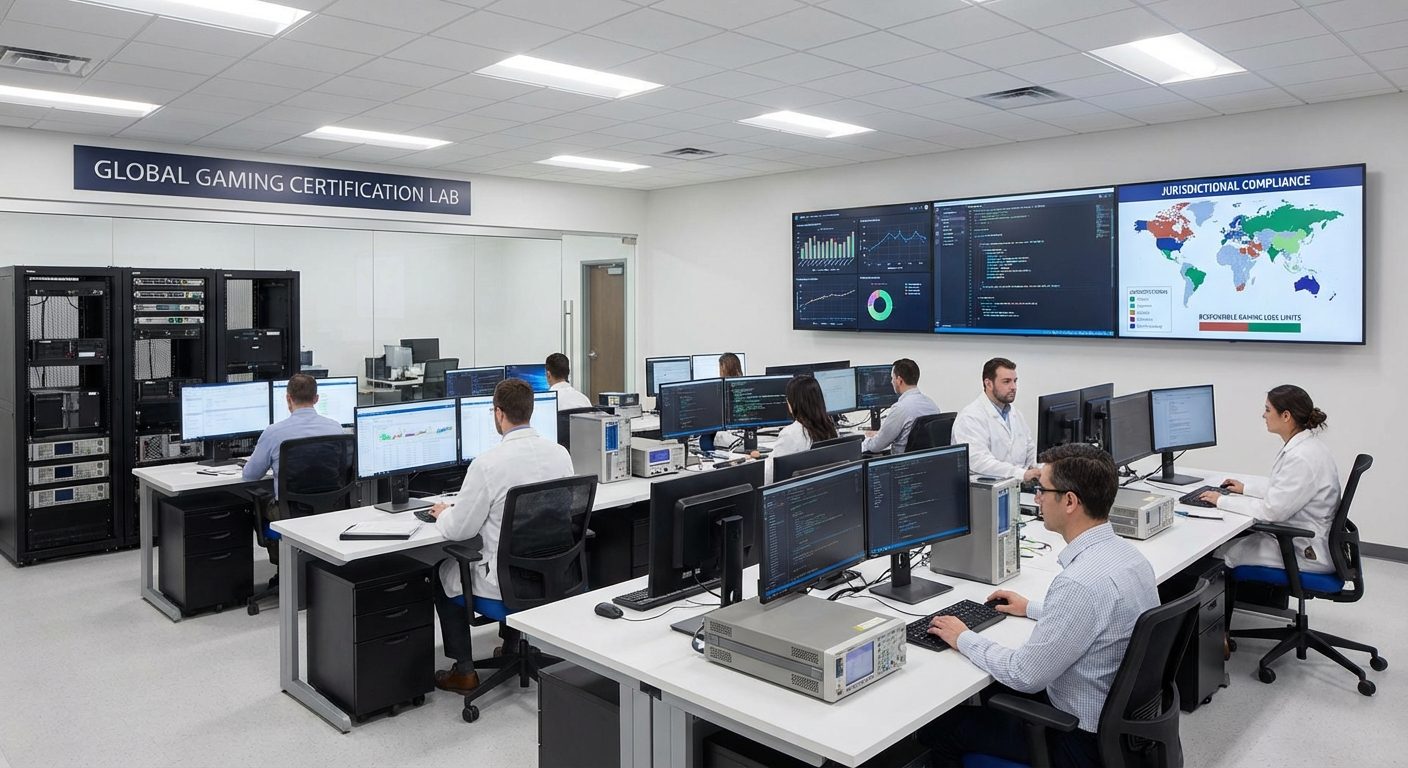
One of the most valuable contributions of an expert developer is the preparation of code for external audits. International laboratories like GLI or BMM Testlabs require specific documentation and logical transparency to grant certifications. An experienced developer knows how to structure the code so that auditors can easily verify the RNG source and the execution of game rules.
Compliance also extends to the implementation of responsible gaming features directly into the game logic. This includes the integration of reality checks and loss limits that respond instantly to player behavior. When these tools are built natively into the game, the operator can ensure they meet the strict requirements of jurisdictions like the UKGC or MGA without needing secondary patches.
Choosing a developer with a background in regulated markets can save an operator months of expensive re-work. These specialists understand the technical nuances of jurisdictional reporting requirements and can build the necessary data hooks from the start. This proactive approach ensures that the transition from development to live operation is governed by technical readiness rather than regulatory delays.

Integration challenges between game logic and platform architecture
Games do not exist in isolation; they must communicate perfectly with the underlying platform architecture to ensure operational stability. A major challenge for developers is game state management, which handles how the system behaves during sudden user disconnections. Ensuring that a player can resume their session exactly where they left off is vital for maintaining trust and reducing support tickets.
Communication between the game client and the server must be optimized for diverse connectivity environments. In many emerging markets, players might experience unstable mobile networks, making efficient data transfer a competitive advantage. Developers achieve this by minimizing the payload of each transaction and implementing smart retry logics that do not compromise the game’s security or integrity.
Furthermore, developers must enable complex event handling to support modern marketing tools like real-time tournaments and bonus engines. This requires the game logic to emit specific data triggers that the platform can interpret to award free spins or update leaderboards instantly. Without this technical synergy, even the most creative game will fail to engage players through the promotional features they expect.
Strategic trade-offs when choosing to hire casino game developers
Operators often face the dilemma of choosing between generalist software engineers and specialized iGaming talent. While generalists might have lower initial costs, the steep learning curve regarding RNG logic and compliance often leads to project delays. Conversely, when you hire casino game developers with niche experience, the higher initial investment is offset by a faster time-to-market and lower risk of certification failure.
The decision between building an in-house team or partnering with an external provider also hinges on long-term strategy. In-house teams offer total control over IP but require significant overhead and continuous training to keep up with industry standards. External teams, on the other hand, provide immediate access to specialized expertise and pre-certified frameworks, which is often the most efficient route for rapid expansion.
- Domain-specific logic: Understanding the nuances of paytable math prevents costly bugs that could lead to unintended high payouts for players.
- Risk mitigation: Experienced developers anticipate common failure points in game logic, reducing the need for emergency maintenance after launch.
- Scalability of talent: Choosing the right partnership model allows operators to scale their development capacity according to the product roadmap.
Ultimately, the choice should be guided by the complexity of the proprietary portfolio the operator intends to build. For high-stakes projects where mathematical precision is paramount, the ROI of specialized talent becomes undeniable. Avoiding technical debt early in the project lifecycle is the most effective way to protect the future margins of the gaming vertical.
Future-proofing your gaming product through technical talent
Quality technical talent ensures that your game portfolio remains adaptable as market trends and technologies evolve. Clean, modular code allows for the seamless integration of AI for personalized player experiences or the rapid development of new genres like crash games. When the underlying architecture is robust, adding new features does not require a complete overhaul of the existing system.
A forward-thinking developer also focuses on the longevity of the product by ensuring high maintainability. This technical foresight allows operators to update graphical assets or modify game math to suit different regional preferences without starting from scratch. Maintaining a balance between creative innovation and mathematical rigor is the only way to ensure a product remains competitive over several years of operation.
As the iGaming industry becomes more technically demanding, the quality of your developers will define your market position. By prioritizing specialized casino game development services, you secure a foundation of technical excellence that supports both player retention and regulatory compliance. Investing in high-tier talent is not just a development cost; it is a strategic move toward long-term operational success.
FAQs about iGaming talent acquisition
How can operators distinguish between a standard web developer and a specialized iGaming engineer?
Distinguishing specialized talent involves looking beyond general coding proficiency to verify an understanding of probabilistic logic. A true iGaming engineer should demonstrate familiarity with implementing Random Number Generators and handling the game state to prevent data loss during player disconnections. Unlike standard web development, this role requires a deep grasp of how math models translate into volatile game mechanics. Operators should ask for evidence of previous work that has successfully passed third-party audits, as this confirms the developer’s ability to write auditable, secure, and compliant code.
What is the operational impact of hiring developers without experience in mathematical game models?
Hiring developers who lack experience in mathematical modeling poses a significant financial risk to the operator. In iGaming, the code must strictly adhere to the Return to Player and volatility settings defined by mathematicians. Even minor logic errors can result in unintended payout frequencies, which can either erode the House Edge or lead to player dissatisfaction and regulatory scrutiny. Specialized developers understand how to verify these outputs through extensive simulation and unit testing, ensuring the final product remains profitable and mathematically sound before it reaches the certification phase.
Why is experience with Player Account Management (PAM) systems critical for new development hires?
A developer’s ability to integrate with Player Account Management systems and game aggregators determines how smoothly your titles will operate within your ecosystem. This competency ensures that transaction handling, seamless wallet updates, and real-time reporting function without latency or data mismatches. Without this specific integration experience, developers may struggle with the complex API handshakes required for modern casino operations. This often leads to technical bottlenecks during launch or persistent bugs in session history and bonus triggering, which directly affects the operator’s ability to manage player accounts effectively.
How does the technical background of a development team affect the certification timeline?
The technical background of your team is a primary factor in determining how long the certification process takes. Developers who are familiar with the rigorous standards of labs like GLI or BMM Testlabs anticipate the documentation and structural requirements needed for an audit. They write clean code that allows auditors to easily trace RNG outcomes and game logic flows. In contrast, teams without this regulatory foresight often face multiple rounds of revisions and technical re-work, which can delay market entry by months. Investing in experienced talent essentially streamlines the path to a license.
What are the long-term considerations regarding Intellectual Property when selecting developers?
When selecting developers, operators must weigh the technical control of their Intellectual Property against the speed of delivery. Hiring internal talent or dedicated teams typically allows for greater control over the source code and long-term product evolution, which is vital for building a unique brand identity. However, this requires a robust internal framework to manage technical debt and security updates. Conversely, choosing providers with pre-existing, certified engines can accelerate market entry but may limit customization. Operators must decide if their priority is owning the technical core or achieving the fastest time-to-market.
Should an operator build an in-house development team or partner with an external provider?
In-house teams offer total control over IP but require significant overhead and continuous training to keep up with industry standards. External teams, on the other hand, provide immediate access to specialized expertise and pre-certified frameworks, which is often the most efficient route for rapid expansion. The deciding factor is the complexity of the proprietary portfolio the operator intends to build: a roadmap of one or two titles rarely justifies the standing cost of a permanent team, while a portfolio meant to differentiate on its own mathematics eventually does.