














Online casino game development is the process of designing, creating and deploying digital versions of traditional casino games for online play. Online casinos and gambling platforms have become some of the most lucrative industries there are, and understanding how one is built is what separates a portfolio that captivates an audience from a catalogue that does not.
This guide covers what the work involves, which game types a portfolio needs, the five steps a game passes through, the languages and engines behind them, and the random number generators that make any of it defensible.
What online casino game development is
Online casino game development is the designing, creating and deploying of digital versions of traditional casino games — slots, poker, blackjack, roulette and more — for online casinos.
It runs through a series of steps:
- concept design,
- programming,
- graphic design,
- sound engineering,
- and rigorous testing.
The goal at the end of them is a game that is fair, entertaining and secure. The process uses HTML5, JavaScript and game development frameworks to build immersive experiences that work on desktops, tablets and smartphones alike.
None of that is simple. It takes particular skills and knowledge, and building a skilled, diverse development team is what decides success in a competitive industry.
The game types a portfolio needs
A portfolio has to cover several game types, because different types reach different customers.
Slot machines
Slot machines are fundamental to a casino offering, and they come in three shapes.
- Classic slots: traditional three-reel games that appeal to purists and nostalgic players.
- Video slots: advanced graphics, sound effects and engaging themes, aimed at modern players.
- Progressive jackpots: interconnected prize pools that grow over time, which incentivise continuous play and draw high-stakes gamblers.
Table games
Table games are a staple of any casino and blend strategy with chance.
- Blackjack: a fast game needing skill and strategy, which appeals to casual and serious players alike.
- Roulette: a simple game of chance with the potential for high returns.
- Poker, in formats such as Texas Hold’em and Omaha: each attracts its own dedicated and competitive players.
- Baccarat: popular among high rollers, and with significant revenue potential.
- Craps: a lively dice game that draws groups of players and creates excitement around it.
Bingo and keno
Bingo is a traditional, social game that appeals across a wide age range and often leads to group play and repeat visits.
Keno is lottery-like: easy to play, quick to resolve, and useful for filling idle time and maximising play per visit.
Scratch cards
Scratch cards are simple, low-cost games that provide instant gratification.
They are effective at attracting casual players, and they integrate into promotional campaigns in a way most other formats do not, which makes them a loyalty tool as much as a game.
Arcade-style games
Arcade-style games such as virtual horse racing and shooting titles put gambling elements inside engaging graphics and sound.
They reach a younger demographic looking for a blend of entertainment and gambling rather than for a casino floor.
Sports betting
Sports betting is not exclusive to online casinos, and it is a useful addition to one.
Integrating a sportsbook can significantly increase traffic and cross-sell opportunities, because it attracts a different type of gambler to the games beside it.
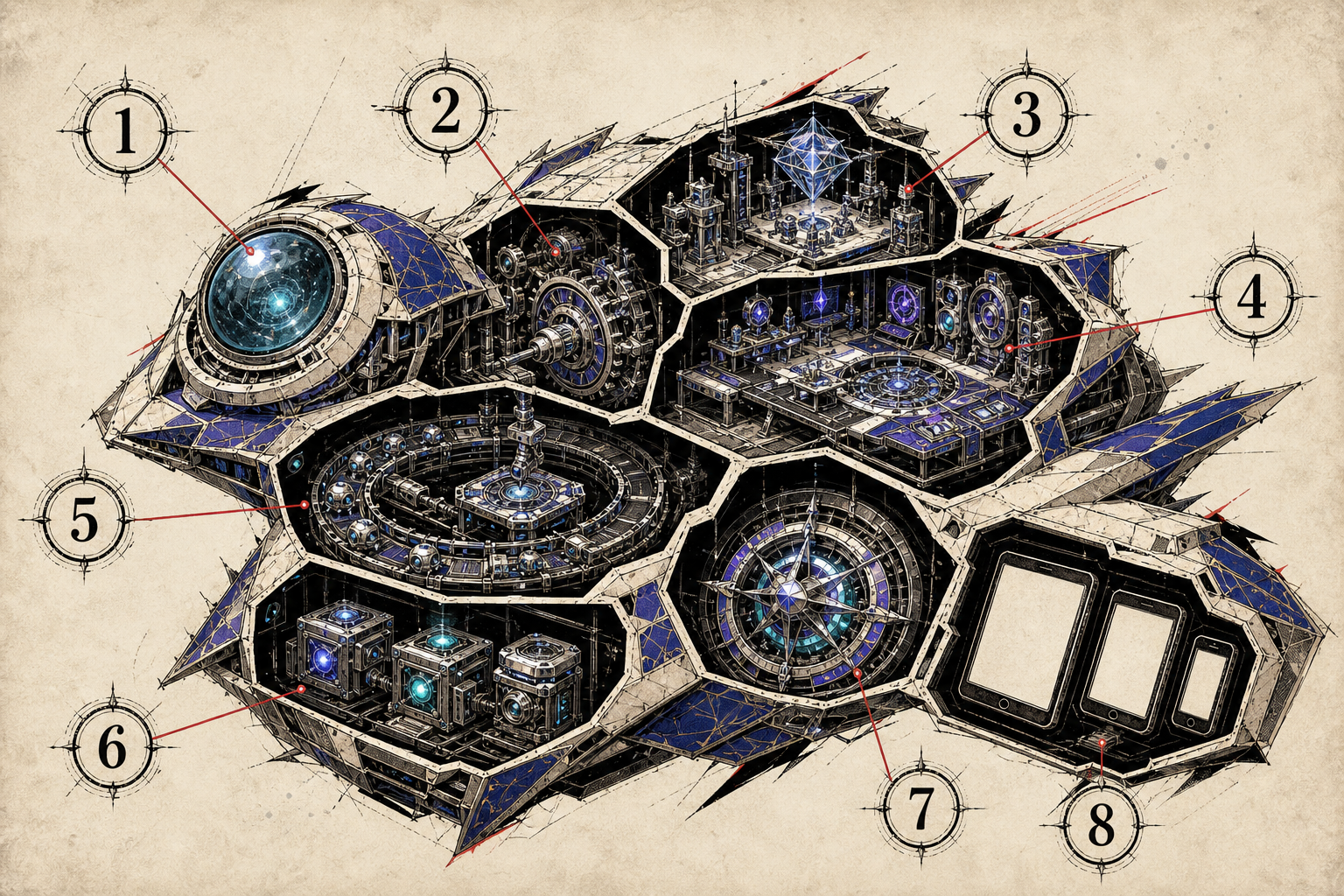
- Audience brief
- Rules and mechanics
- Storyboard and prototype
- Art, audio and interface
- Quality-assurance loop
- Runtime languages and engines
- Randomization core
- Multi-device deployment
How an online casino game gets made
Building one takes technical skills, an understanding of the applicable laws, and knowledge of how players behave.
Step 1 — Understanding the target audience
Market research comes before design, not after it.
Research reveals what players like, how they behave and what their demographics are. Game features, themes and interfaces are then designed against that rather than against a hunch.
Step 2 — Defining rules and gameplay mechanics
The rules follow from the audience, and they have to satisfy three things at once: game balance, fairness and player experience.
This step sets out how players interact with the game — its goals, win conditions, betting systems and bonus features. Establishing them clearly is what makes the game fun and fair and keeps it inside legal standards.
Step 3 — Storyboarding and prototyping
Storyboarding and prototyping turn an idea into something that can be tested.
Storyboarding produces visual representations of the game’s flow: user interfaces, key interactions and any narrative elements. It surfaces problems before significant resources are committed. Prototyping produces a preliminary version used to test core mechanics, user interactions and overall gameplay, and iterative testing against it is where flaws get found.
Step 4 — Development
Gameplay mechanics are the backbone, and three things decide whether the game is good or exceptional: visuals, sound and interface.
Art and animation. Crisp, clear graphics capture players at first glance and set the tone for the whole experience. Detailed environments and characters make the world feel real, a distinctive art style makes the game memorable, and smooth animation is what keeps interaction fluid.
Sound. A well-composed score makes a narrative more compelling, heightens the impact of a scene, and produces the intended emotional response. It also does a functional job: it tells the player whether an action succeeded or failed.
Interface and experience. A well-designed UI means players spend more time playing and less time navigating menus. It reduces frustration and lets a player concentrate on the game rather than on the controls, and an intuitive navigation system is a large part of whether they come back.
Step 5 — Testing and quality assurance
Quality assurance is the last step before launch and the one that decides whether the game ships polished.
QA testers systematically check the game for bugs, performance issues and anything else that would reach a player, which is covered in full in the next section.
What quality assurance covers
QA is five kinds of testing and an eight-stage loop, and none of it stops at release.
The five kinds:
- Functional testing: testers play through the game to find bugs and glitches, and confirm every feature works as intended.
- Performance testing: how the game runs on different devices, looking for lag, crashes and long load times.
- Compatibility testing: whether it works across hardware and software configurations, operating systems, screen sizes and devices.
- Usability testing: how easy the game is to play, assessed on the interface, the controls and the tutorials.
- Regression testing: after a fix, whether that fix broke anything else.
The loop that runs them:
- Planning: define the scope and goals of QA testing and write a detailed plan of what has to be tested.
- Test case development: write test cases covering every aspect of the game, as step-by-step instructions.
- Execution: testers run the cases and document what they find, with steps to reproduce, screenshots and any other relevant information.
- Bug reporting: issues are logged in a bug-tracking tool with a description, a severity level and a status.
- Review and fix: developers review the reported bugs, prioritise them, and update the game.
- Re-testing: testers confirm the issues are resolved and check for new bugs the fixes introduced.
- Final check: a comprehensive round across all features and performance before release.
- Post-launch monitoring: ongoing watching for anything players hit in the live environment.
The languages, engines and frameworks used
Programming languages and frameworks are the building blocks of any casino game project, and three languages and two engines carry most of the work.
The common languages
C++ is known for high performance and control over system resources, which is why it is a staple of game engines and of complex game functionality.
Java offers platform independence through its write-once, run-anywhere capability, and turns up in mobile and enterprise-level games as well as in the server-side applications behind multiplayer.
HTML5 is a robust framework for web-based games with rich content and interactive features, and it works across devices without any additional plugin.
The popular game engines
Unity is a flexible engine supporting 2D, 3D, VR and AR development, with a user-friendly interface and an extensive asset store. It simplifies cross-platform work and suits both indie and large-scale projects.
Unreal Engine, developed by Epic Games, is known for cutting-edge graphics and a high level of realism, which makes it a favourite for AAA titles and for anything visually demanding. It supports platforms from consoles to mobile.
How random number generators keep a game fair
A random number generator is an algorithm or hardware device that produces a sequence of numbers or symbols which cannot reasonably be predicted better than by chance.
Two kinds are used. Pseudo-random number generators use mathematical algorithms to produce long sequences that are not truly random but are sufficiently unpredictable for practical purposes, starting from an initial seed value. True random number generators derive randomness from physical processes such as electronic noise or quantum phenomena, so the numbers are genuinely random and not reproducible.
Why an online casino needs one:
- Fairness and trustworthiness: outcomes are fair and unbiased, which prevents manipulation by either the casino or the players.
- Regulatory compliance: most jurisdictions require online casinos to use certified RNGs to comply with gaming law and protect players.
- Game integrity: each round is independent of the previous ones, which is what keeps outcomes unpredictable in slots, poker and roulette.
- Dynamic difficulty adjustment: an RNG can be used to adjust difficulty, for a more balanced and challenging experience.
Where to start
Exceptional casino game development needs creativity, technical expertise and a real understanding of what players prefer — in that order, because the first two are useless without the third.
Staying ahead of the trends is what keeps a competitive edge as the industry moves. If you are planning a portfolio rather than a single title, our guides to slot game development and bingo game development work through two of these formats end to end.
Frequently asked questions
What is online casino game development?
It is the process of designing, creating and deploying digital versions of traditional casino games — slots, poker, blackjack, roulette and more — for online casinos. It runs through concept design, programming, graphic design, sound engineering and rigorous testing, and its goal is a game that is fair, entertaining and secure.
What types of games should an online casino portfolio include?
A wide enough range to reach different players: slot machines in their classic, video and progressive-jackpot forms; table games such as blackjack, roulette, poker, baccarat and craps; bingo and keno; scratch cards; arcade-style games such as virtual horse racing; and, though it is not strictly a casino game, sports betting.
What are the steps in developing an online casino game?
Five. Understand the target audience through market research; define the rules and gameplay mechanics; storyboard and prototype; develop the art, sound and interface; and then test under quality assurance before launch.
Which programming languages and frameworks are used in casino game development?
C++ for performance and control over system resources, Java for platform independence and server-side multiplayer support, and HTML5 for browser games that need no plugin. The engines most often used are Unity, which covers 2D, 3D, VR and AR, and Unreal Engine, which is preferred where graphics and realism dominate.
What is an RNG and why does an online casino need one?
A random number generator is an algorithm or hardware device producing a sequence that cannot reasonably be predicted better than by chance. Online casinos need one for fairness and trustworthiness, for regulatory compliance — most jurisdictions require a certified RNG — and for game integrity, so that each round is independent of the last.
What kinds of QA testing does a casino game need?
Five kinds: functional testing for bugs and glitches, performance testing across devices for lag and crashes, compatibility testing across operating systems and screen sizes, usability testing of the interface and tutorials, and regression testing to confirm a fix has not broken something else.
If you want a portfolio built rather than described, contact us and we will start from your audience.