


















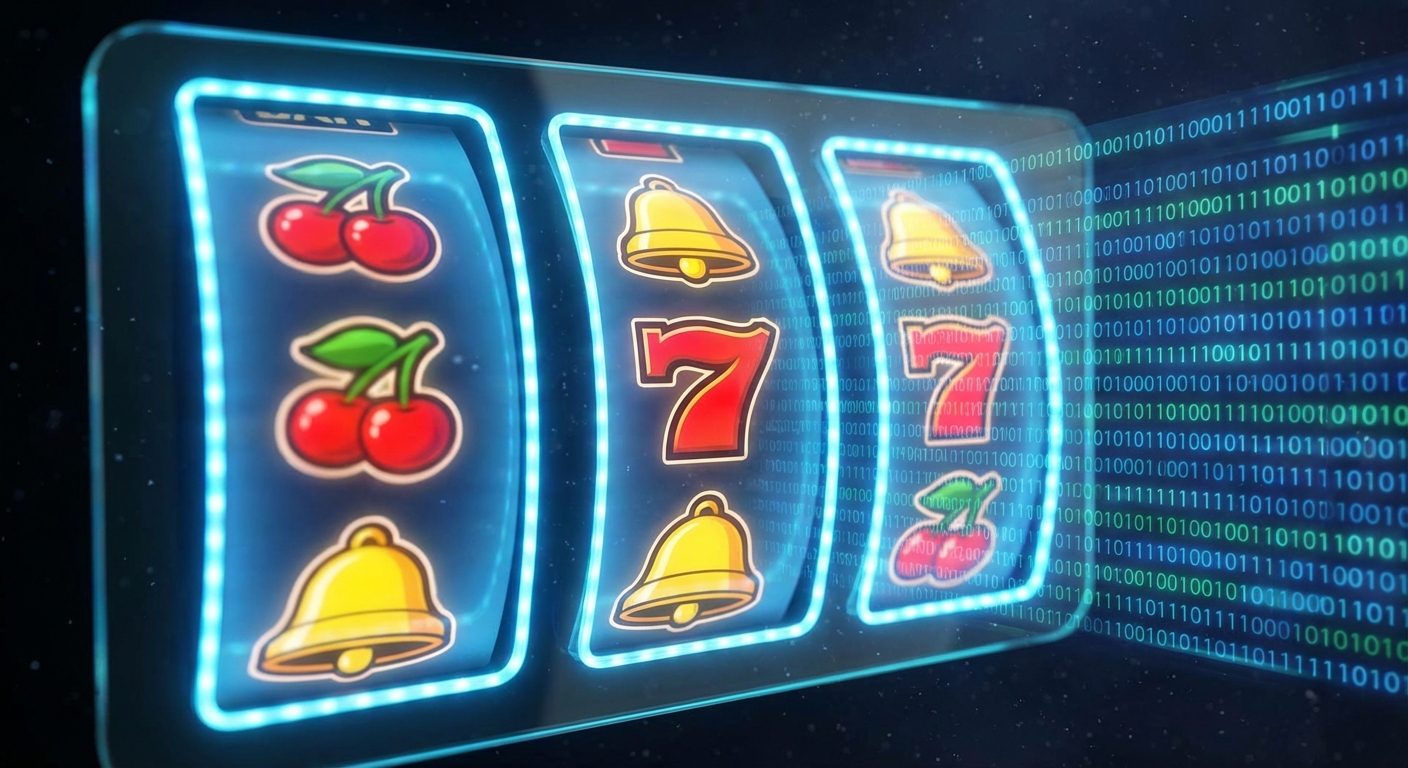

Every spin in a slot game is decided by a random number generator — the core system that makes the outcome of each bet statistically independent and verifiable by regulators. For studios and operators, understanding how that engine works is not optional: it is the foundation of every certification submission.
This post breaks down how developers implement RNG in slot games from algorithm selection and entropy management to reel mapping and live-ops security — the technical decisions that determine whether a product passes GLI review or stalls in compliance.

How developers implement RNG in slot games to ensure mathematical fairness
Modern slot machine RNG systems use Pseudo-Random Number Generators (PRNGs): software-based algorithms that produce sequences of numbers simulating true randomness. These systems run at high speed, are mathematically precise, and are the industry standard for digital gaming environments because they can generate millions of values per second without relying on physical decay or atmospheric noise.
A key characteristic is that the generator runs continuously in the background. Even when no player is interacting, the engine keeps cycling through values. When a bet is triggered, the outcome is determined by the exact millisecond of that action — which is why notions of a “hot machine” or a win streak have no mathematical basis.
At the core of the process is the seed: a complex starting value for the algorithm’s calculations. Developers must source this seed from high-entropy inputs so that no external actor can reconstruct or predict the sequence. A strong, unpredictable seed is what keeps random number generator slots statistically independent across millions of spins.
Selecting algorithms and managing entropy for long-term predictability prevention
Developers typically evaluate two families of algorithms: the Mersenne Twister and Cryptographically Secure PRNGs (CSPRNGs). The Mersenne Twister offers an extremely long period before a sequence repeats, but often needs additional security layers. CSPRNGs are designed to resist reverse-engineering. The right choice depends on the regulatory requirements of the target jurisdiction and the computational overhead the platform can sustain.
Managing entropy is the primary defense against predictability. In a computing context, entropy measures the degree of randomness available to the system, typically gathered from sources like hardware interrupts or high-precision clocks. Without a genuinely random entropy input, even the most sophisticated algorithm becomes vulnerable to pattern exploitation.
The technical goal is to ensure the generator’s period far exceeds the total number of spins the game could ever execute. This long-term unpredictability is what prevents sequence tracking and keeps the house edge aligned with the intended math model.
Mapping raw random values to reel symbols and game outcomes
After the RNG generates a raw integer, the game logic maps that number to a specific reel outcome. This is done through scaling or modular arithmetic, reducing the raw value to fit the range of symbols on a virtual reel strip.
The generator itself has no knowledge of symbols — it produces a data point that the game engine then interprets. For studios curious about how slot machines are programmed, the mapping layer is where RNG output becomes visual spin results.
Virtual reel mapping translates scaled numbers into specific stop positions for the display. If a virtual reel has one hundred stops, the RNG output is converted to a value between one and one hundred. This layer is architecturally separate from the number generation itself, creating a clean split between the randomness engine and the visual representation.
Maintaining the intended RTP requires that this mapping introduces zero statistical bias. If certain values are systematically favored or excluded during scaling, the math model breaks down — leading to unfair outcomes and almost certain regulatory failure. Equal probability across every stop position is a prerequisite for both player trust and certification approval.
Technical requirements for meeting global gaming certification standards
Approval from laboratories like Gaming Laboratories International (GLI) or BMM Testlabs goes well beyond delivering working code. The RNG implementation must pass rigorous statistical testing suites — such as the Diehard battery or NIST tests — that analyze millions of outputs to detect hidden correlations, patterns, or deviations from expected randomness.
Understanding the slot machine math model that underpins these tests matters for studios preparing a first submission, since the statistical thresholds a lab checks map directly back to how the game math was built.
Third-party auditors also perform a full source code review. They verify that the RNG is architecturally isolated from all other game variables: the player’s bet size, current balance, or session history must have zero influence on the generator’s output. Any detectable correlation between game state and RNG output is grounds for rejection.
Documentation is equally critical. Developers must provide a clear audit trail showing how entropy is collected, how seeds are protected, and how the system prevents external interference. Studios that want to streamline this stage can work with specialists in GLI certification preparation from the earliest stages of development — reducing the risk of costly re-submissions.

Maintaining RNG integrity during live operations and updates
Once a game is live, the technical challenge shifts to operational stability. Server restarts and software updates require careful handling: if the RNG re-initializes with the same seed due to a restart error, it will produce an identical sequence — a critical vulnerability that regulators treat with zero tolerance.
Continuous monitoring for statistical anomalies is standard practice in live environments. By tracking outcome distributions in real-time, operators can detect hardware failures or potential exploits before they cause measurable drift from the theoretical math model. This data-driven approach keeps interventions targeted and fast.
In regulated markets, the certified RNG codebase is typically frozen after approval. Any modification to the randomness logic — however minor — usually triggers a full re-certification by the relevant testing laboratory to confirm that no bias was introduced. Version control and change documentation are not optional: they are part of ongoing compliance.
Prioritizing architectural rigor in the slot development lifecycle
Choosing between a custom-built RNG and a pre-certified third-party module is a strategic call for any technical leader. Custom solutions offer design flexibility for unique game mechanics. Pre-certified modules compress time-to-market, arrive with compliance documentation, and carry a track record of validation across multiple jurisdictions.
The long-term ROI of any iGaming product is tied to player trust and regulatory standing. A robust, transparent RNG architecture protects the platform against both external attacks and compliance failures. Many studios choose to partner with a proven slot game development team precisely because that track record of meeting global standards is already built in.
Cutting corners on randomness implementation is among the most expensive risks in game development. A single failure in the RNG logic can trigger financial penalties, license suspension, and lasting damage to brand credibility. Studios that treat certification as a phase — rather than a continuous design principle — tend to encounter these costs at the worst possible moment.

If your studio is scoping an RNG implementation or preparing for a first certification cycle, we work with development teams at every stage — from architecture review to pre-submission testing. Talk to our slot development team to understand what a compliant build looks like from day one.
FAQs about RNG certification and implementation
What happens if an RNG re-initializes with the same seed after a restart?
It produces an identical sequence, and regulators treat that with zero tolerance. It is the reason server restarts and software updates need careful handling in live operations rather than being routine deployments, and it is why continuous monitoring of outcome distributions runs alongside them — a hardware failure or an exploit shows up as drift from the theoretical math model before anyone reports it.
Why is the selection of an entropy source critical for securing a random number generator?
While the algorithm handles the sequence, the entropy source determines the unpredictability of the initial seed. If developers rely on predictable system clocks alone, the sequence could potentially be reconstructed by sophisticated actors. High-quality implementations often gather entropy from non-deterministic hardware noise or cryptographic libraries to ensure the starting point is truly opaque. This prevents seed-guessing attacks, which are a primary concern for regulators during the initial security assessment, as a compromised seed renders even the most robust mathematical algorithm vulnerable to exploitation.
What specific technical oversights often lead to failures during the RNG certification process?
Most failures occur when there is a detectable correlation between the generator’s output and external variables, such as the player’s bet size or session duration. Testing labs like GLI look for leakage, where game state information influences the next random value. Another common pitfall is improper scaling, where the method used to map large integers to reel symbols introduces a slight statistical bias. Ensuring strict architectural isolation between the RNG service and the game’s prize logic is the most effective way to avoid these costly compliance setbacks.
How do developers handle RNG calls during complex game events like multi-level bonus rounds?
Even during intricate bonus features, the core logic remains consistent: the game engine requests a fresh set of random values for every independent event. Whether it is a reel spin, a pick-em prize, or a wheel transition, the generator treats each request as an isolated transaction. Strategic implementation involves ensuring that these high-frequency calls do not exhaust the entropy pool or cause latency. By maintaining a stateless relationship between the game’s visual progress and the underlying generator, developers ensure that bonus outcomes remain as mathematically fair as the base game.
What are the trade-offs of using third-party certified modules for game randomness?
The decision usually hinges on the desired time-to-market and the complexity of the target jurisdictions. Using a pre-certified module can significantly streamline the approval process since the laboratory has already validated the underlying logic. For most studios, the reduced regulatory risk and faster deployment of a certified module often outweigh the architectural flexibility of a custom-developed solution, which would require an extensive, from-scratch audit of the source code and statistical distribution.
Does updating the return-to-player percentage require re-certifying the generator?
Typically, the RNG and the Return to Player (RTP) calculations are treated as separate layers. If a developer modifies the math model or symbol weights to change the RTP, the RNG implementation usually remains untouched and does not require a full re-audit. However, if the mapping logic — the bridge that translates random numbers into game outcomes — is altered, regulators may demand a partial review. Keeping these components modular allows teams to tune game performance or launch new themes without the heavy operational burden of re-validating the core randomness engine.