






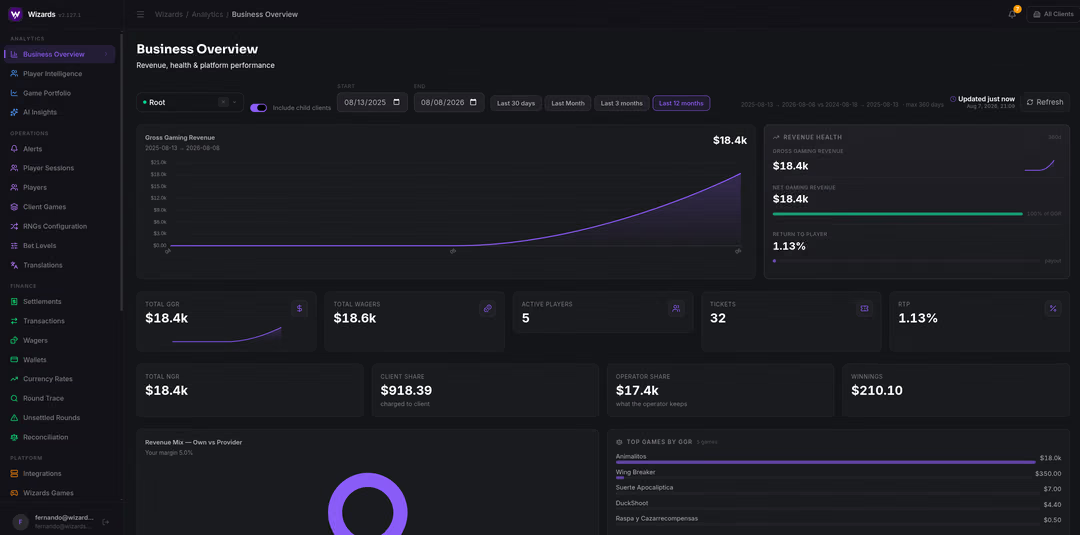
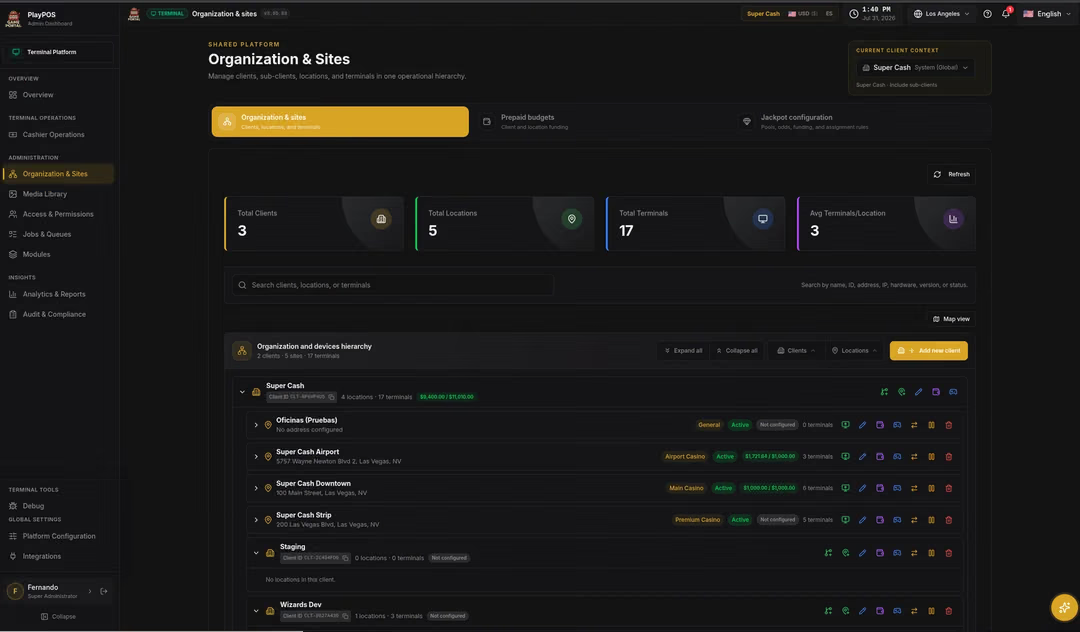













The transition from mechanical reels to complex digital systems has redefined the gaming floor, making it imperative for operators to understand how slot machines are programmed to maintain operational integrity. For a B2B stakeholder, this knowledge is not merely academic but represents the cornerstone of ensuring long-term profitability and meeting stringent jurisdictional requirements. Modern programming must balance the mathematical randomness required by law with the technical stability necessary to prevent revenue leakage through software exploits or logic errors.
While high-fidelity graphics and immersive soundscapes are the primary drivers of player acquisition, the underlying backend logic is what ultimately secures and maintains a gaming license. Partnering with an experienced slot game development company ensures that these technical requirements are integrated from the initial architecture phase. This structural foresight prevents costly rework during the certification process and ensures the product remains transparent for regulatory bodies and internal auditing teams.

Client-server separation and the role of the RGS
Digital slot programming relies on a decoupled architecture where the frontend user interface is strictly separated from the Remote Game Server, or the RGS layer. This separation ensures that visual updates or platform-specific optimizations do not interfere with the core logic that determines game outcomes and financial results. By modularizing these components, operators can refresh game themes or deploy seasonal skins without undergoing a complete and expensive re-certification of the underlying mathematical framework.
The math model acts as the central intelligence of the software, dictating every possible outcome based on a predetermined probability map. This engine remains agnostic to the visual representation, meaning the reels are essentially a graphical interpretation of data processed in the secure backend environment. This architecture allows for higher security and more efficient data handling across various delivery platforms, ensuring that the game logic remains highly resistant to tampering regardless of the player device.
In this B2B environment, the code must be deterministic in its mathematical structure but entirely random in its individual results. This means that while the game is programmed to return a specific percentage over millions of spins, the result of any single spin remains unpredictable. Understanding this distinction is vital for operators who must manage house edge expectations while guaranteeing a fair experience to the end user under regulatory oversight.
Essential components for auditability and regulatory transparency
To achieve regulatory transparency, the programming must include immutable transaction logs that record every bet, spin result, and payout in real-time. These logs provide a forensic trail that auditors use to verify that the game is operating as intended and that no unauthorized manual interventions have occurred. For a CTO or Compliance Officer, these logs are the primary defense against player disputes and potential regulatory inquiries regarding game fairness.
Furthermore, software integrity is maintained through hashing and digital signatures, which ensure the code running in production is identical to the version approved by the lab. This process prevents the “injection” of unauthorized code and ensures that the game logic remains consistent throughout its operational lifecycle. The technical infrastructure must support these checks automatically to maintain the high standards required in modern iGaming jurisdictions.
- Software Hashing: Generating a unique digital fingerprint of the compiled code to detect any unauthorized modifications or environmental tampering throughout the deployment.
- RNG Seed Logging: Recording the initial state and sequential outputs of the generator to allow auditors to recreate specific game outcomes during forensic reviews.
- Transaction Immutability: Utilizing database structures that prevent the deletion or alteration of historical betting data once a game result has been finalized.
These components collectively create a technical trail that satisfies RNG certification requirements set by laboratories like GLI or BMM Testlabs. Ensuring these features are hardcoded into the RGS architecture reduces the friction of periodic audits and enhances the overall reputation of the casino brand. Clear auditability is not just a legal requirement but a strategic tool for risk mitigation and operational security in a competitive market.
The Random Number Generator (RNG) as the technical anchor
At the heart of every digital slot lies the Random Number Generator, which serves as the technical anchor for fairness and unpredictability. In the iGaming sector, how RNG is implemented typically relies on Pseudo-Random Number Generators built on complex algorithms that produce sequences of numbers indistinguishable from true randomness. These algorithms are designed to be statistically independent, which means that no previous result can influence or predict future outcomes in the game cycle.
The programming logic ensures that the RNG is entirely external to the visual code, functioning as a black box that provides raw data to the game engine. This setup prevents any potential patterns from emerging that could be exploited by sophisticated players or automated bots. By maintaining this strict separation, the integrity of the math remains intact regardless of the frontend complexity or the frequency of visual updates.
Operators must often dispel the cycle myth, which suggests that a machine is due for a win after a long losing streak. In a properly programmed iGaming environment, every spin is a discrete event governed by the RNG with no memory of past performance. This technical reality is what allows mathematical models to remain accurate over millions of simulated iterations, providing the stability that casino operators need for financial planning.
Math models and RTP turn code into revenue and risk management
Math models define the economic profile of a slot game, directly impacting both the operator’s margin and the player’s lifetime value. Developers must program specific variables such as Hit Frequency and Volatility to align the game with the intended market segment and player profile. High volatility games offer larger but less frequent payouts, while low volatility titles provide more consistent wins to extend the player’s session time.
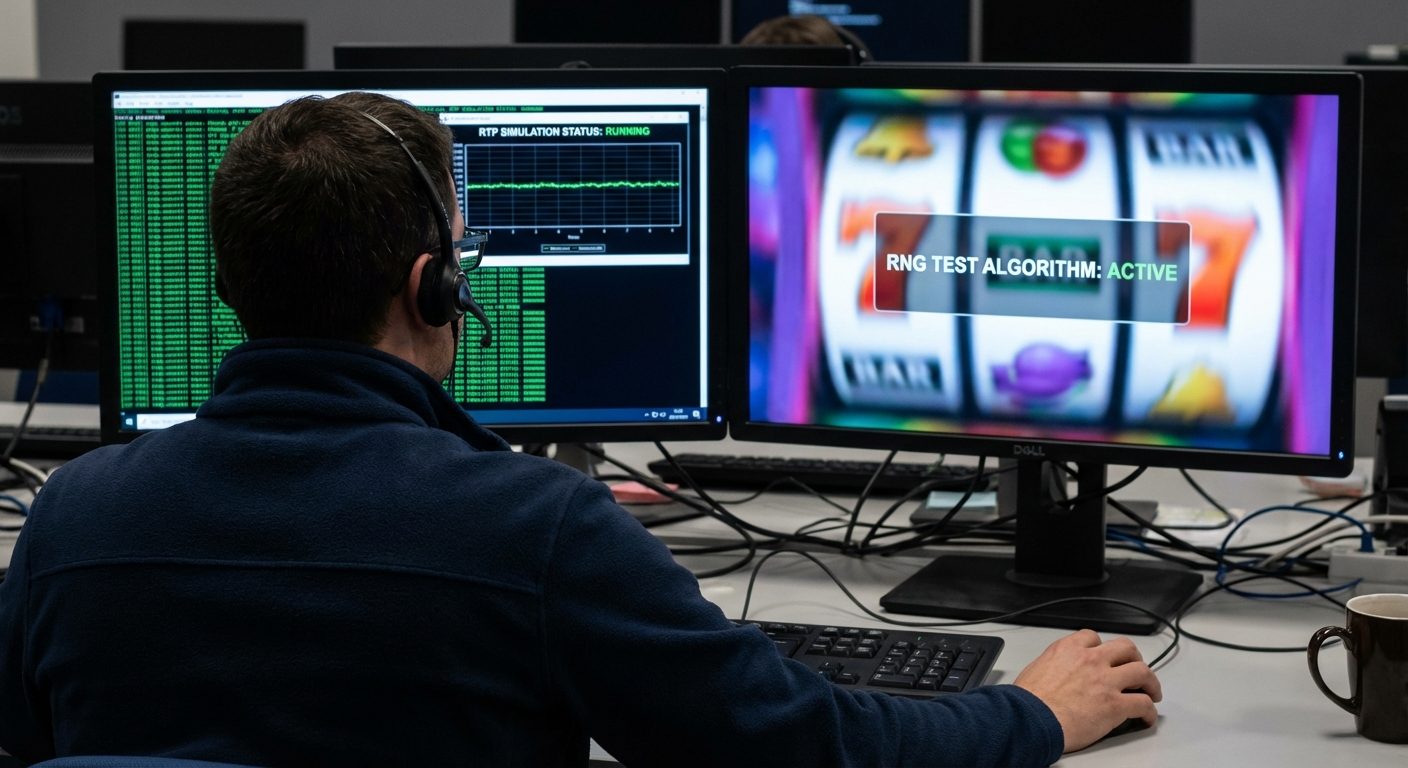
The Return to Player percentage is a hardcoded value that represents the theoretical amount returned to players over an infinite number of spins. To verify this value, the underlying slot math modelling undergoes massive simulations that often reach billions of iterations to ensure the empirical results match the theoretical design. This rigorous testing phase is critical for risk management and for establishing reliable financial forecasting for the casino operator.
Modern features like bonus buys or cascading reels significantly increase the complexity of the underlying math and the programming logic required. Each additional layer of gameplay must be accounted for in the overall RTP calculation to ensure the house edge remains protected. Miscalculating these features can lead to unexpected volatility spikes that jeopardize the casino’s liquidity and regulatory standing if the payouts deviate from the certified model.

Preparing for certification with technical documentation and code review requirements
Preparing for certification requires the submission of a comprehensive Technical Design Document and the full source code for review by an independent laboratory. Certification labs examine the logic to ensure that there are no hidden subroutines or “backdoors” that could compromise the fairness of the game. A clean, well-documented codebase is essential for moving through GLI’s certification process quickly and avoiding costly delays in the commercial launch schedule.
Smart programming strategies involve the isolation of critical files, which contain the core math and RNG logic, from the non-critical visual assets. This modular approach allows operators to update graphics or fix minor UI bugs without triggering a full and expensive re-certification of the entire software suite. This efficiency is a major competitive advantage in a fast-paced market where content freshness is a primary driver of retention.
Simulation reports provided by the developer serve as the first line of proof that the code behaves exactly as the mathematical model predicts. These reports demonstrate the statistical distribution of outcomes across various bet levels and game states to the regulators. For the Product Manager, having these reports ready before the official lab submission can drastically reduce the time-to-market for new slot titles.
Strategic oversight in slot programming for long-term operation
Strategic oversight in slot development requires a balance between innovative gameplay and the rigid requirements of global compliance standards. Choosing a scalable architecture that supports easy updates without breaking audits is a fundamental business decision for any serious casino operator. Transparency between the game studio and the operator regarding the technical stack ensures that future regulatory changes can be met with minimal operational disruption.
Ultimately, auditability should not be viewed as a regulatory hurdle but as a foundation for building player trust and protecting brand reputation. When a platform can prove the integrity of its code and the randomness of its outcomes, it creates a sustainable environment for long-term growth. Engaging with a qualified slot game development company provides the technical assurance needed to navigate this complex landscape and focus on core business expansion.
FAQs about slot machine auditability and RNG standards
How can a slot be deterministic in its maths and random in each spin?
The math model fixes the probability map, and the RNG decides where inside it each individual spin lands. The game is programmed to return a specific percentage over millions of spins while the result of any single spin stays unpredictable, and every spin is a discrete event with no memory of past performance — which is why the cycle myth, the belief that a machine is due for a win after a losing streak, has no mechanism behind it.
How should operators manage software versioning to ensure continuous compliance after a slot is live?
Post-deployment, operators must implement strict version control protocols to ensure the live game environment remains synchronized with the lab-certified version. This involves maintaining a secure repository where each software build is assigned a unique hash or digital signature. If an update is required to fix a technical bug, the new code typically undergoes a delta-audit to verify that the core math and RNG remain untouched. Effective versioning management prevents the risk of ‘version drift,’ which can lead to accidental non-compliance and severe regulatory penalties during periodic inspections.
What technical red flags should CTOs look for when evaluating a slot provider?
When evaluating third-party providers, a primary red flag is the lack of separation between visual assets and the core mathematical engine. If the Remote Game Server (RGS) logic is tightly coupled with the frontend code, any minor graphical update could necessitate a costly and time-consuming re-certification of the entire software package. Operators should also scrutinize technical documentation for clear evidence of RNG independence. A mature development partner provides comprehensive simulation reports and modular code architectures that facilitate faster audits and offer greater transparency during compliance reviews.
How does the programming structure change when targeting multiple regulatory jurisdictions?
Programming for diverse markets involves creating a core math model that meets the strictest common denominators while allowing for jurisdiction-specific modules. Different regions may have unique rules regarding game speed, maximum bet limits, or specific bonus functionalities. A scalable architecture allows developers to swap these peripheral modules without altering the primary certified RNG or base logic. This modular approach significantly reduces time-to-market for multi-jurisdictional rollouts and minimizes the operational complexity of managing different code versions across various international regulatory landscapes.
What specific triggers usually necessitate a full re-certification of the game code?
A full re-certification is typically triggered by any modification to ‘critical files’ that house the RNG logic, paytables, or the underlying mathematical engine. Minor cosmetic changes, such as font updates or sound effects, often fall under low-impact modifications that may only require a simple lab notification. However, introducing new mechanics like ‘buy bonuses’ or altering the hit frequency requires a complete review of the simulation results. Understanding this distinction is vital for operators planning seasonal updates or iterative improvements to their existing game portfolios without breaking certification.
How do modern slot programming practices handle data privacy at the backend level?
In modern iGaming architectures, the Remote Game Server is designed to be player-agnostic to enhance security and simplify audits. The programming logic focuses strictly on processing bets and returning results based on the RNG, while player-identifiable information (PII) is managed by the operator’s platform or a separate wallet system. This separation ensures that even if an auditor reviews the game logs, they only see anonymous transaction IDs. This structure not only simplifies data privacy compliance but also protects the game logic from being influenced by specific player-side data.