

















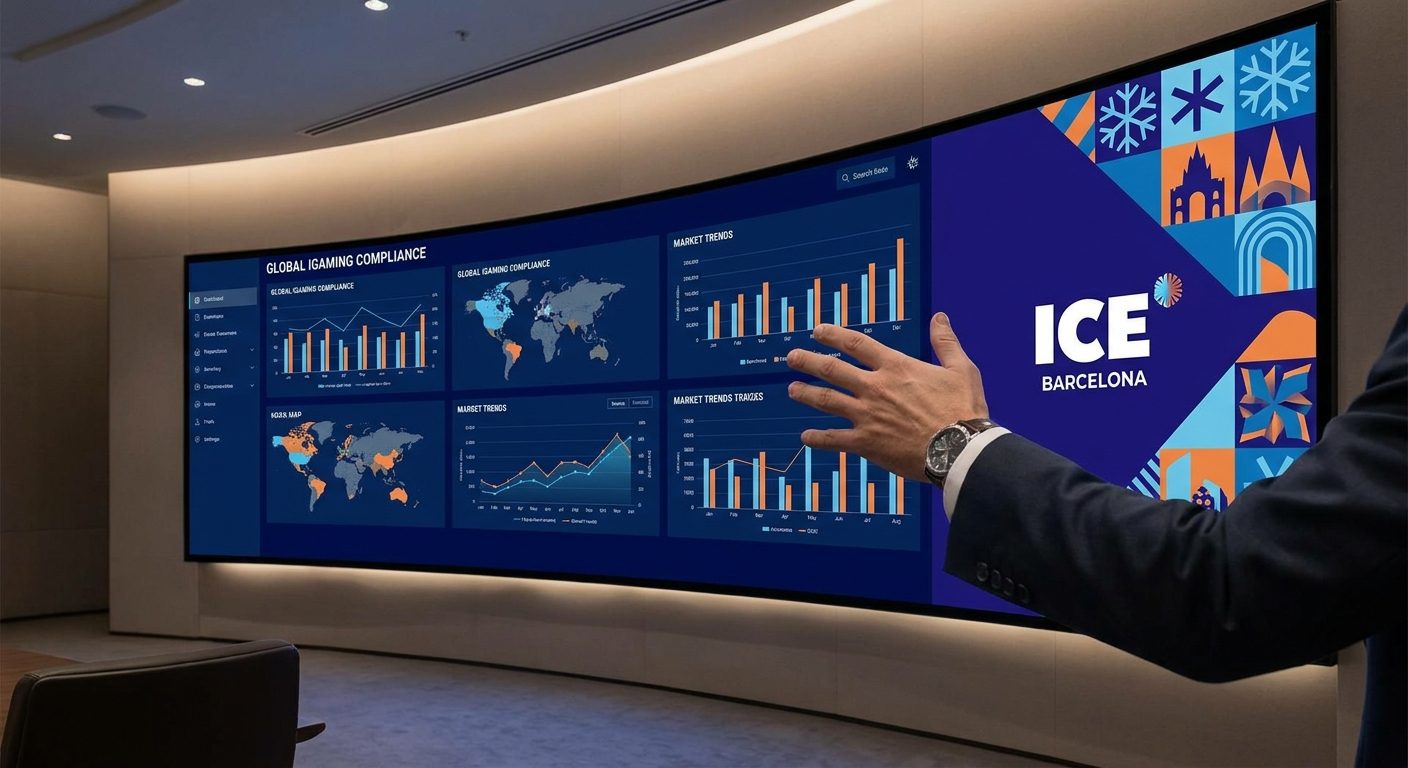

ICE Barcelona 2026, held from 19 to 21 January at Fira Barcelona Gran Via, drew a record 62,988 professionals from 162 countries. The sheer volume of innovation on the showfloor can obscure the truly impactful shifts, but a closer look reveals several trends poised to reshape operational strategies and compliance approaches in the coming year. Operators who attended recognized that translating broad observations into concrete, actionable steps for specific markets and regulatory environments is where true value lies.
Understanding these shifts is not merely about tracking new technologies; it involves anticipating regulatory pressures, refining player engagement, and optimizing market strategy. As an iGaming and digital marketing solutions provider, we help operators worldwide integrate these forward-looking insights into their business plans, drawing on the wider circuit of iGaming conferences that shape the year.

How new iGaming compliance demands affect your operations after ICE Barcelona 2026
Regulatory scrutiny will intensify across jurisdictions in 2026, demanding greater transparency and accountability. Discussions at the event emphasized player protection as the central pillar of new policies, moving beyond mere tick-box exercises. This increased oversight translates into several concrete operational impacts for your business:
- Expanded Advertising Restrictions — New rules could limit promotional messaging, requiring operators to rethink acquisition strategies and ensure all marketing is fully compliant with local advertising codes.
- Tighter Deposit and Loss Caps — Many jurisdictions are introducing or strengthening limits on player deposits and net losses, which directly influences player value and necessitates more sophisticated responsible gambling tools.
- B2B Vendor Accountability — Regulatory bodies are increasingly holding platform and iGaming compliance experts responsible for their clients’ operational conduct, demanding robust audit trails and proactive risk management in software solutions.
- Enhanced Transparency — Operators must demonstrate end-to-end transparency in their systems, from game fairness to payment processing, often through mandatory data reporting and regular independent audits.
For example, the Malta Gaming Authority (MGA) will raise the gaming tax for Maltese players to 15% for Type 1 casino games from October 1, 2026, up from the previous single 5% rate, underscoring evolving financial obligations detailed in our breakdown of the Malta gaming license.
Similarly, the Curacao licensing system has shifted under the LOK framework, requiring direct B2C and B2B licenses from the Curacao Gaming Authority (CGA). It carries stricter requirements like a registered local presence, at least one full-time local key person (with enforcement extending to April 2027), and game content certification by a CGA-approved lab, as we explain in our guide to the Curacao gaming license.
What platform technologies are essential for 2026 growth
To navigate these regulatory shifts and capitalize on market opportunities, technology solutions showcased at ICE Barcelona 2026 focused on modularity, agility, and embedded compliance. The era of monolithic platforms is yielding to flexible architectures that can adapt quickly to new requirements.
Modular gambling platform providers offer systems that simplify integration and allow operators to swap components, fostering greater control over their tech stack. This approach supports multi-vertical offerings and easier market entry, as specific modules can be tailored for local regulations.
Artificial intelligence (AI) is moving beyond hype, delivering tangible benefits in game suggestions, dynamic bonus optimization, and identifying early churn signals. AI offers significant advantages for enhancing player experience and operational efficiency.
However, it remains a valuable add-on for specific use cases rather than a universal differentiator that every operator must fully implement immediately.
Blockchain technology continues its adoption as a core payment infrastructure, not solely as a player-facing option. Stablecoins, for instance, are increasingly used for B2B transfers and cross-border funds, streamlining operations.
Curacao explicitly permits crypto deposits and withdrawals under the same B2C license, provided operators apply AML source-of-funds checks, reflecting a growing acceptance of digital assets within regulated frameworks.

How new game content and player engagement models are evolving
The innovation in game development and player engagement discussed at ICE Barcelona 2026 highlights a clear shift in what captivates audiences. Designs are adapting to mobile-first consumption patterns and the influence of streaming platforms, prioritizing immediate gratification and intuitive interaction.
Key trends in game content and player engagement include:
- Lighter Mechanics and Instant Formats — Games are designed for quicker comprehension and faster play sessions, catering to on-the-go players. This often means simplified rulesets and rapid outcome loops.
- Decision-Based Play — Integrating player choices directly into the game narrative or mechanics enhances engagement, moving beyond purely luck-based outcomes.
- Mobile-First Design — Optimization for smaller screens and touch interfaces is paramount, ensuring seamless performance and intuitive controls across various devices.
- Streaming and Creator Distribution — New content is often designed with shareability in mind, recognizing that streamers and content creators are significant drivers of discovery and player acquisition.
- Cross-Platform Strategy — Developing games that offer a consistent experience across desktop, mobile, and potentially other emerging platforms extends reach and retention.
These developments mean casino game development services must prioritize immersive yet accessible experiences. Data analytics plays a critical role here, connecting player behavior with informed responses, which allows operators to personalize engagement, reduce friction, and identify potential risks earlier.

Navigating market expansion and strategic consolidation in 2026
Market dynamics observed at ICE Barcelona 2026 point to a nuanced global landscape for iGaming operators. While mature markets in Europe and North America may see plateauing growth, new regions offer significant expansion opportunities.
Emerging markets in Latin America, parts of Africa, and select MENA (Middle East and North Africa) jurisdictions are expected to drive much of the global iGaming growth. These regions often feature rapidly digitalizing populations and nascent regulatory frameworks, presenting both opportunities and unique challenges for market entry.
Conversely, consolidation through mergers and acquisitions (M&A) is accelerating in established markets. Operators seek greater scale to manage rising operational costs and regulatory burdens, while suppliers aim for synergistic acquisitions to expand their product portfolios and market reach.
Successful market entry in new regions often hinges on hyper-localization, including offering content tailored to local preferences and supporting diverse payment solutions. The shift from traditional CPA (cost per acquisition) to RevShare (revenue share) affiliate models also reflects a growing emphasis on long-term value and partnership.
What to prioritize when applying ICE Barcelona insights to your strategy
Operationalizing the trends observed at the event means making deliberate choices about resource allocation and strategic direction. Your focus should balance immediate gains with long-term resilience and compliance. Consider these priorities when refining your iGaming strategy:
- Integrate Compliance Proactively — Embed regulatory requirements into your platform architecture and operational workflows from the outset, rather than treating them as separate add-ons.
- Prioritize Modular Technology — Invest in platforms and systems that offer flexibility and scalability, allowing you to adapt quickly to evolving market demands and regulatory changes without full system overhauls.
- Leverage Data for Player Engagement — Implement advanced analytics to understand player behavior deeply, enabling personalized experiences, effective responsible gambling interventions, and optimized retention strategies.
- Strategically Approach Market Entry — Conduct thorough due diligence for new markets, focusing on localized content, payment methods, and legal compliance to maximize success.
- Balance Innovation with Responsibility — While pursuing cutting-edge technologies and game formats, ensure that player protection and cybersecurity remain at the forefront of your development efforts.
Applying these insights effectively requires a cohesive strategy across technology, compliance, and market development. Embracing this holistic view helps ensure sustainable growth and long-term competitiveness in a dynamic industry.
Staying ahead of rapid regulatory shifts, technological advancements, and evolving market dynamics is essential for sustainable iGaming growth. Connect with our team at Wizards to assess how these insights apply to your operational challenges and growth ambitions. Our iGaming consulting team helps you develop a tailored roadmap, translating industry trends into concrete competitive advantages for your business.
Frequently asked questions about ICE Barcelona iGaming trends
When is the next ICE Barcelona and when did the 2026 edition take place?
ICE Barcelona 2026 ran from 19 to 21 January 2026 at Fira Barcelona Gran Via, drawing a record 62,988 professionals from 162 countries. The next edition, ICE Barcelona 2027, is scheduled for 18 to 20 January 2027 at the same venue, as part of World Gaming Week.
What does embedding compliance proactively look like for an iGaming operator?
Proactively embedding compliance involves integrating dedicated software for automated reporting and real-time data feeds directly into your platform. It means continuously monitoring player interactions and transactions through AI-driven tools, ensuring swift identification of potential risks or breaches. This shifts compliance from a reactive task to an inherent operational component, crucial for navigating stricter regulations.
How does AI assist with responsible gambling efforts in 2026?
AI significantly enhances responsible gambling by analyzing player behavior to detect subtle risk indicators early, beyond just churn. It can personalize interventions, offering tailored responsible gaming tools or messages to at-risk individuals. This proactive, data-driven approach helps operators meet intensifying player protection demands by identifying anomalies indicative of problem gambling patterns.
What specific criteria should operators use to evaluate B2B software vendors for compliance in 2026?
To evaluate B2B vendors for compliance, assess their adherence to recognized standards like GLI-19, which covers interactive gaming systems. Look for robust, auditable data trails, clear incident response protocols, and capabilities for data segregation per jurisdiction. Verifying their independent audit reports and data protection certifications provides further assurance of their accountability.
What are the primary factors affecting the timeline for a GLI certification of iGaming software?
The timeline for GLI certification varies significantly, typically ranging from a few weeks to several months for complex iGaming software. Key factors include the completeness and quality of submitted documentation, the complexity of the game or platform, and the responsiveness to any identified non-conformities during testing. Thorough preparation can expedite the process.
Beyond content and payments, what other elements are crucial for hyper-localization in emerging iGaming markets?
Effective hyper-localization in new markets goes beyond just content and payments. It involves understanding local cultural sensitivities for marketing campaigns, adapting user interfaces for prevalent device types or digital literacy levels, and offering region-specific customer support channels. This deeper cultural integration fosters player trust and engagement within diverse regulatory environments.