




















Augmented reality (AR) significantly enhances player engagement by merging digital content with physical environments, moving beyond a simple “wow” factor. This technology provides a new dimension for immersive augmented reality casino experiences, especially in live dealer and interactive slot settings, setting a new benchmark for player interaction.
For iGaming operators, AR integration comes down to two concrete demands: building the real-time 3D rendering and motion-tracking layer, and putting it through the same game-fairness and data-privacy checks a regulator already applies to any digital game. Getting both right is what separates a shippable casino game development strategy from a stalled pilot.

How augmented reality casino games transform player engagement
Augmented reality transforms passive consumption into active, engaging experiences for players by directly overlaying digital elements onto their real surroundings. This immersive approach allows operators to offer a uniquely personalized gaming environment that fosters deeper connections with the game.
- It boosts user retention by making interactions more personal and memorable, as digital game elements appear to exist within the player’s own space.
- Players often experience longer session durations as the enhanced reality keeps them actively involved and curious about new interactive possibilities.
- AR enables greater personalization, adapting game elements to the player’s immediate physical space and preferences, making each session feel uniquely tailored.
Industry market research put the global AR gaming market at around USD 9.8 billion in 2023, with projections reaching USD 86.3 billion by 2033, a pace that reflects substantial player demand for more immersive interactions.
This growth underscores how AR-enhanced casino experiences can serve as a powerful differentiator in increasingly competitive iGaming markets, attracting and retaining modern players.
How augmented reality changes live dealer games and virtual slots
AR technology extends the types of casino games operators already run by bringing virtual elements into the physical world, creating engagement opportunities that enhance existing mechanics rather than replacing them.
Specifically, augmented reality introduces compelling innovations for both live dealer experiences and virtual slot gameplay. This technology enhances realism and player control by bringing virtual elements directly into the physical environment.
Enhancing Live Dealer Games with AR Overlays
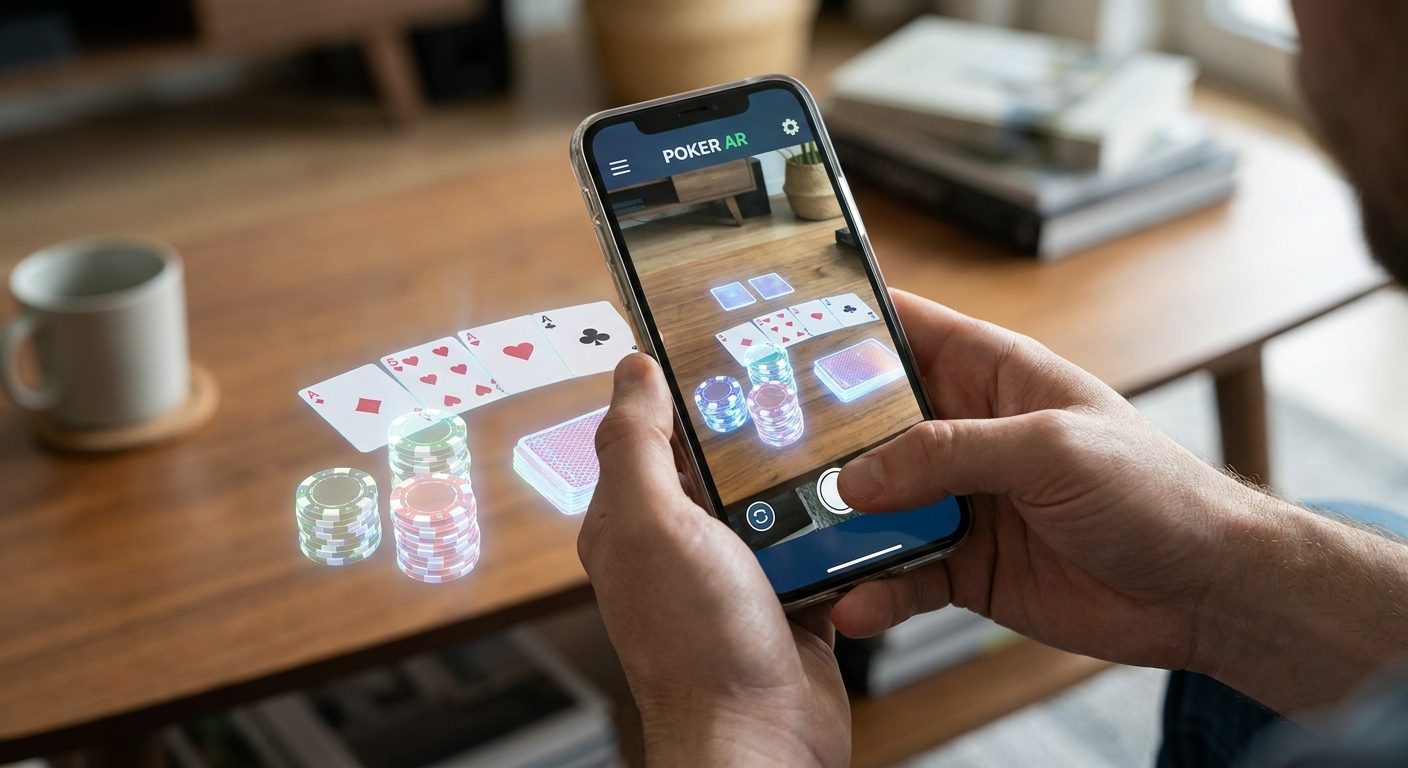
In a live dealer setting, AR elements could manifest as holographic playing cards appearing directly on the player’s table, creating a tangible, interactive feel. Similarly, 3D chips might virtually stack and move within the player’s physical space, responding to their virtual actions.
Real-time statistics, betting odds, and player leaderboards could seamlessly overlay the live video feed, providing immediate, contextual data within the player’s physical room without distracting from the dealer. This deep integration helps bridge the gap between land-based and online casino experiences, offering a more tactile and visually rich environment.
Operators can use AR to provide richer game information and unique visual flair, making each hand of blackjack or spin of the roulette wheel more compelling. Implementing these visual layers well is a specialized gambling game development task, not a cosmetic add-on.
Transforming Virtual Slots with Interactive AR
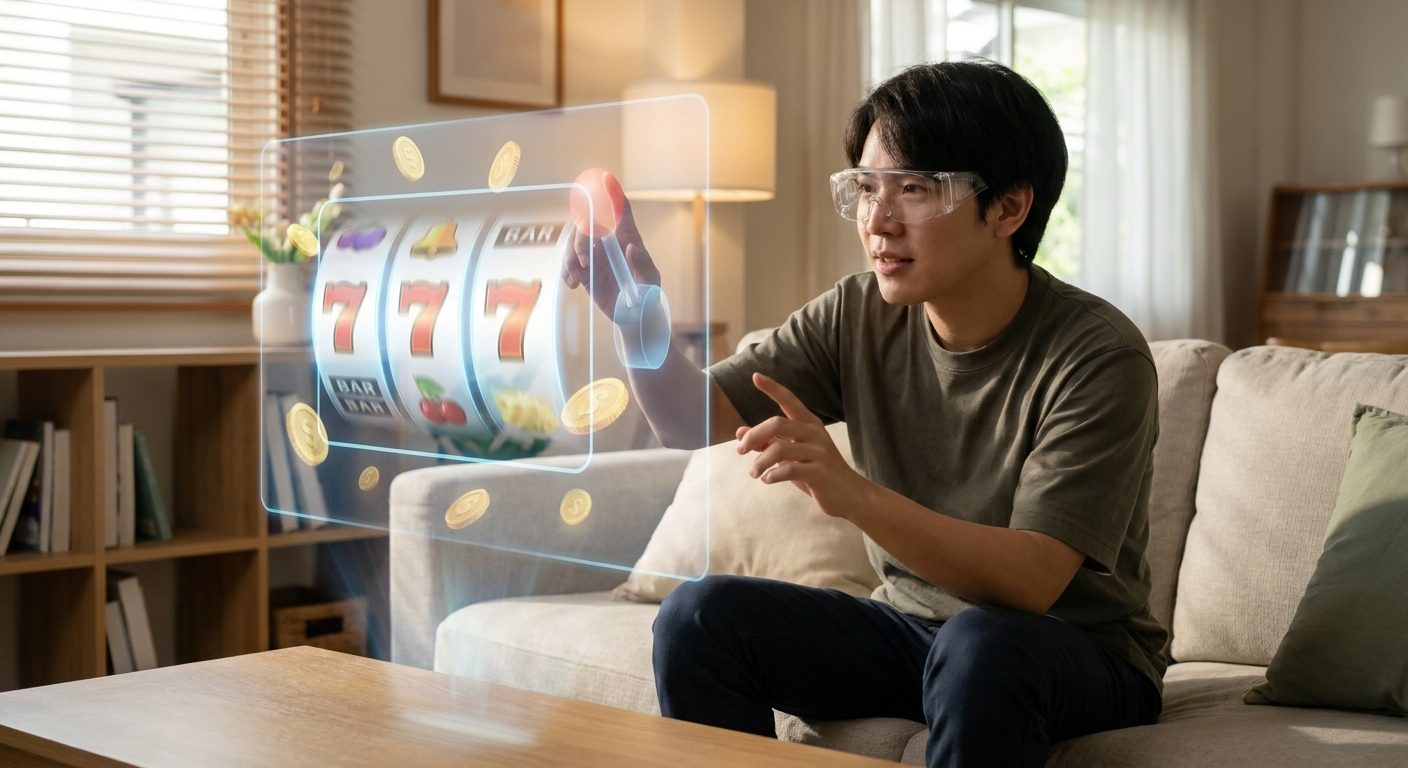
For virtual slots, AR allows players to conceptually “place” a slot machine within their actual living room or chosen environment through their device’s camera. This enables highly personalized setups where the machine’s aesthetics and animations can adapt to the player’s physical space, offering a truly integrated and novel gaming experience.
Beyond static placement, interactive AR features could allow players to physically gesture to pull a lever, or watch bonus rounds unfold across their coffee table. The same visual craft that defines strong slot game art carries directly into how these AR layers are designed, making the game part of the player’s surroundings and deepening the connection to each outcome.
Technical considerations for augmented reality game development
Developing effective augmented reality casino games requires addressing specific technical complexities beyond standard iGaming development. These considerations directly impact performance, user experience, and overall project viability, demanding specialized expertise.
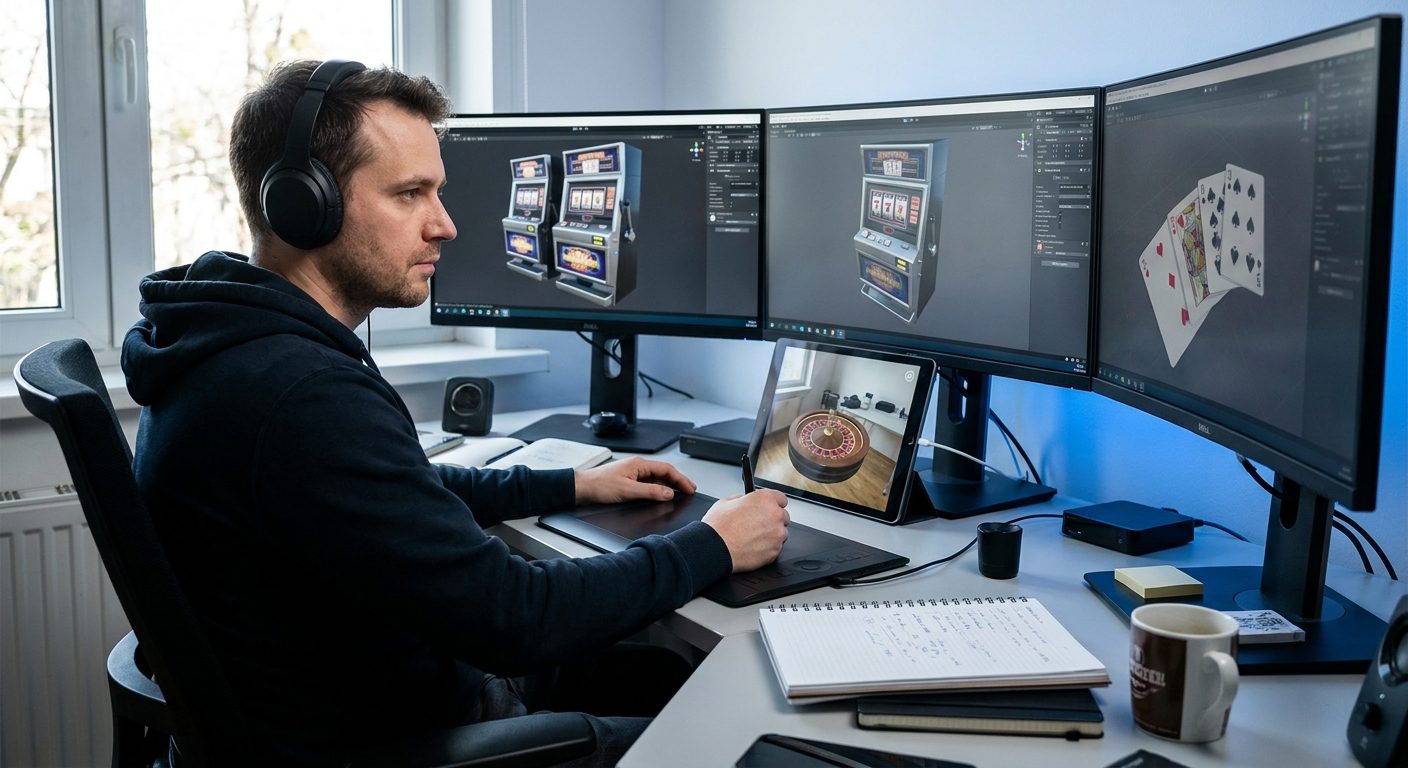
- Advanced 3D Modeling and Animation: Creating realistic holographic elements and interactive virtual objects demands sophisticated 3D modeling, texturing, and animation expertise to achieve believable integration with the real world.
- Robust Backend Infrastructure: AR applications are data-intensive, necessitating powerful backend systems to handle real-time rendering, precise object tracking, and complex environmental mapping without latency issues.
- Accurate Motion Tracking and Environmental Mapping: Precise recognition of physical environments, surface planes, and user movements is essential for seamless digital overlay and natural interaction within the augmented space.
- Cross-Device Compatibility and Optimization: Ensuring a consistent, high-fidelity experience across a wide array of mobile devices and operating systems presents a significant development challenge due to varying hardware capabilities.
- Low Latency and Bandwidth Management: Minimizing delays between player actions and AR feedback risks breaking immersion and causing user frustration, particularly in fast-paced casino games where responsiveness is paramount.
These technical demands mean that successful AR casino game development often requires a specialized team with proven experience in both iGaming mechanics and advanced AR frameworks like Unity AR Foundation or Apple ARKit/Google ARCore.
Navigating compliance and responsible gaming for augmented reality casino environments
Integrating AR into gambling platforms introduces new layers of regulatory scrutiny, requiring operators to adapt existing compliance frameworks. The immersive nature of AR environments potentially heightens risks associated with data privacy and responsible gaming, making proactive planning essential.
Existing regulations, such as those governing Random Number Generators (RNGs), game fairness, and data security, still apply directly to the digital elements within an AR gambling game. Standards like GLI-19, which specifically covers interactive gaming systems, would typically encompass AR components, evaluating their integrity, randomness, and performance.
Operators must ensure that AR elements do not inadvertently influence game outcomes or create unfair advantages, and that all virtual interactions are transparent.
Furthermore, the enhanced data collection capabilities of AR, which might map player environments or analyze user interactions in deeper ways, mean existing data privacy regulations, such as GDPR, become even more critical to uphold for player protection.
Responsible gaming measures also require careful consideration. The profound immersion offered by AR could intensify player engagement, potentially making it more challenging for individuals to disengage or recognize their time and money spent.
Operators must implement robust self-exclusion tools and clear reality checks that function effectively and prominently within these new, highly interactive settings. Adapting these compliance frameworks for AR is where iGaming certification support proves its value, turning evolving requirements into concrete launch conditions.
Building a strategic roadmap for augmented reality casino integration
Successfully integrating augmented reality into your iGaming offerings demands a clear, phased strategy rather than an isolated technical project. A well-defined roadmap minimizes risks and maximizes potential returns, ensuring your investment yields long-term benefits.
- Define Clear Objectives: Pinpoint specific player engagement metrics, market differentiation goals, or revenue targets that AR integration aims to achieve. Without clear objectives, evaluating success becomes difficult.
- Start with Pilot Projects: Begin with smaller, contained AR experiences to test technology, gather real player feedback, and refine development processes before committing to a broader rollout. This iterative approach mitigates larger-scale risks.
- Ensure Platform Scalability and Integration: Design AR solutions that integrate cleanly with your existing gambling platform and its supporting infrastructure. Future-proofing your platform for increased player adoption and new AR features ensures sustainable growth.
- Prioritize User Experience (UX) Design: Focus on intuitive interfaces and interactions that leverage AR’s strengths without overwhelming players or compromising ease of use. A complex or clunky AR experience will deter adoption.
- Partner with Specialized Expertise: Collaborate with developers and consultants who possess a deep understanding of both advanced AR technology and the unique nuances of iGaming mechanics, regulations, and player psychology.
Following these strategic steps helps ensure that your investment in an augmented reality casino environment translates into a sustainable competitive advantage rather than a stranded pilot. Planning these integrations end to end, from concept to pilot to rollout, is where iGaming consulting keeps the budget and the timeline on track.
Augmented reality gives operators a real way to deepen player engagement, but the payoff depends on execution: a pilot with clear metrics, a backend that scales, and AR components that pass the same fairness and data-privacy review as the rest of the platform.
If you are scoping an AR project and want it to hold up at both launch and audit, let’s talk it through.
Frequently asked questions about augmented reality in casino gaming
What specific hardware do players typically need for AR casino games?
Most AR casino games leverage common consumer devices like modern smartphones and tablets, using their built-in cameras and gyroscopes. While dedicated AR glasses are emerging, they are not yet standard for mass-market iGaming adoption. Designing for this broad accessibility keeps AR casino offerings reachable for the widest player base without requiring specialized equipment.
How does AR game development differ from traditional online casino game development?
AR game development significantly expands beyond traditional iGaming by requiring expertise in real-time 3D rendering, environmental mapping, and precise motion tracking. This involves integrating advanced AR frameworks like Unity AR Foundation or Apple ARKit, necessitating a distinct skill set alongside standard game engine development. Bridging that technical expertise gap is the main hurdle operators face when moving into AR.
Can AR features be integrated into existing gambling platforms, or do they require new infrastructure?
Integrating AR features into existing gambling platforms is possible, but it typically requires robust API integration and upgrades to handle increased data processing for real-time overlays and 3D assets. While a full platform rebuild is often not necessary, your backend infrastructure must be scalable and capable of supporting new AR modules seamlessly.
What are the primary legal challenges for operators launching AR casino games in new jurisdictions?
Launching AR casino games in new jurisdictions presents unique challenges, particularly regarding data privacy for environmental mapping and ensuring fairness within immersive experiences. Operators must often secure specific legal opinions and adapt compliance frameworks to each region’s nuanced regulations, such as distinct data residency laws in European markets or evolving age verification protocols.
What kind of player data can augmented reality casino games collect beyond traditional online gaming?
Augmented reality casino games can collect sophisticated data like spatial mapping of a player’s environment, specific gesture inputs, and real-world object recognition. This goes beyond traditional gameplay data, raising new privacy considerations. Operators must transparently inform players and ensure robust security protocols are in place to comply with regulations like GDPR.
How can operators measure the ROI of investing in augmented reality casino experiences?
Operators can measure AR ROI by tracking specific metrics beyond standard KPIs. Look for increased average session duration, higher player retention rates for AR-enabled games, and enhanced conversion rates from casual to loyal players. Pilot projects are crucial for establishing baselines and refining strategies before broader deployment, allowing for targeted optimization.
Which game genres within casinos show the most immediate promise for AR integration?
Live dealer games and virtual slots show the most immediate promise for AR integration due to their direct visual and interactive potential, allowing for holographic elements or virtual machine placement. This also extends to enhanced social interaction in multi-player table games, boosting engagement without requiring complex external hardware beyond a smartphone.