







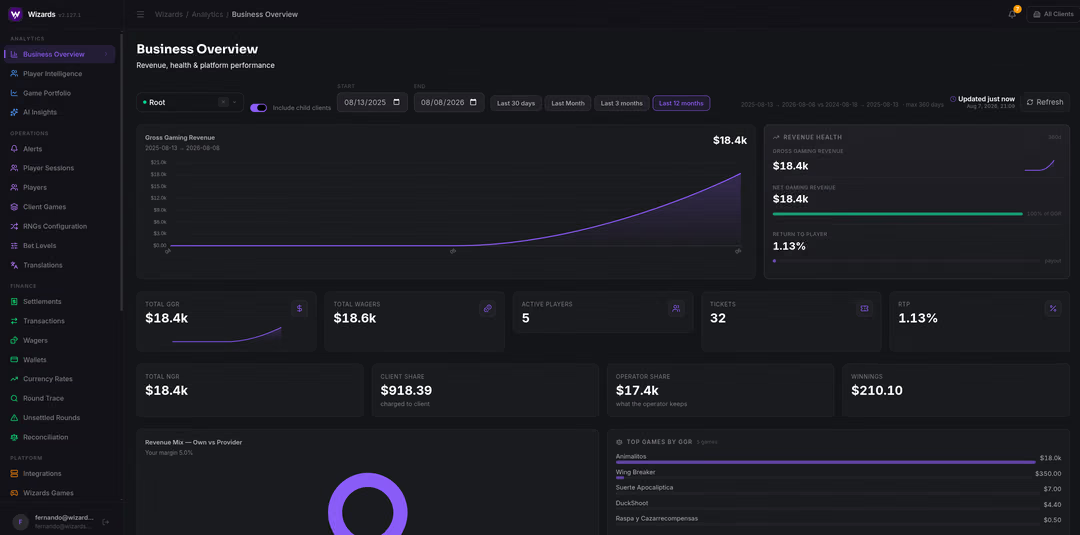
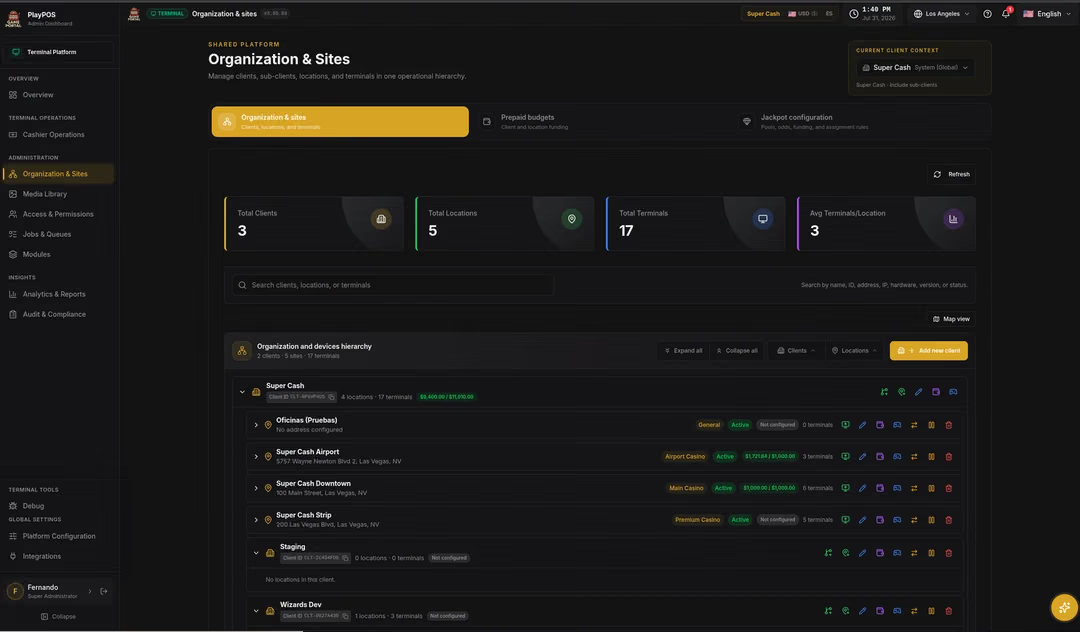

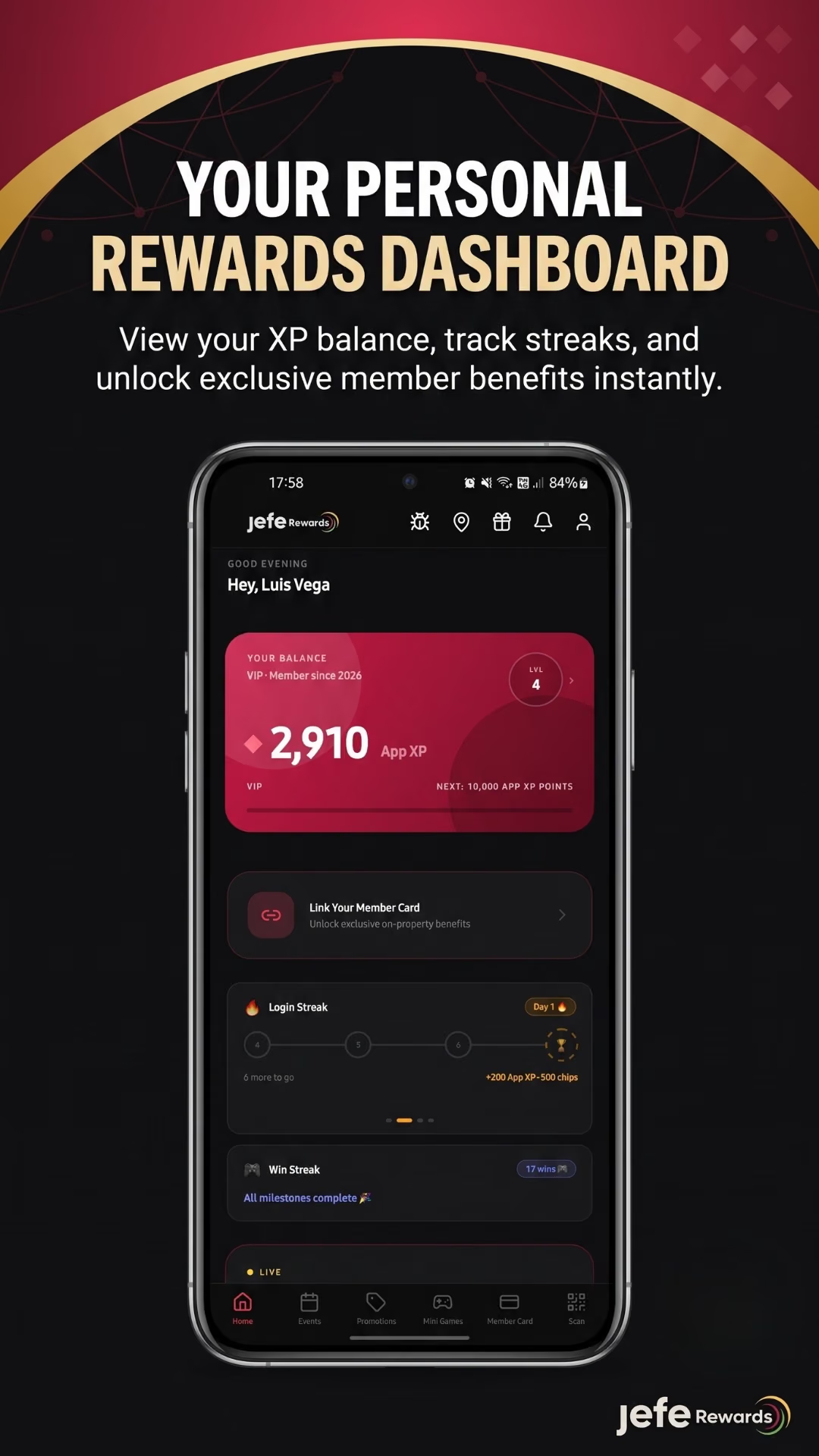











Net Gaming Revenue (NGR) is calculated by subtracting bonuses, taxes, and third-party fees from Gross Gaming Revenue. A bonus engine controls this calculation, converting marketing credits into real liability and determining whether a promotion becomes a growth lever or a profit leak.
Marketing spends that look efficient on paper often hide deeper costs associated with long-tail bonus liability. Our team focuses on refining iGaming marketing automation to bridge the gap between aggressive acquisition and sustainable net revenue margins.

How a bonus engine calculates the real liability of your free spins
Every active credit on a player account represents a potential debt that remains on the balance sheet until specific conditions are met. If you issue a 100 USD bonus with a 30x wagering requirement, the logic must monitor 3,000 USD in betting volume before the liability clears and the funds move off the balance sheet.
The logic within the system must track this liability in real time as it moves through the player lifecycle. When a player wins using bonus funds, the liability increases; when they lose, it decreases. Without real-time ledger updates, an operator might overestimate their liquidity, especially during high-volume events where promotional activity peaks.
Managing sticky bonuses creates a specific type of technical debt where funds remain on the balance sheet for months. If the system does not enforce strict expiration caps, these small, fragmented liabilities can accumulate across thousands of accounts. This complicates financial reporting and can lead to significant discrepancies during quarterly audits or regulatory reviews.
An effective system mitigates this by applying automated cleanup scripts that reclaim expired funds based on the specific terms of the promotion. By reducing the accrual period, operators can clear their balance sheets faster and present a more accurate picture of their financial health to stakeholders and regulators.
What happens when your wagering requirements do not match game RTP
Wagering requirements must be calibrated against the Return to Player (RTP) percentage of the games allowed in a promotion. If a player uses a bonus on a high-RTP game without appropriate game weighting, the probability of them converting that bonus into withdrawable cash increases substantially. This shift effectively raises the cost of the marketing campaign beyond the initial budget.
The ranges below are illustrative examples of how weighting commonly scales with RTP across game categories, not universal or regulatory figures. Actual percentages vary by operator, jurisdiction, and platform provider.
| Game Category | Standard RTP | Weighting Contribution | Expected Conversion Cost |
|---|---|---|---|
| Standard Slots | 94% – 96% | Full contribution, used as the baseline | Calculated at baseline |
| High-RTP Slots | 98%+ | Sharply reduced | Moderate increase |
| Table Games | 99%+ | Heavily reduced or excluded | High liability risk |
| Crash Games | 96% – 97% | Reduced or excluded to limit fast clearance | High velocity risk |
When game weighting is not precisely configured, players naturally gravitate toward games that maximize their conversion probability. A blackjack game with a 99.5% RTP requires a steep contribution reduction to maintain the same margin as a 95% RTP slot. If the system treats all games equally, the operator is essentially subsidizing a high-probability win for the player.
This mathematical imbalance is often where marketing budgets disappear. The bonus engine must handle complex game-specific rules that adjust the contribution percentage in real time. Failure to implement these weights correctly can result in a promotion carrying a negative expected value on average, meaning the operator loses money across the player base over time.
Progressive jackpot games add another layer of complexity to this weighting model, since a portion of each stake feeds a growing prize pool rather than the standard payout structure. Understanding how a progressive jackpot system allocates that portion is essential before assigning it a wagering contribution.

Why your marketing budget disappears through bonus abuse
Industry estimates suggest that multi-accounting and bonus poaching can drain 15 to 20 percent of a promotional budget if not mitigated by real-time logic. Professional abusers search for loopholes in the promotion, such as placing low-risk bets to satisfy wagering requirements, turning a marketing tool into a direct financial loss for the operator.
Sophisticated actors often use “opposite betting” strategies, such as betting on both red and black in roulette using bonus funds. A modern system must identify these patterns and is designed to flag or void the contribution toward wagering. Relying on manual reviews for these patterns is often impractical at scale and leads to delayed payouts that frustrate legitimate players.
- Ignoring the correlation between IP addresses and device IDs during the bonus claim phase.
- Allowing high-volatility betting patterns followed by a shift to low-volatility games after a big win.
- Failing to set maximum bet limits while a bonus is active, allowing players to clear requirements in fewer rounds.
- Neglecting to monitor sudden changes in wagering velocity that indicate automated bot activity.
Preventing these leaks requires deep integration between the promotional layer and the core gambling platform. Building defensive logic into campaigns from day one helps operators close these gaps before they scale. These safeguards protect GGR and NGR margins by ensuring that bonuses are only converted by players who are genuinely engaging with the platform.

How to forecast the cost of a loyalty program before it goes live
Forecasting the long-term impact of a loyalty program requires a shift from simple acquisition math to complex data modeling. Before launching a new tiered reward system, you must simulate how different player segments will interact with the rewards. This involves stress testing various RTP scenarios to ensure the loyalty engine remains profitable even during winning streaks.
- Model the expected turnover per tier based on historical player data or market benchmarks.
- Apply the bonus engine logic to simulate the conversion rate of loyalty points into playable credits.
- Set strict expiration caps and maximum conversion limits to prevent the accumulation of unmanageable liability.
- Monitor the velocity of point accrual to identify if the rewards are too easy to obtain relative to the house edge.
Feeding this player-segment data into your iGaming CRM keeps tier assignments accurate as behavior shifts, and layering in gamification mechanics alongside the tiered rewards keeps engagement high without inflating liability.
Regulatory standards, such as those from the UKGC, require transparency on how these rewards are calculated and when they expire. Operators must be able to demonstrate that their loyalty mechanics are fair and do not encourage excessive gambling. Clear documentation of the mathematical logic is as important for compliance as it is for financial stability.
Accurate data modeling during this phase prevents the “sticky bonus” problem mentioned earlier. By calibrating the reward frequency, you ensure that the loyalty program serves as a retention tool without becoming a permanent fixture on the liability side of the balance sheet. This foresight is what separates sustainable operators from those who struggle with eroding margins.
How a bonus engine automates your promotional logic
Transitioning from manual, ‘one-size-fits-all’ bonuses to an automated, event-driven system reduces human error and improves player segmentation. When the bonus engine ties directly into a player’s real-time activity, rewards can trigger on specific milestones, such as a first win or a period of inactivity, and reach players through channels like email or in-app messaging.
Automation also allows for granular control over wagering limits and game restrictions, applying dynamic requirements based on a player’s risk profile instead of a blanket rule for everyone. The selection of gambling platform providers is a foundational decision here: the flexibility of the underlying software determines how quickly you can pivot your promotional strategy as the market shifts.
Personalization driven by automation also supports MGA and UKGC licensing standards. By capping promotional exposure to players showing signs of high-risk behavior, operators demonstrate a commitment to responsible gambling that protects both the license and the brand while keeping marketing spend focused on sustainable, high-value player segments.
Reach out to our team at Wizards when your iGaming project needs a more precise approach to bonus liability. We can analyze your current promotional logic to identify where game weighting or wagering requirements are eroding your margins, and help you move from generic promotions to a technically sound architecture built for long-term profitability.
Frequently asked questions about bonus engines
How do you know if a bonus engine is actually profitable?
Profitable promotions generally maintain a positive expected value for the operator by balancing Cost per Acquisition against Player Lifetime Value. Many operators set an internal target for their bonus conversion rate to keep marketing spend from eroding the house edge across the gaming platform, especially during high-volume periods.
What is the difference between a sticky bonus and a cashable one?
Sticky bonuses allow players to wager but never withdraw the initial credit, while cashable bonuses convert into real funds once requirements are met. From a technical perspective, sticky bonuses often remain on the balance sheet as restricted funds. Using automated scripts to clear these liabilities once the operator’s defined expiration window passes helps maintain accurate financial reporting.
Can a bonus engine handle cross-jurisdictional compliance for MGA and UKGC?
Modern systems allow for segregated logic based on the player’s specific license. UK-facing operators, for example, must comply with UKGC Licence Condition 4.1.1, which requires customer funds to be kept separate from the operator’s own funds for consumer protection. These systems also apply region-specific wagering caps, and they operate alongside platform-wide controls that sit outside the bonus engine, such as the UKGC’s 5 GBP maximum stake per spin on online slots.
Does the bonus engine automatically handle tax deductions for NGR?
Bonus engines typically track pre-tax liability, so calculating Net Gaming Revenue requires integrating local gaming tax rates. In the German market, the 5.3 percent turnover tax on stakes significantly alters the margin. Granular data exports from the engine let finance teams apply these specific jurisdictional deductions during their monthly or quarterly reporting cycles.
How often should an operator audit their game weighting configurations?
Operators typically perform deep audits of game weighting every quarter or whenever a new RGS, a Remote Gaming Server, is integrated. If a new category like Crash Games is added, the logic must be stress-tested to ensure high-velocity betting does not accelerate bonus conversion. Independent reviews by labs like eCOGRA can further validate these mathematical models.
Can the system detect players using VPNs to claim multiple bonuses?
Advanced engines integrate with third-party verification tools to flag non-residential IP addresses or device fingerprints associated with previous abuse. While the engine manages the promotional logic, it relies on real-time data feeds from security providers like GeoComply to block high-risk claims. This filtering prevents the budget drain commonly associated with organized bonus poaching and multi-accounting rings.