
















Modern iGaming operators face a critical challenge known as content fatigue, where players find the same massive libraries of thousands of titles across almost every competing platform. To break this cycle of commoditization, custom casino game development has emerged as the definitive tool for operators seeking true market differentiation and improved margins. While this path requires significant upfront planning compared to off-the-shelf licensing, the ability to control the player experience offers a unique competitive edge in highly regulated landscapes.
Although third-party licensing provides a faster route to market, building bespoke content secures long-term equity and brand independence that aggregators simply cannot provide. Partnering with a specialized casino game development company allows operators to navigate the technical complexities of proprietary IP while ensuring the final product aligns with their specific commercial goals. This strategic shift transforms a game from a mere utility into a high-value asset that drives sustainable player lifetime value.

Strategic scenarios where custom casino game development is the right move
Now that we recognize the need for differentiation, let’s look at the specific triggers for this investment. Strategic custom casino game development becomes essential when an operator seeks to break free from vendor-locked portfolios that dictate their content roadmap. By owning the IP, a mid-sized operator can achieve vertical integration, controlling the entire tech stack and math models to optimize their EBITDA performance over multiple years.
This approach is particularly effective when targeting high-value player segments that require exclusive content within loyalty programs. Instead of offering generic rewards, operators can provide unique gaming experiences that are unavailable anywhere else in the market. This creates a powerful retention loop where the brand becomes synonymous with a specific type of gameplay, fostering deep-seated loyalty that third-party titles cannot replicate.
Furthermore, the transition to proprietary content is a logical step for operators aiming to eliminate recurring licensing fees. While Gross Gaming Revenue (GGR) shares are manageable at low volumes, they become a significant operational burden as a platform scales. Investing in a bespoke library allows the operator to keep a larger percentage of the house edge, directly impacting the bottom line and providing more capital for further player acquisition.
The value of proprietary math models and mechanics
Beyond the brand, the engine under the hood is what truly dictates player retention. Standardized games often use generic math models designed to appeal to the broadest possible audience, which frequently results in mediocre engagement metrics. Custom development allows for the creation of unique volatility and Return to Player (RTP) settings specifically tailored to the risk appetite and preferences of your local player base.
Proprietary mechanics serve as a primary defense against player churn in a saturated market. When an operator owns the math behind unique cascading reels or specific bonus triggers, they create a “sticky” environment where players cannot find that exact dopamine hit elsewhere. These mechanics are not just aesthetic choices; they are calculated business assets that influence session length and the frequency of return visits.
Ownership of the intellectual property also facilitates seamless cross-channel adaptation without the need for additional vendor negotiations. An operator can adapt a successful web-based mechanic for mobile applications or even retail terminals while maintaining a consistent mathematical experience. This flexibility ensures that the core product performs optimally across all touchpoints, maximizing the reach and longevity of the initial investment.
Navigating RNG certification and technical compliance
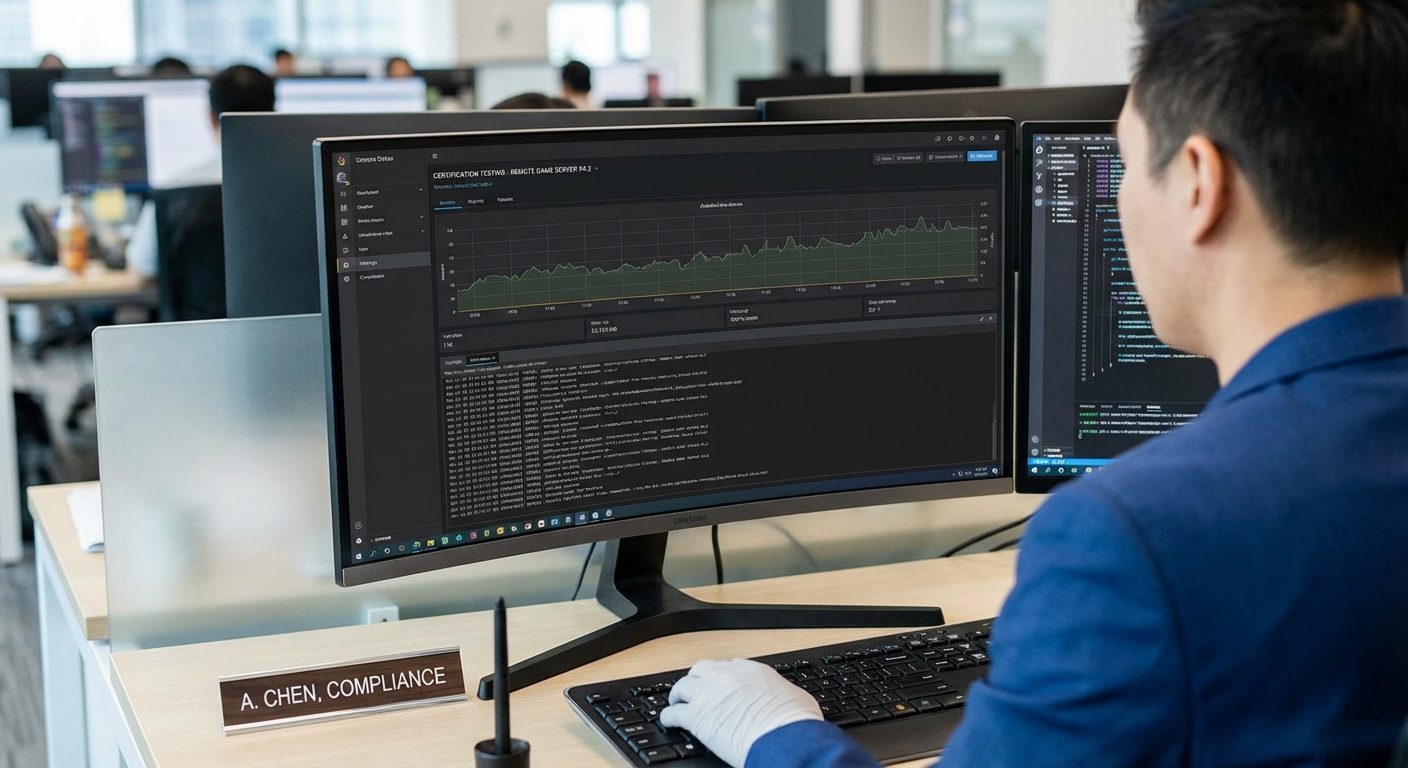
However, owning the IP means owning the responsibility for its integrity and regulatory standing. For CTOs and compliance officers, the primary concern is ensuring that the Random Number Generator (RNG) meets the rigorous standards of specific jurisdictions. This is a structured process that involves rigorous third-party lab testing from recognized entities such as GLI or iTech Labs to verify mathematical fairness.
Integrating custom titles into an existing ecosystem requires a robust technical strategy, often involving a Remote Game Server (RGS). Operators must decide whether to build a proprietary RGS or integrate their custom builds into an existing third-party framework. While building a proprietary server increases the initial technical hurdle, it provides total control over game delivery, data collection, and platform-wide scalability.
Compliance documentation is another critical pillar that requires meticulous attention to detail during the development phase. Multi-jurisdictional licensing demands comprehensive technical files that outline every aspect of the game’s logic and security protocols. Framing compliance as a core part of the development lifecycle, rather than an afterthought, ensures a smoother transition through the certification phase and into the live market.
Comparing the ROI of bespoke titles vs third-party licensing
Technical viability aside, the decision ultimately rests on the financial projection and the trade-off between different cost structures. Custom development involves a significant upfront Capital Expenditure (CapEx) for design, math, and coding. In contrast, third-party licensing is characterized by lower entry costs but high, ongoing Operational Expenditure (OpEx) through continuous revenue sharing agreements that eat into long-term margins.
The “break-even” point is the most critical metric for Product Managers to evaluate when justifying a bespoke build. This calculation involves estimating the total volume of bets required to cover the initial development and certification costs. Once this threshold is crossed, the game essentially becomes a high-margin asset, as the operator no longer pays a percentage of every spin to an external provider.
- Margin Retention: By eliminating GGR share, the operator retains the full house edge, which significantly increases the lifetime profitability of every active player.
- Bargaining Power: Owning proprietary content provides leverage when negotiating terms with other aggregators, as you are no longer entirely dependent on their libraries.
- Asset Appreciation: Unlike licensed games that can be pulled by a vendor, proprietary titles represent permanent intellectual property that adds tangible value to the company.
Balancing your portfolio with a hybrid content strategy
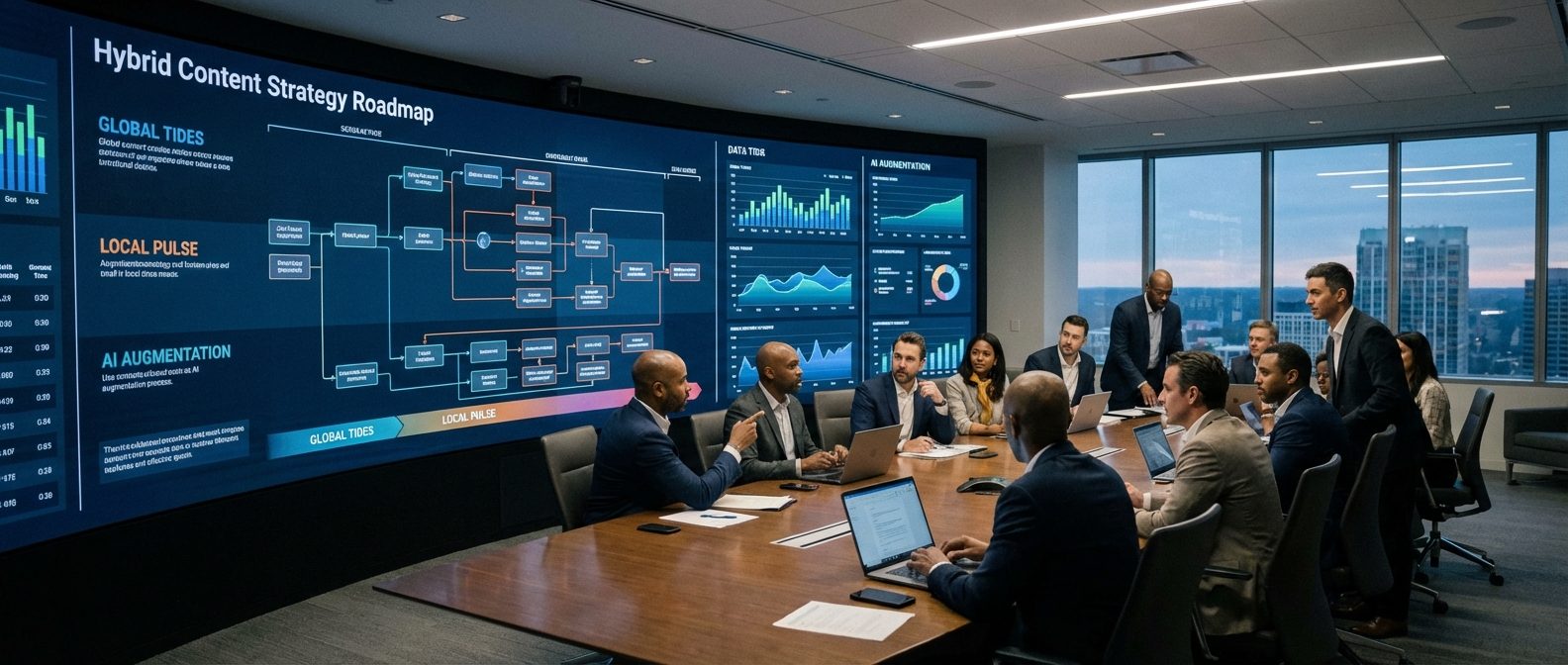
So, does it have to be one or the other? Most successful mid-sized operators find that a hybrid content strategy offers the best balance between risk and reward. This model involves maintaining a broad library of “hits” from major aggregators to satisfy general player demand while simultaneously building a core of exclusive, proprietary titles that define the brand’s unique identity.
A tiered entry strategy can help mitigate initial risks, starting with “reskinning” existing frameworks before moving into full custom builds. Reskinning allows an operator to test brand-specific themes using proven math models at a lower cost. Once the data confirms player interest, the operator can then commit to more complex projects involving entirely original mechanics and specialized math profiles.
When choosing a casino game development company, the focus should be on iGaming-specific expertise and a proven track record in certification. A partner who understands the nuances of RNG requirements and jurisdictional nuances is essential for a data-driven product roadmap. This balanced approach ensures that the operator remains competitive today while building the proprietary foundations for tomorrow’s growth.
FAQs about bespoke iGaming content ROI
What is the break-even point for a custom casino game?
The break-even point is the total volume of bets required to cover the initial development and certification cost, and it is the metric that decides whether a bespoke build is justified. Custom development is capital expenditure paid once; third-party licensing is a lower entry cost carrying a continuing revenue share. Past the break-even point the game becomes a high-margin asset, because the operator stops paying a percentage of every spin to an external provider.
What factors typically influence the time-to-market for bespoke iGaming software?
The timeline for bespoke iGaming software creation typically depends on the complexity of the mathematical model and the depth of the visual assets. While a reskin might take a few weeks, a full-cycle build often spans several months due to iterative balancing and third-party testing backlogs. Operators should account for the certification window at labs like GLI or iTech Labs, which can vary based on the target jurisdiction’s specific technical standards. Efficient planning involves finalizing the math profile early to allow art and compliance workflows to run in parallel.
How should an operator evaluate a development partner for proprietary slot mechanics?
When selecting a partner for developing exclusive casino titles, operators should prioritize studios that offer full source code ownership and comprehensive technical documentation. It is essential to verify their experience with specific Remote Game Server (RGS) integrations and their history of successful certifications in your target markets. A strategic partner does not just deliver a game; they provide the mathematical proof and localized compliance assets necessary for a smooth launch. Evaluate their post-launch support structures, as proprietary content requires ongoing optimization and compatibility updates to maintain performance.
Who is responsible for the ongoing technical maintenance of owned gaming intellectual property?
Ownership of the intellectual property (IP) usually means the operator is responsible for the game’s lifecycle, including updates for mobile OS compatibility and security patches. However, most operators mitigate this by establishing a Service Level Agreement (SLA) with the original developer. This ensures that the technical performance of the game remains stable as the platform scales. It is important to define these maintenance boundaries during the contract phase to avoid unexpected operational costs or technical debt that could diminish the long-term ROI of the asset.
How does developing exclusive casino titles change access to player data?
One of the primary advantages of proprietary content is the ability to capture granular telemetry that aggregators often obfuscate. Developing your own titles allows for the integration of custom data hooks, providing deeper insights into player behavior, session volatility preferences, and specific churn triggers. This level of data ownership enables more precise segmentation and the ability to trigger real-time loyalty rewards based on proprietary game events. Operators can use these insights to refine their broader content acquisition strategy and optimize their overall portfolio performance.
Does owning a custom game require the operator to hold a separate B2B supplier license?
In most jurisdictions, the operator must ensure the specific game title is certified for their B2C license, but they do not necessarily need a B2B supplier license unless they are distributing the game to other third-party platforms. The development company usually holds the necessary supplier certifications to build the software. However, the operator must confirm that their internal Remote Game Server (RGS) or the third-party RGS they utilize is authorized to host custom builds within the relevant regulatory framework. Compliance requirements vary significantly between markets like Malta, Ontario, or the UK.