




















Launching a new online casino requires balancing speed against technical sovereignty, a dilemma most operators face during the initial planning phase. A white label gambling platform serves as the fastest entry point into the market, providing a pre-configured environment that includes software, licensing, and payment processing under one contract. While this model allows for rapid deployment, it typically mandates a trade-off regarding the level of control an operator has over their unique brand identity and long-term technical roadmap.
Understanding these operational boundaries is essential for Product Managers who must decide if the immediate convenience justifies the potential lack of future flexibility. To better understand how different architectures impact growth, stakeholders should evaluate modern Gambling Platforms & Software to determine which model aligns with their specific expansion goals and regulatory requirements.

What is a white label gambling platform and why operators choose it?
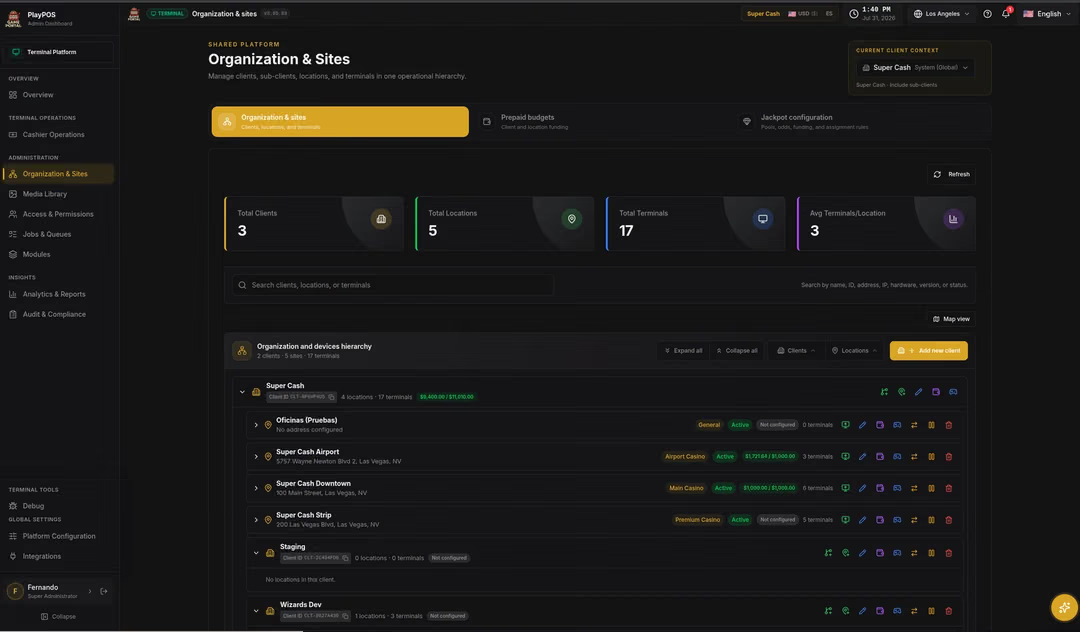
A white label solution in the iGaming sector is a comprehensive business package where a provider supplies a fully functional casino or sportsbook to an operator. This package traditionally includes the frontend website, a backend management system, a suite of integrated games, and a regulatory sub-license. By utilizing the provider’s existing corporate structure, the operator avoids the high costs and administrative hurdles of securing an independent gaming license in jurisdictions like Malta or Curacao.
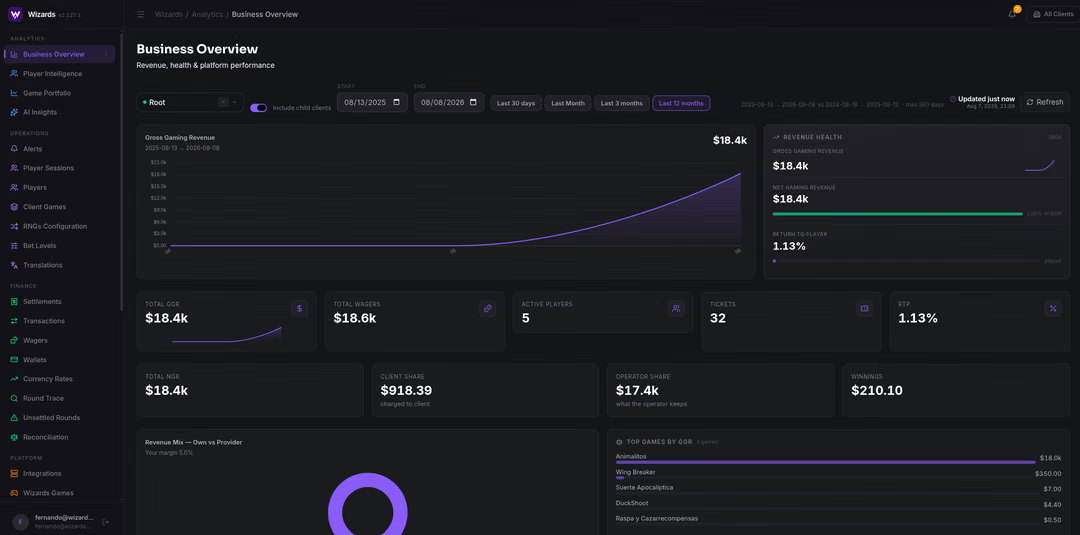
The primary value proposition for B2B decision-makers is the drastic reduction in time-to-market. Instead of spending several months or even years developing proprietary software and negotiating with individual payment processors, an operator can launch a functional brand within weeks. This allows small to medium enterprises to test market theories and start generating revenue without a massive upfront investment in technical infrastructure or legal teams.
Furthermore, the provider acts as a critical operational buffer by managing the complex relationships with payment gateways and game studios. They handle the technical maintenance and security updates, allowing the operator to focus almost exclusively on marketing and player acquisition. For a startup, this delegation of technical responsibility is often the only feasible way to enter a highly competitive and regulated industry without deep internal technical expertise.
Where a turnkey platform stops an operator customising
Despite the initial benefits, many operators eventually hit a technical glass ceiling that prevents further differentiation. Because the white label model relies on a shared infrastructure, the frontend often suffers from the template problem. When multiple casinos use the same underlying skins and navigation logic, it becomes difficult for a brand to stand out in a saturated market, leading to a generic user experience that fails to foster long-term player loyalty.
From the perspective of a Head of Product, the most significant limitation is the restricted access to the core tech stack. Proprietary feature requests, such as a unique gamification engine or a custom loyalty program, are frequently met with a refusal from the vendor. This happens because the provider must maintain a uniform codebase across all their clients to ensure stability, making it nearly impossible to implement site-specific technical innovations.
Integration friction also becomes a bottleneck as the business matures and requires more sophisticated tools. Adding third-party CRM systems, advanced affiliate management software, or proprietary risk algorithms can be complicated or entirely prohibited. If the provider’s API is closed or limited, the operator is forced to work within the confines of the vendor’s ecosystem, which may not be as efficient or powerful as specialized external solutions.
Compliance and licensing dependency risks
Operating under a sub-license creates a significant dependency on the white label provider’s regulatory health. While this setup simplifies the initial launch, the operator is technically a tenant on the provider’s license rather than a sovereign entity. This relationship implies that any regulatory failure, fine, or suspension faced by the provider directly impacts every operator functioning under their umbrella, potentially leading to immediate operational shutdowns beyond the operator’s control.
There is also a risk of regulatory contagion within the shared environment of the platform. If another operator on the same white label system is flagged for poor AML (Anti-Money Laundering) or KYC (Know Your Customer) practices, it can trigger increased scrutiny from regulators for everyone on the platform. Maintaining a high standard of compliance becomes a collective challenge where the weakest link in the provider’s ecosystem can jeopardize the reputation and stability of all associated brands.
Expansion into new regulated markets presents another hurdle due to certification friction. If an operator wants to enter a specific territory like Ontario or Sweden, they must wait for the white label provider to certify their software for that specific jurisdiction. This dependency can result in missed opportunities if the provider decides the entry cost is too high or if their technical roadmap does not align with the operator’s geographic growth strategy.

What a revenue share and shared data cost as volume grows
The economic model of a turnkey setup often includes a revenue share agreement that can become a burden as the brand scales. In the early stages, paying a percentage of GGR (Gross Gaming Revenue) is a fair trade for the low setup cost. However, as player volume increases, this “success tax” can eventually exceed the cost of maintaining a proprietary or modular solution, significantly eating into the operator’s net margins.
Data ownership remains one of the most critical long-term risks for growing iGaming businesses. Many white label agreements limit the operator’s access to raw player data, providing only sanitized reports through a dashboard. This lack of direct data access hinders the ability to run advanced business intelligence or deploy AI-driven retention strategies that require deep integration with user behavioral patterns and real-time transaction history.
Vendor lock-in represents a major strategic challenge when an operator decides to move to a different provider or develop their own platform. Migrating thousands of player accounts, active bonuses, and historical data from a rigid white label gambling platform is technically complex and expensive. Without a pre-planned exit strategy or a modular technical foundation, the operator may find themselves stuck with an outdated partner simply because the cost of migration is too high.

When to transition away from a white label gambling platform?
Identifying the right moment to shift away from a template-based model is a strategic decision that depends on specific volume triggers. When the cumulative monthly revenue share paid to the provider starts to match or exceed the estimated cost of a dedicated development and hosting team, the financial argument for a more independent solution becomes undeniable. At this point, owning the technology becomes a capital investment rather than a recurring operational expense.
Product differentiation often serves as the secondary catalyst for a transition. When the marketing team identifies that the brand’s growth is stalled due to a generic UX or the inability to offer unique betting markets, it is a sign that the current platform has reached its limit. Operators who need to control the entire player journey to compete on experience rather than just bonuses must seek a foundation that allows for full frontend and backend customization.
Operational maturity is the final indicator that a move is necessary for the business. As an organization grows, the need for direct control over specialized departments becomes paramount:
- CRM and Loyalty: The ability to build bespoke automated journeys based on real-time triggers without vendor intervention.
- Risk Management: Implementing proprietary fraud detection and limit-setting tools that are specific to the brand’s risk appetite.
- Payment Strategy: Negotiating direct contracts with local payment methods to improve acceptance rates and reduce processing fees.
These operational levers are often only fully accessible through a modular or proprietary architecture.
Evaluating your foundation for long-term iGaming growth
While a white label setup is an excellent tool for rapid market entry and testing a new brand concept, it should be viewed as a starter foundation rather than a permanent home for a scaling business. The trade-off between speed and control is acceptable in the short term, but the long-term success of an iGaming operator depends on the ability to innovate and adapt without technical or regulatory dependencies on a third party.
Choosing a partner that offers a path toward modular expansion or has experience facilitating future migrations is a strategic move for any forward-thinking CEO. By prioritizing control over player data and maintaining a clear vision of the brand’s unique value proposition, operators can ensure they are not trapped beneath a technical ceiling when they are ready to scale. A successful transition requires a clear understanding of the existing Gambling Platforms & Software landscape to choose the right architecture for the next phase of growth.
FAQs about white label casino solutions
What does a white label gambling platform include?
A white label package traditionally bundles the frontend website, a backend management system, a suite of integrated games and a regulatory sub-license into one contract. The provider also carries the relationships with payment gateways and game studios and handles technical maintenance and security updates, which is what lets an operator concentrate on marketing and player acquisition instead of infrastructure.
Beyond revenue volume, what specific operational bottlenecks indicate a need for more control?
While revenue is a key trigger, operational bottlenecks often manifest as an inability to execute real-time marketing campaigns or personalize player journeys. If your team cannot deploy a new bonus type or modify the registration flow without waiting weeks for vendor approval, the platform is hindering your agility. This lack of autonomy in CRM execution and risk management often signals that the business has matured beyond the capabilities of a shared environment, requiring a shift toward more modular software architectures that allow for internal control over the player experience.
What are the primary technical prerequisites for migrating away from a turnkey iGaming solution?
Moving from a pre-configured setup requires establishing a robust internal technical foundation first. Operators must secure their own direct agreements with game aggregators and payment service providers to ensure continuity. Additionally, a dedicated data migration strategy is vital to preserve player history and loyalty statuses. You will likely need an internal DevOps or engineering team to manage the new infrastructure and oversee the integration of third-party APIs. Preparing these elements months in advance helps mitigate the risks associated with technical debt and ensures a smoother transition from a white label gambling platform to a sovereign one.
How does the delegated licensing model affect entry into new regulated markets?
Operating under a sub-license means your geographic roadmap is strictly tied to the provider’s regulatory certifications. If a new lucrative market opens, but your vendor lacks the necessary local compliance approvals or technical certifications, you are effectively blocked from entry. This creates a strategic disadvantage compared to competitors with independent licenses or modular platforms who can pivot more quickly. It is essential to evaluate whether a provider’s current jurisdictional footprint and future certification pipeline align with your long-term expansion goals to avoid being sidelined during critical market openings.
What are the most overlooked costs associated with maintaining a long-term white label partnership?
Beyond the visible revenue share, operators often face indirect costs related to limited optimization. For instance, being unable to integrate a specialized fraud detection tool can lead to higher chargeback rates or bonus abuse, which directly impacts the bottom line. Furthermore, reliance on a vendor’s generic payment gateway may result in lower transaction approval rates compared to direct local integrations. These hidden inefficiencies act as a secondary tax on growth, where the lack of granular control over the technical stack of a white label gambling platform prevents the marginal gains necessary for scaling.
Is it possible to achieve meaningful brand differentiation while using a shared frontend infrastructure?
Achieving true differentiation within a template-based system is challenging but possible through focused content curation and localized marketing strategies. However, technical differentiation—such as unique navigation patterns or proprietary gamification layers—is usually restricted. Operators can mitigate this by choosing providers that offer headless options or more flexible API access to the frontend. This allows you to build a custom user interface while still leveraging the vendor’s backend for compliance and payments. Even so, the deeper the customization, the more you approach the boundaries where a bespoke solution would be more efficient.