




















The iGaming sector presents a high-growth opportunity that rivals the most aggressive fintech markets, yet its complexity often surprises even seasoned investors. Navigating the legal and technical landscape requires a fundamental shift in perspective, treating the project less as a recreational game and more as a high-stakes financial operation. Understanding exactly how to start an online casino involves balancing rapid user acquisition with the rigorous uptime and security standards expected by global regulatory bodies.
Success in this competitive space hinges on the reliability of your infrastructure and the agility of your software architecture. Partnering with a specialized casino game development company ensures your platform can manage high concurrency and secure financial transactions without performance degradation. This technical foundation allows leadership to focus on market positioning rather than troubleshooting back-end failures or integration bottlenecks.

The strategic roadmap for how to start an online casino
Launching a digital gambling operation requires a synchronized approach across three critical pillars: legal compliance, technical infrastructure, and market strategy. While the allure of the industry is strong, the roadmap must begin with a clear definition of the minimum viable platform that meets regional standards while offering a competitive user interface. Defining these parameters early ensures that the project remains focused on core functionality rather than feature creep.
The initial phase focuses on assembling the core components necessary to satisfy both regulators and the target audience during the first months of operation:
- Licensing Phase: Securing the legal right to operate within a specific jurisdiction while establishing necessary corporate and financial structures for global operations.
- Technical Integration: Building the core engine and connecting with game aggregators and payment gateways to ensure a functional and secure betting loop.
- Soft Launch: Executing a limited release to verify system stability and marketing efficiency before committing to a full-scale public campaign and high-volume traffic.
Establishing these milestones early prevents the common mistake of over-investing in custom game features before the core regulatory and payment foundations are fully secured. A modern casino must prioritize a mobile-responsive core and a verified random number generator from day one to build immediate credibility with players and auditors alike. By focusing on these requirements, founders can build a scalable framework for iterative growth.
Selecting the right jurisdiction for your gambling license
The first technicality isn’t code; it’s the license that allows the code to run legally. Founders must choose between Tier-1 jurisdictions like Malta or the UK, which offer high prestige and better banking access, or Tier-2 options like Curacao or Anjouan, known for faster entry and lower initial costs. This decision serves as the cornerstone of your entire operational framework and budget allocation.
This choice directly impacts your ability to secure reliable banking relationships and integrate top-tier payment gateways, as financial institutions weigh the regulatory rigor of your home base. A prestigious license often simplifies the onboarding process with global providers, though it requires stricter reporting and higher operational oversight. Conversely, a Tier-2 license may allow for a faster launch but could limit access to specific high-value markets.
Beyond the permit itself, maintaining compliance with Anti-Money Laundering (AML) and Know Your Customer (KYC) standards is a continuous operational requirement. Effective platforms integrate automated identity verification tools to mitigate risk while ensuring the onboarding flow remains frictionless for legitimate players looking to deposit and play quickly. Robust compliance protocols are essential for maintaining the longevity and reputation of the digital brand.
Software architecture and the platform ownership dilemma
With a legal framework in place, the focus shifts to the engine that drives the user experience and internal operations. Choosing between a white-label solution for immediate market entry or a custom-built platform for long-term control is perhaps the most significant technical decision a CTO will face. Each model carries distinct trade-offs regarding time-to-market and unique competitive differentiation.
Custom development offers a distinct competitive advantage by allowing unique features and full ownership of the tech stack, which is vital for long-term scalability. Conversely, white-label options reduce time-to-market but often restrict the operator’s ability to differentiate the product or switch providers without a complete overhaul. The decision should align with the long-term vision for brand independence and technical innovation.
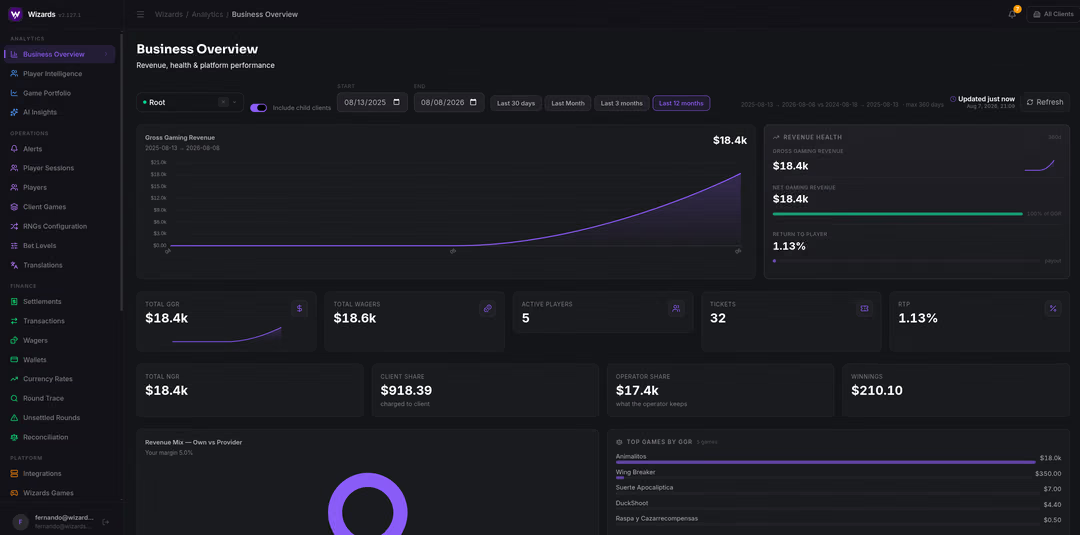
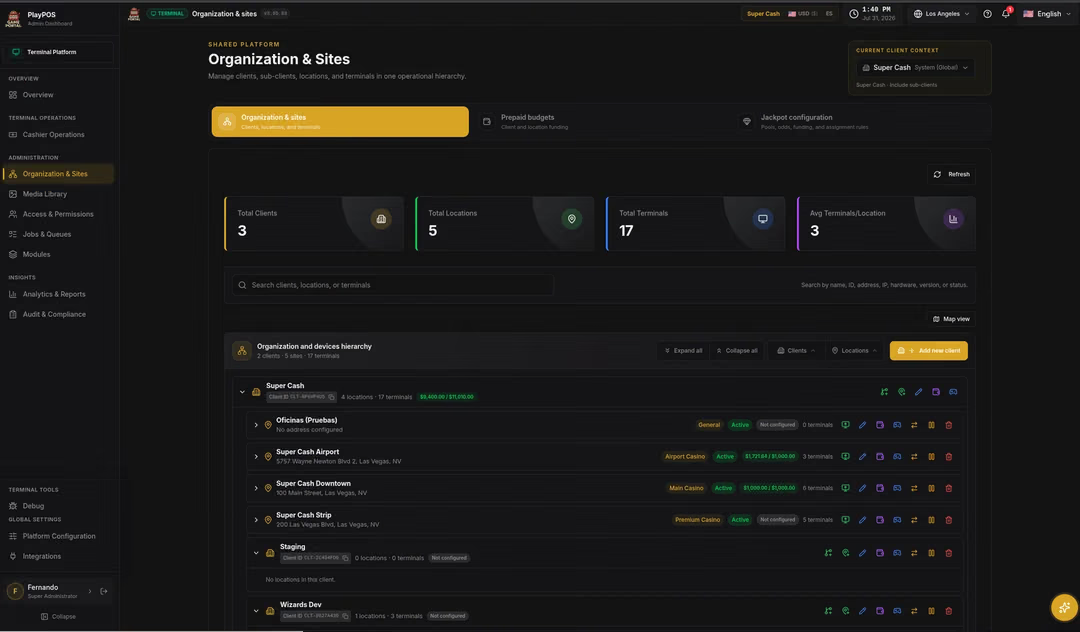
Regardless of the model, a robust back-office is non-negotiable for managing user data, promotional campaigns, and risk management through a unified CMS and CRM system. An API-first design is essential here, enabling the seamless integration of diverse third-party game providers and specialized modules without disrupting the core platform. This modularity ensures the site can adapt to new trends without extensive downtime.

Essential integrations for payments and security
A platform is only as strong as its ability to move money safely and resist fraudulent activity at scale. Modern operators must integrate a diverse range of Payment Service Providers (PSPs) to support both traditional fiat currencies and emerging cryptocurrency options, catering to local player preferences across different regions — and the reserve, approval-rate and chargeback terms behind those integrations are covered in our guide to iGaming payment solutions. This diversity in payment methods is a key factor in converting and retaining global users.
Security extends beyond the ledger to the integrity of the gaming experience itself through certified Random Number Generators (RNG). These certifications are not just legal requirements; they are essential for building player trust, ensuring that every spin or hand dealt is provably fair and mathematically sound according to industry standards. Third-party auditing of these systems provides the technical resilience required for a sustainable operation.
To protect against external threats, the infrastructure must include advanced fraud detection systems and multi-factor authentication for player accounts. Technical resilience is achieved through constant monitoring and the implementation of defensive layers that prevent unauthorized access while maintaining the low-latency performance required for real-time applications. A secure environment is the most powerful retention tool available to any digital gambling operator.

Defining your player acquisition and retention strategy
Even the most secure platform needs a steady flow of users to generate a return on investment in this crowded marketplace. Affiliate marketing remains the primary growth engine in the iGaming industry, requiring specialized tracking software to manage partnerships and ensure transparent commission structures for high-traffic referrers. This ecosystem allows for performance-based scaling that aligns marketing spend with actual revenue generation.
Data-driven retention strategies are equally vital for maximizing Customer Lifetime Value (CLV) through personalized bonuses and loyalty programs. By analyzing player behavior in real-time, operators can deploy automated triggers that offer rewards at critical moments, reducing churn and encouraging long-term engagement. Leveraging data analytics allows for a more granular understanding of player preferences and spending habits over time.
A mobile-first experience is no longer an optional feature but a central requirement for any competitive strategy. Most players now access their favorite games via smartphones, making high-performance mobile web interfaces or dedicated native applications the standard for successful player acquisition. Ensuring that the user journey is seamless across all devices is a non-negotiable factor for achieving a positive ROI.
Balancing speed to market with long term scalability
Ultimately, the path you choose depends on your immediate capital and your long-term vision for the brand’s growth. Balancing speed to market with the flexibility of custom software requires a clear understanding of how your platform will evolve as regulations shift and player expectations rise. The initial choice of technology stack will dictate your ability to pivot in the future.
The right strategy is one that anticipates these technological evolutions, favoring architectures that can scale horizontally as the user base grows. Selecting a technical partner like a specialized casino game development company provides the necessary insight to bridge the gap between initial launch and market leadership. Their expertise in handling high-concurrency environments can be the difference between a stalled project and a flourishing business.
Success in the iGaming world is reserved for those who view technology as a dynamic asset rather than a static cost. By empowering your team with the right tools and a scalable roadmap, you can build a resilient digital product that thrives in the intersection of data, security, and exceptional user experience. Maintaining this balance ensures that the platform remains competitive and compliant throughout its entire lifecycle.
FAQs about online casino launch requirements and compliance
What are the main phases of an online casino launch?
A launch runs through a licensing phase, a technical integration phase and a soft launch. Licensing secures the legal right to operate in a chosen jurisdiction and establishes the corporate and financial structures behind it. Technical integration builds the core engine and connects the game aggregators and payment gateways that close the betting loop. The soft launch is a limited release that verifies system stability and marketing efficiency before any full-scale public campaign.
What are the primary technical dependencies before a soft launch?
Focusing on the critical path of how to start an online casino requires synchronizing three main dependencies: the completed jurisdictional audit, fully integrated Payment Service Providers (PSPs), and a certified Random Number Generator (RNG). Before moving to a public release, teams must ensure the back-office reporting tools are correctly capturing data for Anti-Money Laundering (AML) compliance. These elements form the functional core that allows the platform to process real transactions while meeting legal standards, preventing costly operational delays during the initial user acquisition phase.
What is the most common mistake when evaluating iGaming infrastructure?
Many founders prioritize game variety over the robustness of the underlying casino platform architecture. A common error involves selecting a rigid turnkey solution that lacks API-first flexibility, making it difficult to switch providers or scale as the user base grows. This technical debt often leads to performance bottlenecks during peak traffic or security vulnerabilities in the payment loop. Choosing a scalable framework that allows for modular updates ensures the operation remains resilient against shifting regulatory requirements and evolving player expectations in the highly competitive digital gambling market.
When does it make sense to transition from a white-label to a proprietary platform?
While a white-label model is ideal for rapid market entry, transitioning to a custom-built solution typically becomes necessary when the need for brand differentiation and operational control outweighs the benefits of managed services. This shift usually happens when an operator reaches a specific volume of active users where the commission fees of a provider impact the overall ROI. Having full ownership of the tech stack allows for deeper integration of personalized retention tools and unique gaming features, which are critical for long-term scalability and independent business valuation.
What specialized roles are necessary for a startup gambling operation?
Launching a digital gambling platform requires a cross-functional team that bridges the gap between gaming and fintech. Essential roles include a dedicated Compliance Officer to navigate multi-jurisdictional regulations and a Technical Architect experienced in high-concurrency systems. Additionally, a Data Analyst is vital for monitoring player behavior and optimizing the lifetime value of users through automated retention strategies. Having these specialized skills in-house, or through a strategic development partner, ensures the platform maintains high uptime and security while adapting to the complex demands of the international iGaming sector.
How does geographic expansion affect the technical requirements of the platform?
Expanding into new markets involves more than just translating the user interface; it requires sophisticated geo-blocking and localized payment orchestration. Each region has specific technical standards for data privacy and transaction reporting that the platform must accommodate. For instance, moving from a Tier-2 jurisdiction to a regulated European market might necessitate a complete overhaul of the Know Your Customer (KYC) workflows and a more rigorous audit of the random number generation process. A flexible architecture allows for these regional adjustments without requiring a total redesign of the core gambling engine.